Lakeshore Learning Materials GG127 Gear-Bot User Manual GG127 Booklet FOR TESTING
Lakeshore Learning Materials Gear-Bot GG127 Booklet FOR TESTING
User Manual
1 1
2 2
Remote Control
©Lakeshore
BUILDING GUIDE
2
6
4
2
2
20
Warning: Changes or modifications to this unit not expressly approved by the party responsible for compliance could void the user’s authority to operate the equipment.
NOTE: This equipment has been tested and found to comply with the limits for a Class B digital device, pursuant to Part 15 of the FCC Rules. These limits are designed to
provide reasonable protection against harmful interference in a residential installation. This equipment generates, uses and can radiate radio frequency energy and, if not
installed and used in accordance with the instructions, may cause harmful interference to radio communications.
However, there is no guarantee that interference will not occur in a particular installation. If this equipment does cause harmful interference to radio or television reception,
which can be determined by turning the equipment off and on, the user is encouraged to try to correct the interference by one or more of the following measures:
• Reorient or relocate the receiving antenna.
• Increase the separation between the equipment and receiver.
• Connect the equipment into an outlet on a circuit different from that to which the receiver is connected.
• Consult the dealer or an experienced radio/TV technician for help.
GG127
Do not mix old and new batteries. Do not mix alkaline, standard (carbon-zinc), or rechargeable (nickel-cadmium) batteries.
STEP 5
STEP 6
12
6
1
1
1262 2
Use a Philips-head screwdriver to remove the battery covers from the remote
and the motorized base. Install two “AA” batteries in the remote control and
four “AA” batteries in the motorized base. Then replace the covers. Now the
remote control and motorized base are ready for your child to use.
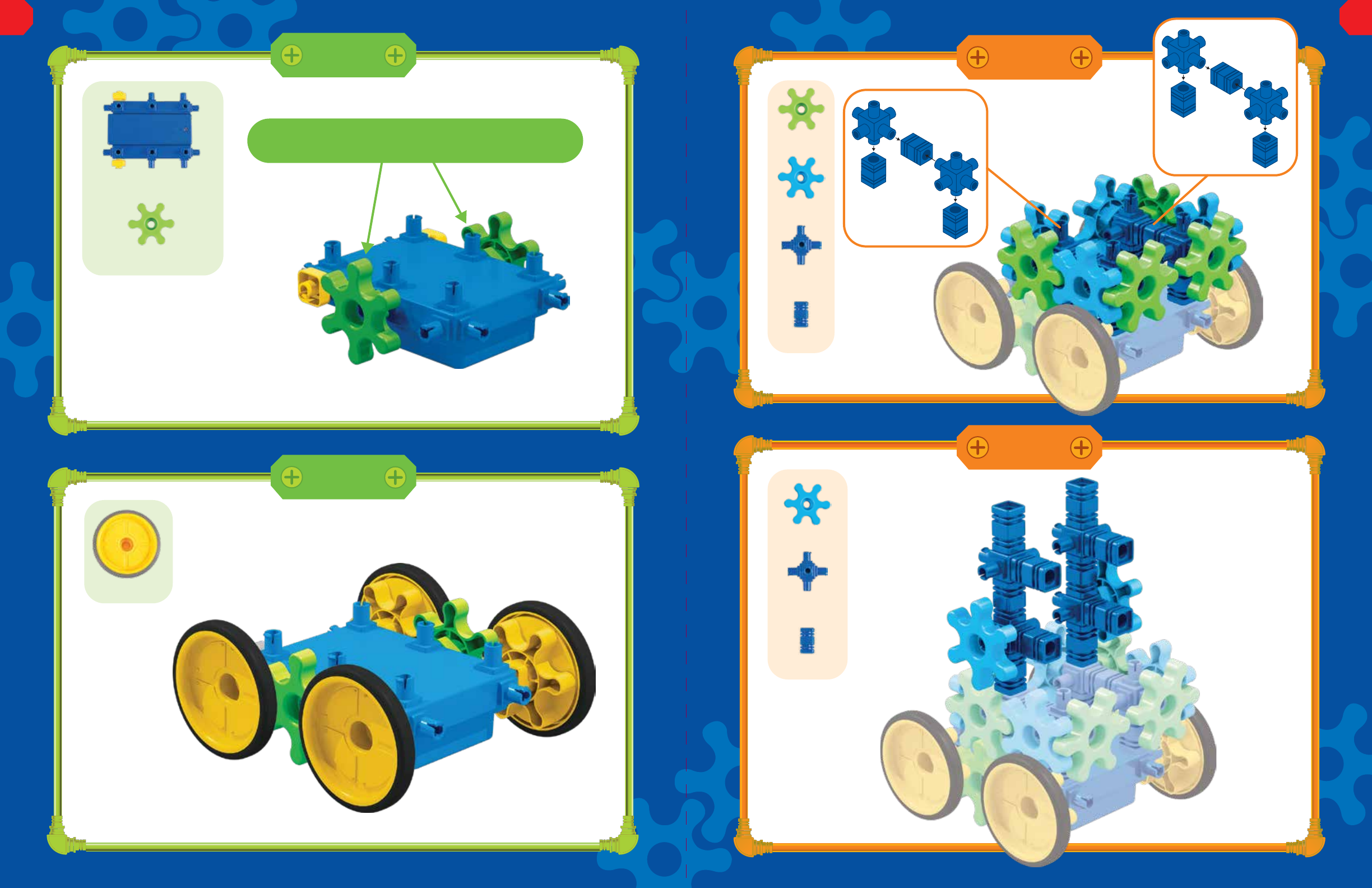
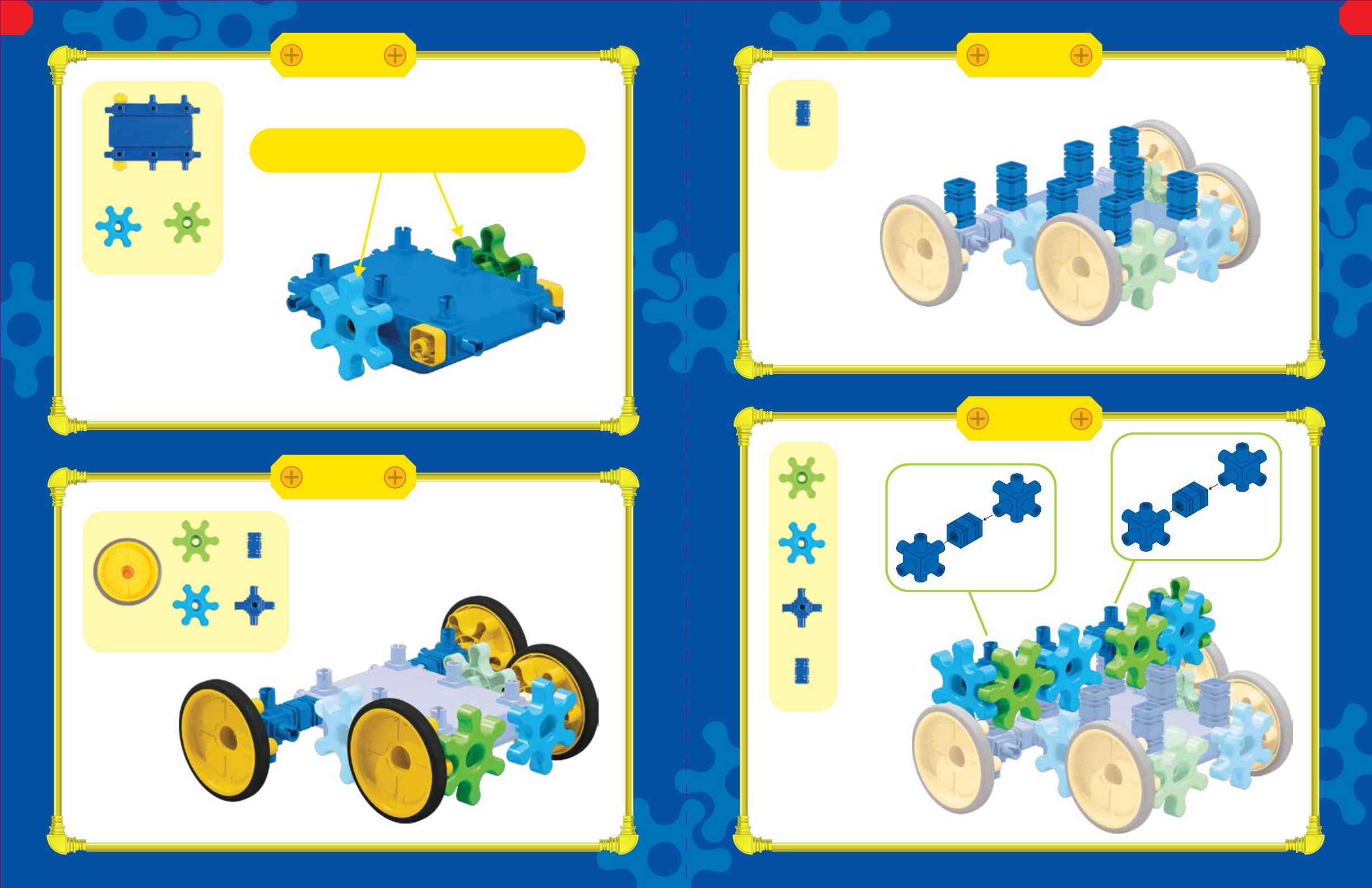
For best results, add a gear to
the center connector on each
side of the motorized base
before attaching the four
wheels. This will ensure that the
wheels spin at the same time.
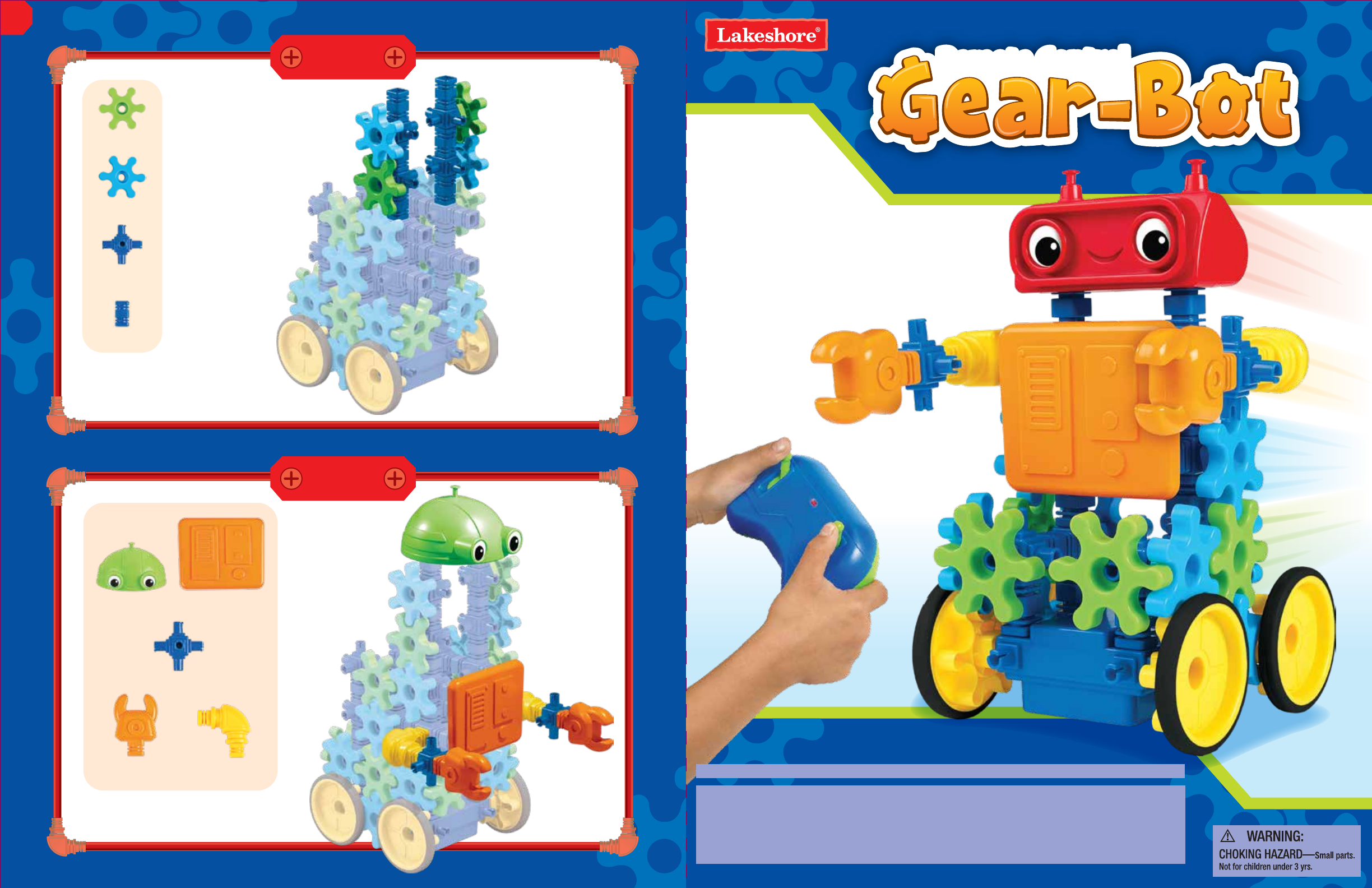
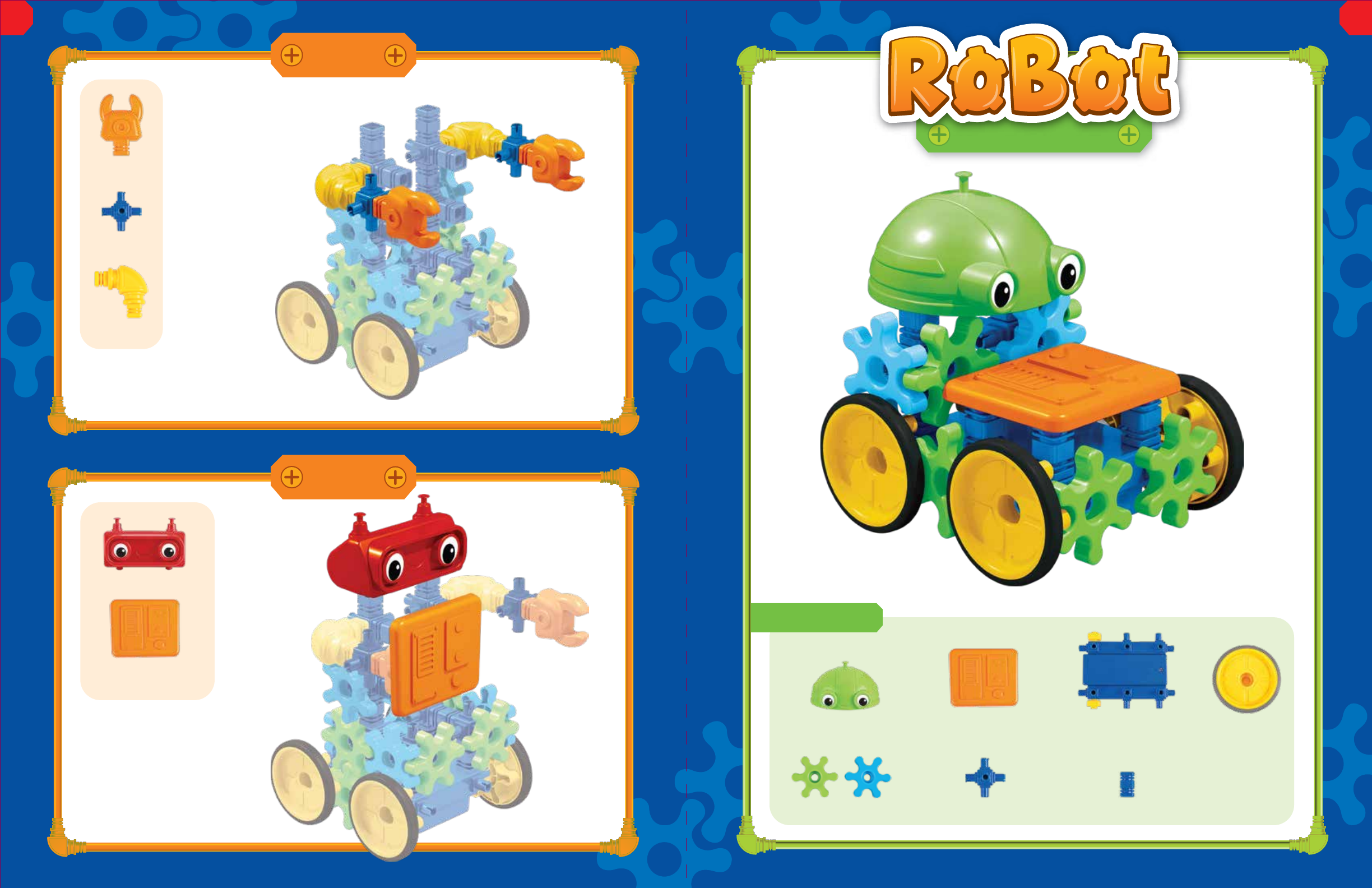
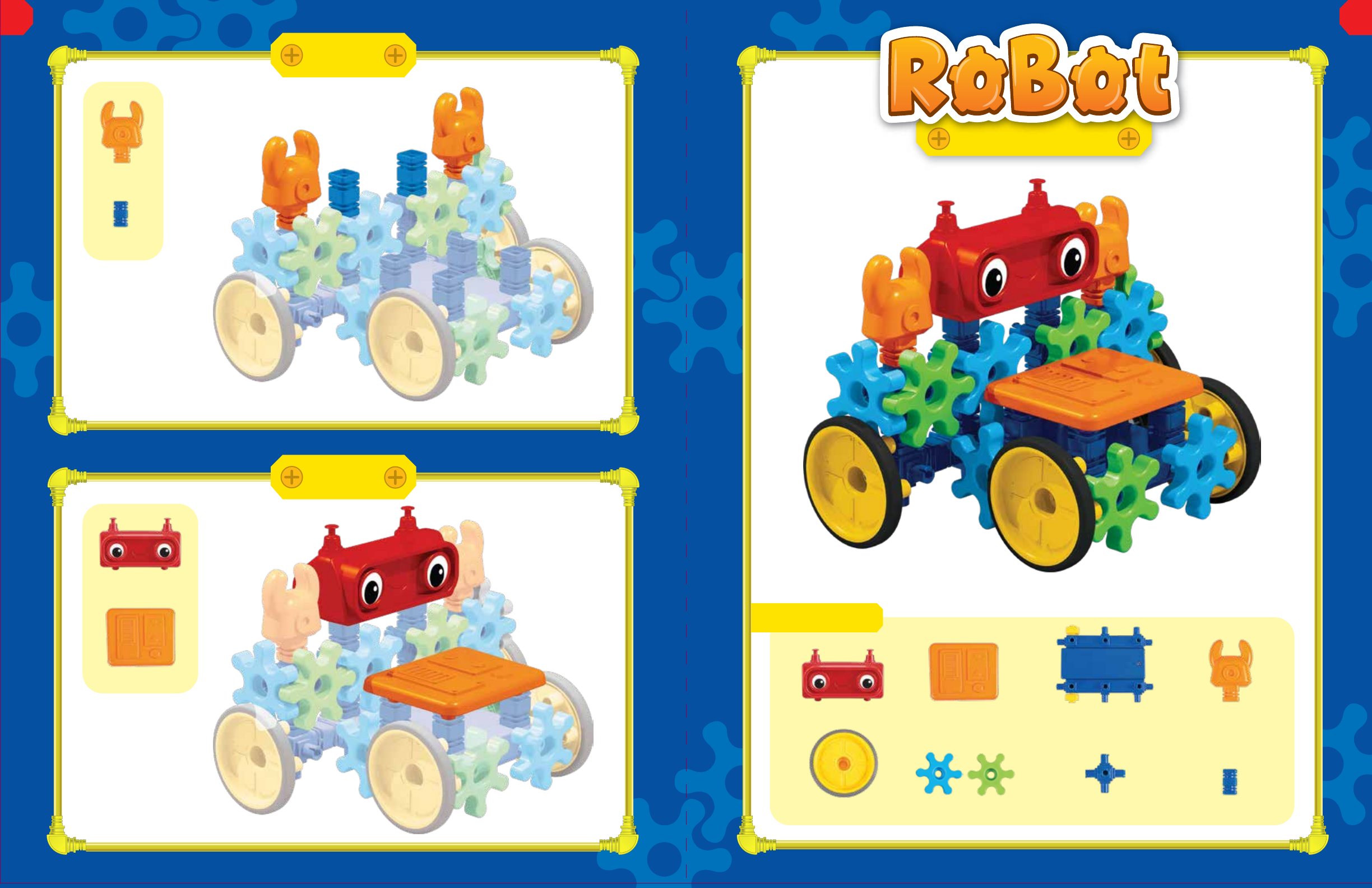
Add gears or risers to the pegs on the motorized base to build up or out —
creating any robot you can dream up!
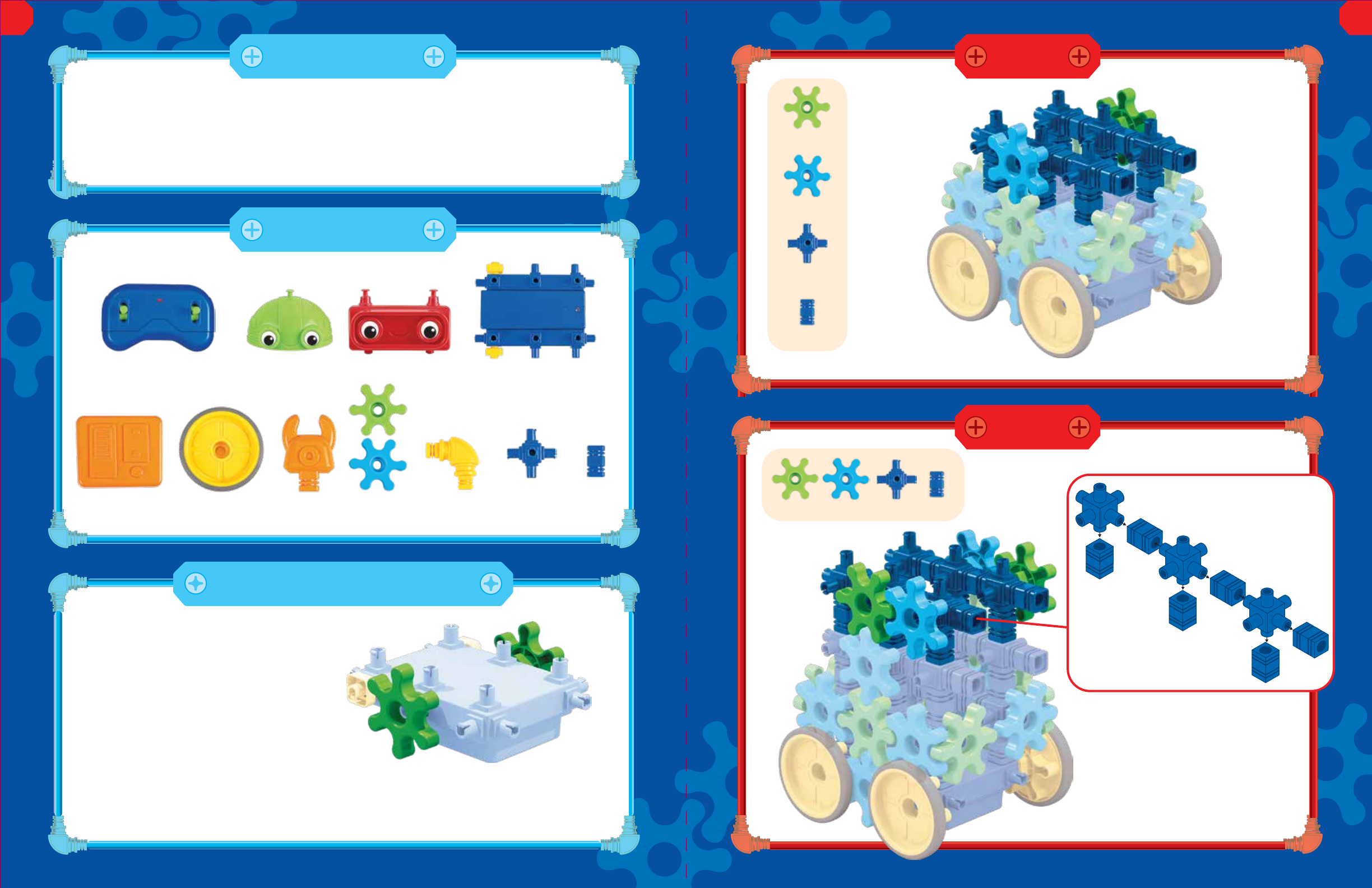
Wireless remote control 2 robot heads Motorized base
Chest plate 4 wheels 40 gears 2 shoulders
60
risers
36
connectors
2 claws
USING THE POWER BASE
BEFORE YOU BEGIN
WHAT’S INCLUDED
STEP 3
STEP 4
219
STEP 1
STEP 2
64
44
1
11
46
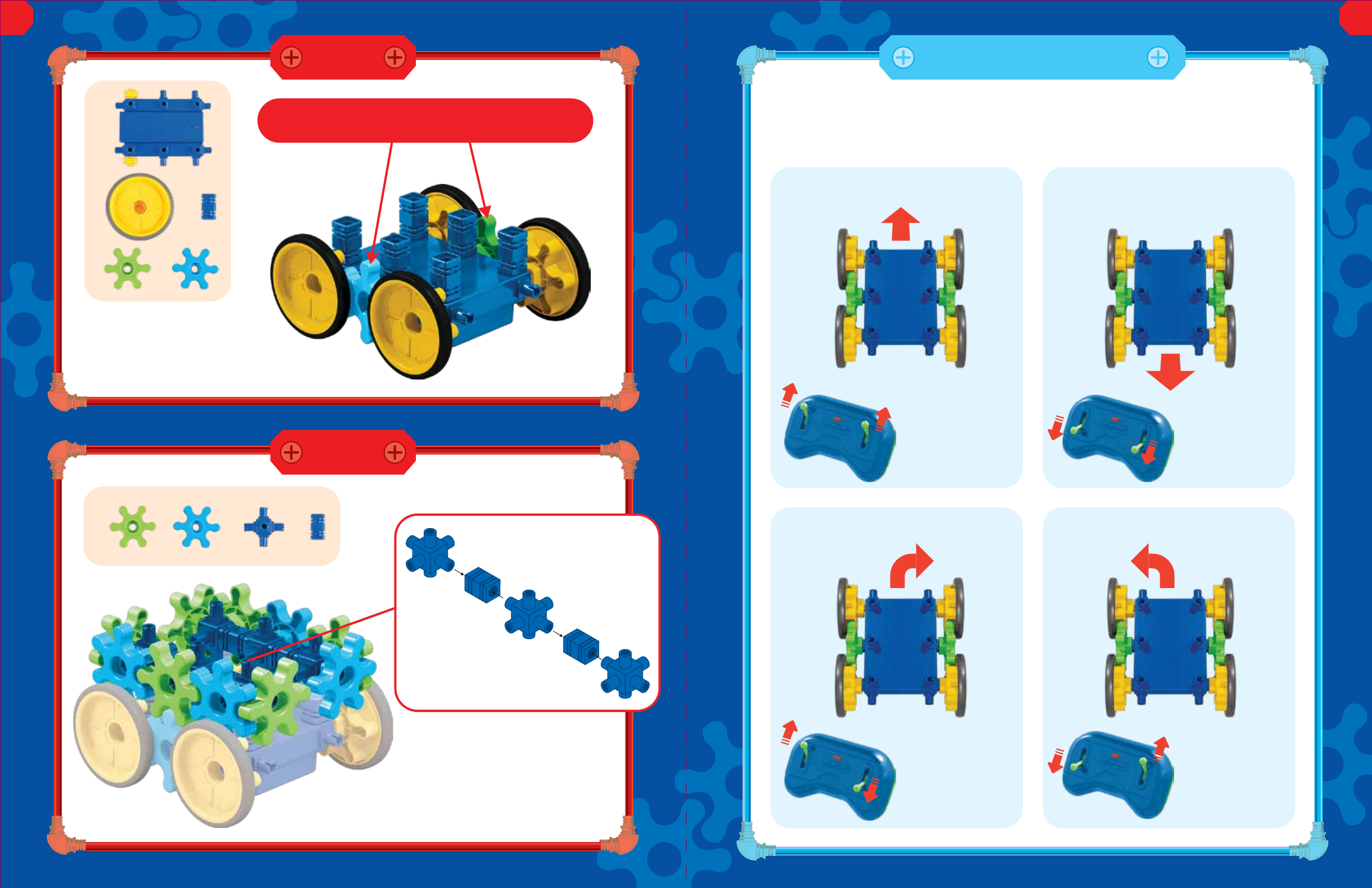
Before you use the wireless remote and motorized base, make sure to
slide the power switches on both components from “off” to “on.”
Move Forward
To move forward,
push both knobs up.
To move backward,
push both knobs
down.
To move to the left,
push the right knob
up and the left
knob down.
To move to the
right, push the left
knob up and the
right knob down.
Move Backward
Move to the Right Move to the Left
USING THE REMOTE CONTROL
These gears will help the wheels move at the same time.
18 3
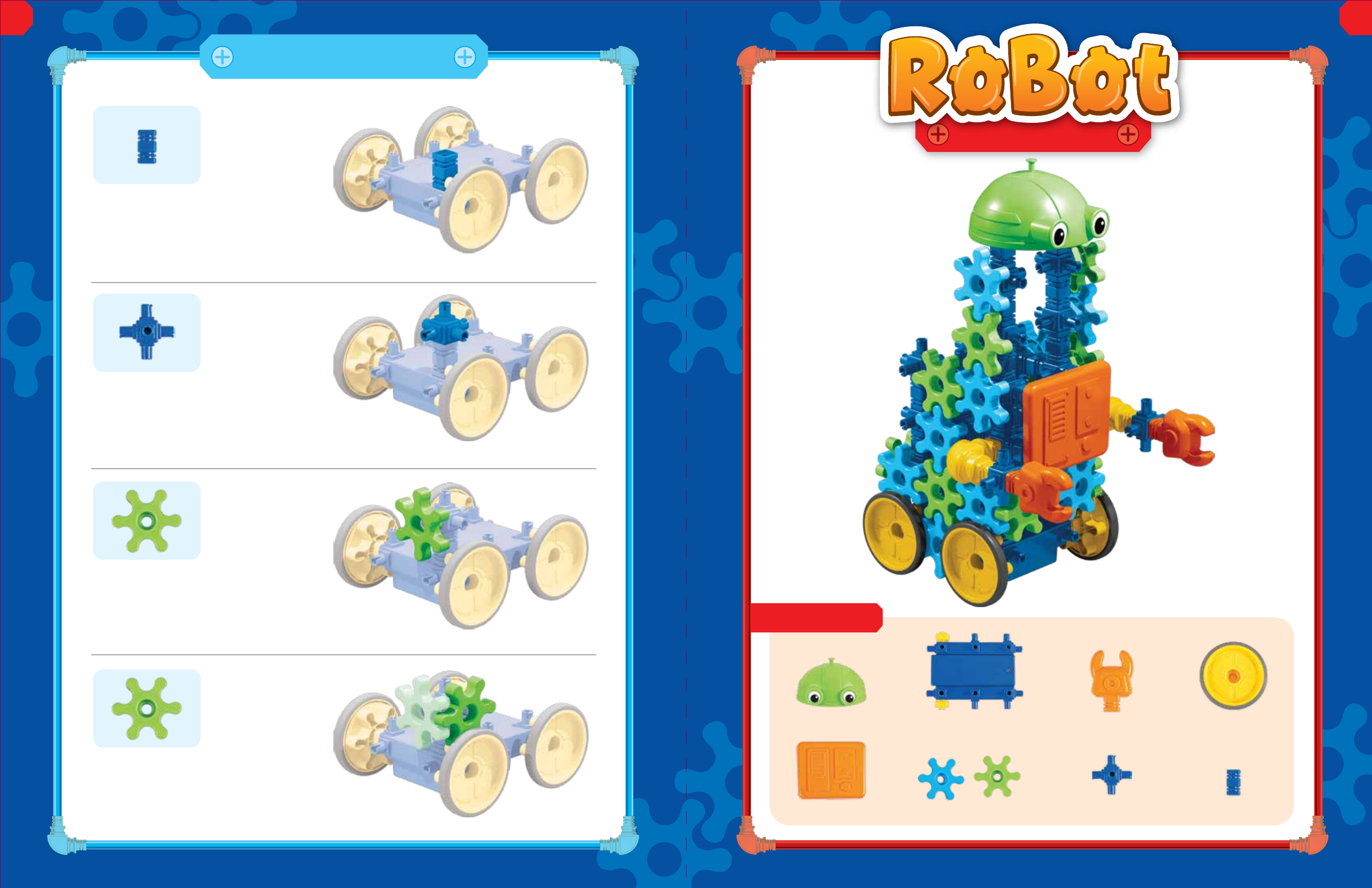
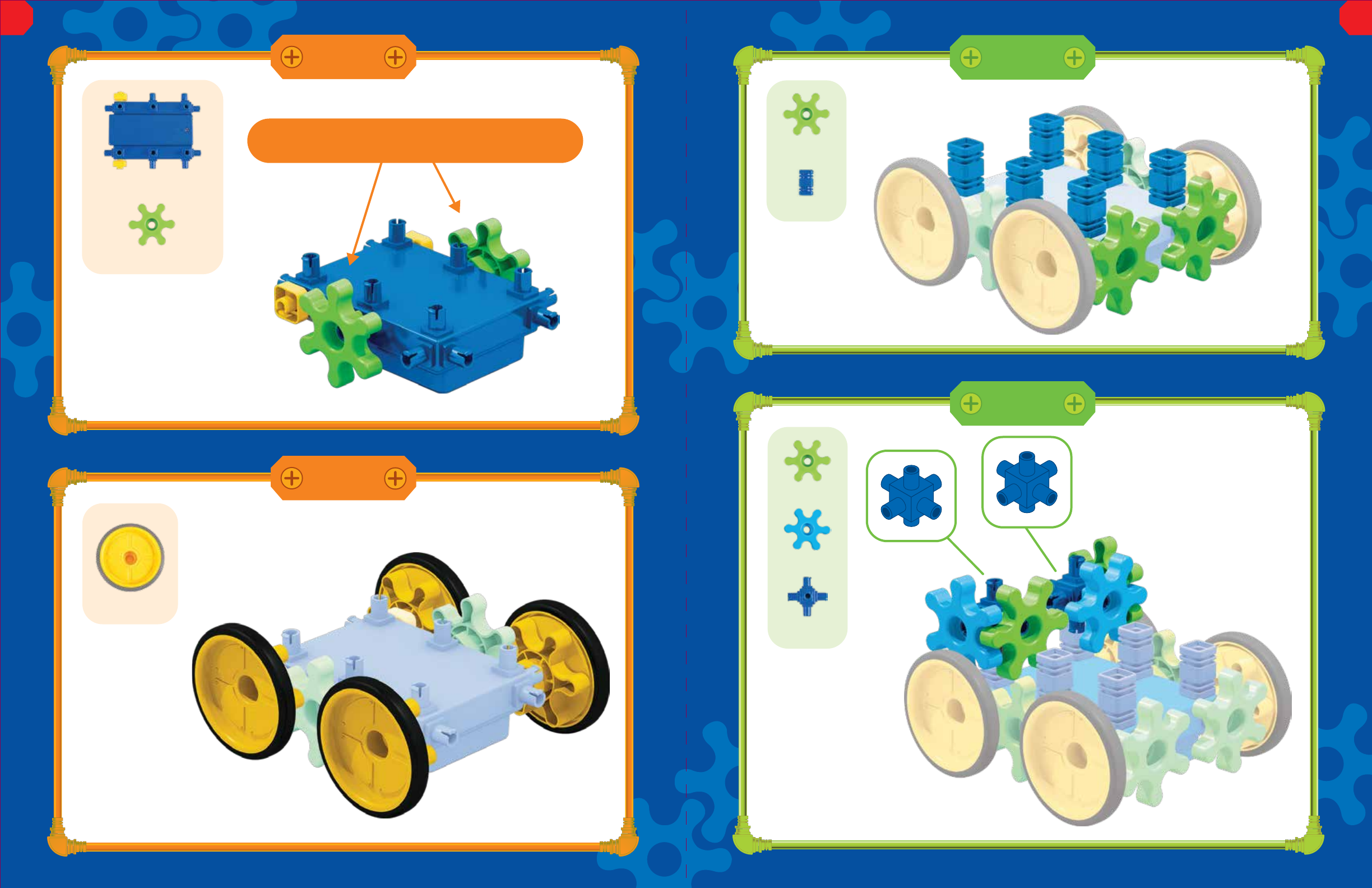
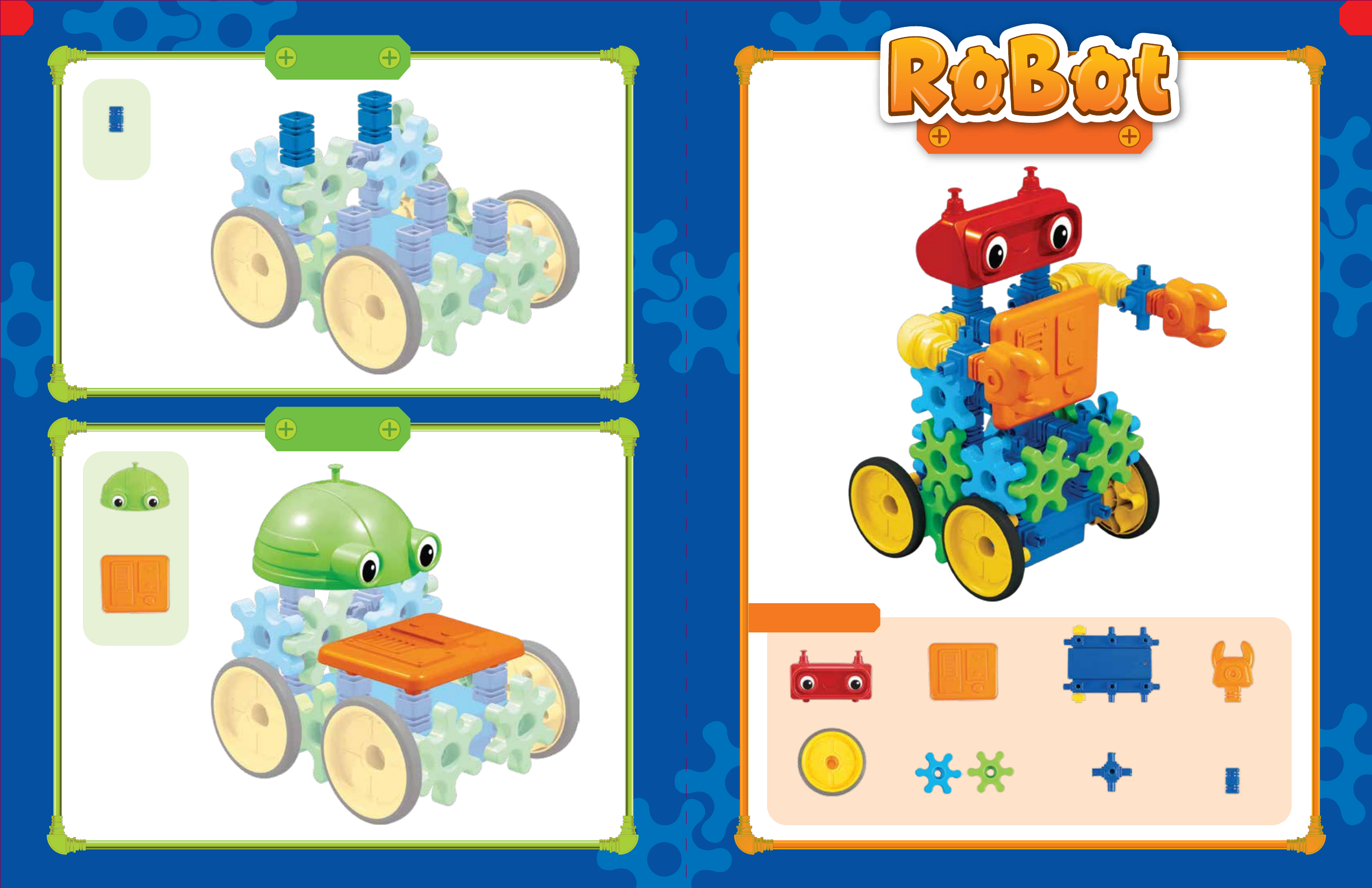
To build on the motorized base, add
a riser to a connection point.
Next, add a connector to a riser.
To build even higher, keep adding
risers and connectors.
To add a gear, attach it to a connector.
To make the gears spin, attach them to
the connectors so that the gears
interlock (with each other).
BUILDING YOUR GEAR-BOT
1
You Will Need:
2 4
1810
1
BUILD #4
8 8
1
417
STEP 5
STEP 6
1
2
2
1
2
1 4
2 6 82
1 1
BUILD #1
You Will Need:
16 5
6
4
4
4
STEP 1
STEP 2
STEP 3
4
1
2
10
4
2
STEP 4
These gears will help the wheels move at the same time.
615
6
2
These gears will help the wheels move at the same time.
1
2
4
2
2
2
STEP 3
STEP 4
STEP 1
STEP 2
14 7
STEP 5
2
1
1
1
You Will Need:
2
47 7 2010
1 1
BUILD #3
STEP 5
STEP 6
813
2
1
2
1
STEP 5
STEP 6
1 2
45 5 146
1 1
You Will Need:
BUILD #2
12 9
These gears will help the wheels move at the same time.
1
1 1
2
2
41
1
STEP 1
STEP 2
STEP 3
STEP 4
4
3
3
8
2
10 11
FCC STATEMENT
1. This device complies with Part 15 of the FCC Rules. Operation is subject to the following two
conditions:
(1) This device may not cause harmful interference, and
(2) This device must accept any interference received, including interference that may cause
undesired operation.
2. Changes or modifications not expressly approved by the party responsible for compliance could
void the user’s authority to operate the equipment.
This equipment has been tested and found to comply with the limits for a Class B digital device,
pursuant to part 15 of the FCC Rules. These limits are designed to provide reasonable protection
against harmful interference in a residential installation. This equipment generates, uses and can
radiate radio frequency energy and, if not installed and used in accordance with the instructions,
may cause harmful interference to radio communications. However, there is no guarantee that
interference will not occur in a particular installation. If this equipment does cause harmful
interference to radio or television reception, which can be determined by turning the equipment off
and on, the user is encouraged to try to correct the interference by one or more of the following
measures:
—Reorient or relocate the receiving antenna.
—Increase the separation between the equipment and receiver.
—Connect the equipment into an outlet on a circuit different from that to which the receiver is
connected.
—Consult the dealer or an experienced radio/ TV technician for help.