Nine Eagles Electronic Technology 2714507001 Eagle Jet User Manual jet english
Shanghai Nine Eagles Electronic Technology Co., Ltd. Eagle Jet jet english
users manual
INDEX
Product Safety Warnings………....................………..2
The Ten Best Things About The Eagle Jet…………4
Tips for Good Maintenance……............................…..5
How to Replace the Propellers……………...............5
Packaging Checklist…………..…...............................6
Illustration of the Eagle Jet & Accessories…...........6
Battery Installation and Recharging……...................7
Pre-Flight Pilot Checks ……........................................8
Flying the Eagle Jet…………………….......................9
Maximise Your Fun………….......................................10
Frequently Asked Questions……….....................…..11
Technical Support….....................................................11
Thank you for investing in hours of fun and flying
action with your new Eagle Jet. We have included
the latest technology and designed the aerodynam-
ics of the Eagle Jet to make sure you have a great
flying experience. We hope you have as much fun
flying as we have had in designing, building and
testing the Eagle Jet.
Best Regards
The Nine Eagle Team
WARNING
CHOKING HAZARD: Small parts.
Not for Children under 3 years.
WARNING
Do not touch the running propeller!
Do not play above someone’s head!
Adult supervision is required!
1 PAGE
PRODUCT SAFETY WARNINGS
General Safety
Read this user guide carefully and use the Eagle
Jet according to these instructions. You should
keep this manual as reference for the future.
Small parts included with this toy may cause
children to choke if parts are swallowed. Children
under 8 years of age should not play with this toy.
This toy must be used under strict adult
supervision. NEVER touch the moving parts and
NEVER fly this toy close to other people or above
their heads. When flying, always keep the jet in
sight so that you can control its flight. Never insert
non-connected wires or cables into the power
socket.
Transmitter, Batteries & Recharging
1. Always turn your jet and transmitter OFF when not
in use. Remove the batteries from the transmitter if
not in use for a long time. For the longest flight time
we recommend new alkaline batteries or fully
charged rechargeable batteries for the transmitter.
2. NEVER charge the Eagle Jet in anyway other than
the way described in these instructions. The transmitter
charger should only be used for the Eagle Jet. NEVER
try to use it to recharge other batteries.
3. Do not try to charge non-rechargeable batteries. Use
only the recommended batteries and ensure all
batteries in the transmitter are of the same type. If use
re-chargeable batteries for the transmitter, please
remove the batteries when recharging, and recharge
them according to the manufacturers instructions.
4. Install the batteries under correct polarity as shown
inside the transmitter casing. The supply terminals are
not to be short-circuited
Extra Safety for Li-PO Batteries
1.Your Eagle Jet is powered by a small rechargeable
Li-PO battery that is fixed inside the aircraft. If not used
correctly, Li-PO batteries can cause fire. Do not throw
batteries into fire or place them close to heat sources.
Also you should keep your batteries in a dry location.
2 PAGE

2.Only recharge the Li-PO battery through the
transmitter and NEVER recharge the batteries in
excess. When re-charging place the Eagle Jet in an
open area with fire proof surroundings. Ensure you
do not leave the Eagle Jet unattended whilst
charging. Do not connect the batteries with other
circuits. Do not use screws and sharp objects to
modify or fasten the batteries. NEVER cut or break
open the batteries.
3.To maintain the life of the battery, re-charge the
batteries at least every 6 months if not in use for a
long time. Turn off the power after use.
Take Care of the Environment
Li-PO batteries should be disposed of by putting the
battery in a safe open area and connecting a
moderate resistance across the cell terminals until
the cell is completely discharged. CAUTION: The
battery may get extremely hot during the discharge.
Once fully discharged immerse the battery in salt
water for several hours and then place it in your
recycle rubbish bin.
This device complies with part 15 of the FCC rules. Opera-
tion is subject to the following two conditions:
1) This device may not cause harmful interference, and
2) This device must accept any interference received, in-
cluding interference that may cause
undesired operation.
NOTE:This equipment has been test and found to comply
with the limits for a Class B digital device, pursuant to part 15
of the FCC rules. These limits are designed to provide
reasonable protection against harmful interference in a resi-
dential installation. This equipment generate, uses and can
radiate radio frequency energy and, if not installed and used
in accordance with the instructions, may cause harmful in-
terference to radio communication. However, there is no
guarantee that interference will not occur in aparticular
installation. If this equipment does cause harmful interfer-
ence to radio or television reception, which can bedetermined
by turning the equipment off and on, the user is encouraged
to try to correct the interference by one or more of the
following measures:
3 PAGE
@ Reorient or relocate the receiving antenna.
@ Increase the separation between the equipment and
receiver.
@ Connect the equipment into an outlet on a circuit differ-
ent from that to which the receiver is connected.
@ Consult the dealer or an experienced radio/TV techni-
cian for help.
WARNING: Changes or modifications to this unit not
expressly approved by the party responsible for com-
pliance could void the user’s authority to operate the
equipment.
WEEE:
When this appliance is out of use, please remove all
batteries and dispose of them separately. Bring electrical
appliances to the local collecting points for waste electri-
cal and electronic equipment. Other components can be
disposed of in domestic refuse.
The Ten Best Things About the Eagle Jet
1. The Eagle Jet is designed for maximum fun and is
simple to use. The two engines give it power to fly
outdoors, and allow you to steer, gain height, do 360
degree loops and fly up to 60m (200 ft) away.
2. The internal, rechargeable Li-PO battery maximizes
your flight time, as it is high powered and low weight.
3. The materials for this toy have been chosen to maxi-
mize durability and the length of its life. The body is virtu-
ally unbreakable. We have crashed them many times in
outdoor testing and they just keep flying.
4. Our digital technology inside the Eagle Jet helps you to
control the speed of the jet accurately
5. You have two channel options. This means you and a
friend can fly two planes at the same time and put the
Eagle Jet through its paces in Fighter Mode.
6. You can easily fine tune your flying performance using
the trim button which is designed and located for easy
use during flight.
This product is in compliance with essential requirements
and other provisions of Directive 1995/5/EC.
4 PAGE
7. Recharging is SAFE and EASY. You do not have to
plug into main supply power. The internal Li-PO bat-
tery re-charges directly from the transmitter.
8. The aerodynamics of the Eagle Jet maximizes its
energy efficiency which gives you longer flight times.
9. LED light beams from each wing tip looks great
and add to the realism of the Eagle Jet.
10. The Eagle Jet is guaranteed to give you maximum
fun. We’ve had great fun designing it.
Tips for Good Maintenance
1. Remove the batteries from the transmitter if you’re
not using it for a long time.
2. Clean your Eagle Jet with a damp clean cloth be-
fore each flying session. A clean smooth aircraft re-
duces drag, increases flight time and flight speeds.
3. Avoid leaving your Eagle Jet in strong sunlight or hot
places such as in a locked motor vehicle.
4. NEVER immerse your Eagle Jet into water as you will
destroy the electronics.
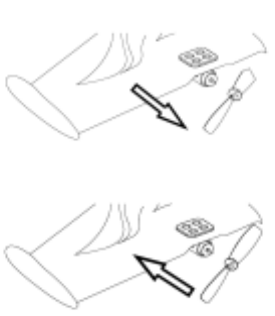
How to Replace the Propellers
Remove the damaged propeller from the Eagle Jet and
install the new propeller facing the correct direction.
(PICTURE 1 AND PICTURE 2)
PICTURE 1
PICTURE 2
5 PAGE
NOTICE:
This procedure must be done by adults as there is a
sharp point on the motor shaft after removing the
propeller.
Packaging Checklist
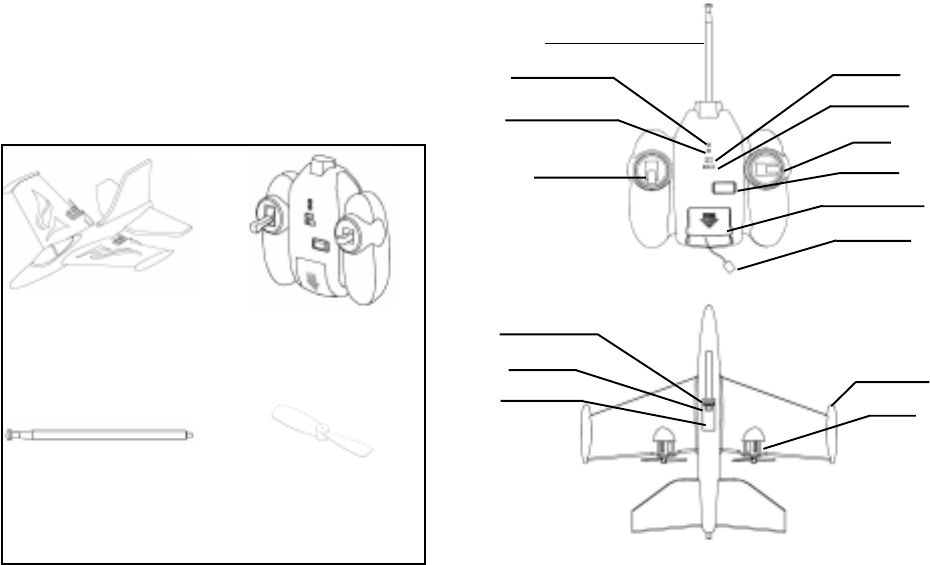
Eagle Jet with internal
Li-PO Battery: 1 pc
Transmitter with
internal Recharger
Lead: 1pc
Antenna: 1pc Spare Propellers:
2pcs
Illustration of the Eagle Jet & Accessories
Power LED Indicator
Charger LED Indicator
Throttle
Power Switch
Channel Switch
Rudder
Trim Button
Charging Box Cover
Charging plug
Recharging Socket
Direction Light
Propeller
Power Switch
Battery Box Cover
6 PAGE
ANT
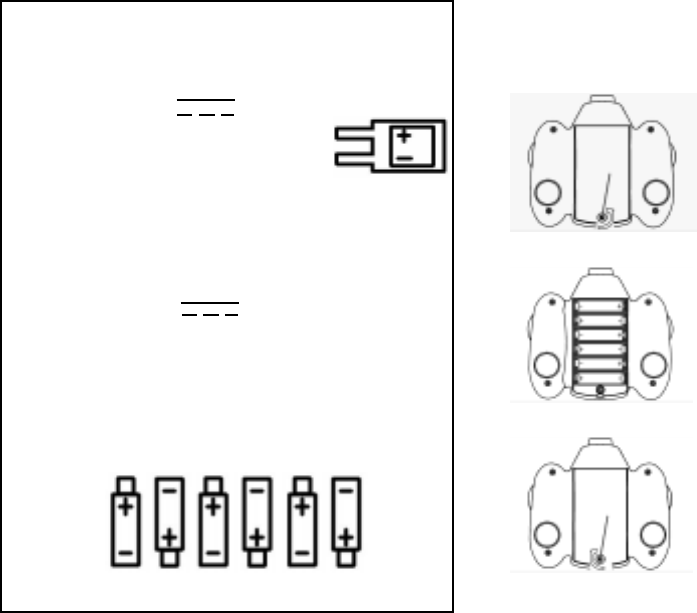
Battery Requirements for the Eagle Jet:
Battery Requirements for the transmitter
Power supply: DC
Power: DC 3.7V, 5.2W
Battery: 1 X 3.7V Li-PO, rechargeable
(included inside the Eagle Jet)
Power supply: DC
Power: DC9V, 2.8W
Battery: 6 x 1.5V, “AA”/LR6/AM3 Alkaline battery (not
included), alternatively you could use 1.5V “AA” re-
chargeable batteries which are more environmentally
friendly and a less costly option.
Battery Installation and Recharging
1. Use the screwdriver to turn
anti-clockwise to open the bat-
tery cover.(PICTURE 1)
PICTURE 1
PICTURE 3
PICTURE 2
2. Install 6pcs of “AA” alkaline
batteries with correct
polarities.(PICTURE 2)
3. Close the battery cover by
screwing it clockwise with the
screwdriver.(PICTURE 3)
7 PAGE
Recharge the jet
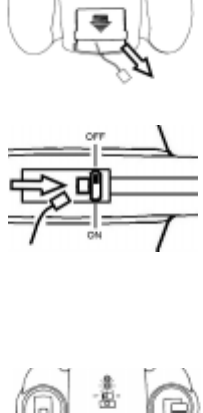
1. Pull open the recharge-
able door of the transmitter
and take out the recharge-
able wire.(PICTURE 1) PICTURE 1
2. Turn off the jet; insert the
recharging plug into the
socket.(PICTURE 2)
PICTURE 2
3. The green LED indicator will
be bright when recharging,
when the battery is full, the
green LED indicator will be
turned off automatically, then
remove the plug from the
socket.(PICTURE 3)
PICTURE 3
4. It will take 30~40 minutes for recharging, and the jet
can fly 4~6 minutes after recharging.
5. If the batteries in the transmitter are exhausted, re-
charging may take longer.
Pre-Flight Pilot Checks
1. Screw the antenna into the transmitter tightly.
2. Switch the transmitter and Eagle Jet to the same
channel.
3. First turn on the transmitter and then the jet, the LED
light will flash.
4. Hold the body of your Eagle Jet and point the tail to-
wards you.
5. Extend the antenna fully.
1 PAGE
8 PAGE
Flying the Eagle Jet
1. Push the throttle forward slightly to make the jet fly with
5~10 degree angle upwards, throw it out slightly.
2. When the jet flies out, adjust the throttle to make the jet
fly stable.
3. Push the rudder to the left, the jet will turn left; then
push the rudder to the right, the jet will turn right.
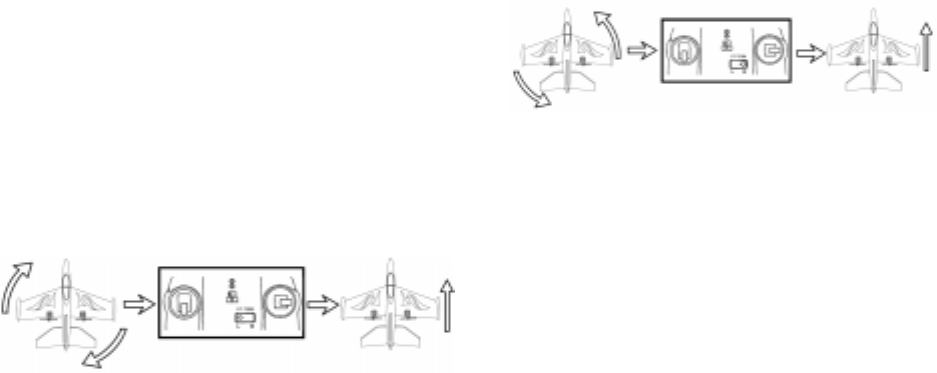
4. When the jet rotates clockwise, press the left side of
the Trim button repeatedly until the jet stops rotating and
can fly straight.(PICTURE 1)
PICTURE 1
5. When the jet rotates anticlockwise, press the right
side of the Trim button repeatedly until the jet stops
rotating and can fly straight.(PICTURE 2)
PICTURE 2
6. Once the Eagle Jet flies stable, you can push the
throttle forward slowly to gain height.
7. Once the Eagle Jet is 8m (24ft) or more high, you
can increase speed and the aircraft will do 360 de-
gree loops. You only need to pull the throttle back
slowly for the Eagle Jet to descend. Or if the Jet is half
engine at 8m height or more high, you can pull down
the throttle to make the jet fall and then push the throttle
to the utmost quickly, then your jet will do a 360 de-
gree loop.
9 PAGE
8. If your jet flies in deflection way and the trim button
is confused, you only need to turn off the transmitter
and then restart it, your jet will fly normally.
Notice:
If the propeller of the jet is blocked from spinning,
the jet will switch to automatic protection status.
The motor will stop working to avoid burnout. Reset
the Power switch or wait for 5 seconds for your
Eagle Jet to work again.
Maximise Your Fun
1. Find a large open outdoor location such as a park
or sporting field. Places with grassland are good to
minimize damage when landing. The Eagle Jet is
best flown on calm days or in light wind. It can be
flown in moderate breezes, but tends to be carried by
the wind and can be carried beyond radio control
range. Trim is difficult to use in windy conditions.
2. You can also fly your jet indoor, please notice to chose
a larger space to fly.
3. Avoid flying near power lines, or during rain or snow, as
electromagnetism and water are not good for the Eagle
Jet’s electronics.
10 PAGE

Frequently Asked Questions
Technical Support
If you have any other questions feel free to contact us at support@nineeagle.com . We also have another FAQ Page,
updated manuals and safety guidelines on our website www.nineeagle.com.
FAQ Cause Solution
Propeller doesn’t work
Suddenly stops or falls
during flight
No reaction on the jet
Failure on controlling
Short R/C
--Power off
--Low voltage
--low voltage
--same frequency toy being played
--Mistake channel selection of the
transmitter
--Power off
--a toy of same frequency is played at
the same time
--Fly out the controlling scope
--There’re same frequency products be-
ing played
--Antenna not fully extended
--Turn on the power
--Re-charge the batteries
--Re-charge the batteries
--find another place without interference
--Reset the correct channel
--Turn on the power
--Use different frequency toys or find other place
to play this toy at least 60m (200ft) away
--Please fly within 60m (200ft)
--Use different frequency toys or find other place
to play this toy at least 60m (200ft) away
--Extend the antenna fully
11 PAGE