Nix Sensor NIXMINI001 High resolution, wireless, portable color sensor User Manual Regulatory Manual

Nix Sensor Ltd High resolution, wireless, portable color sensor Regulatory Manual

Contents

Regulatory Manual

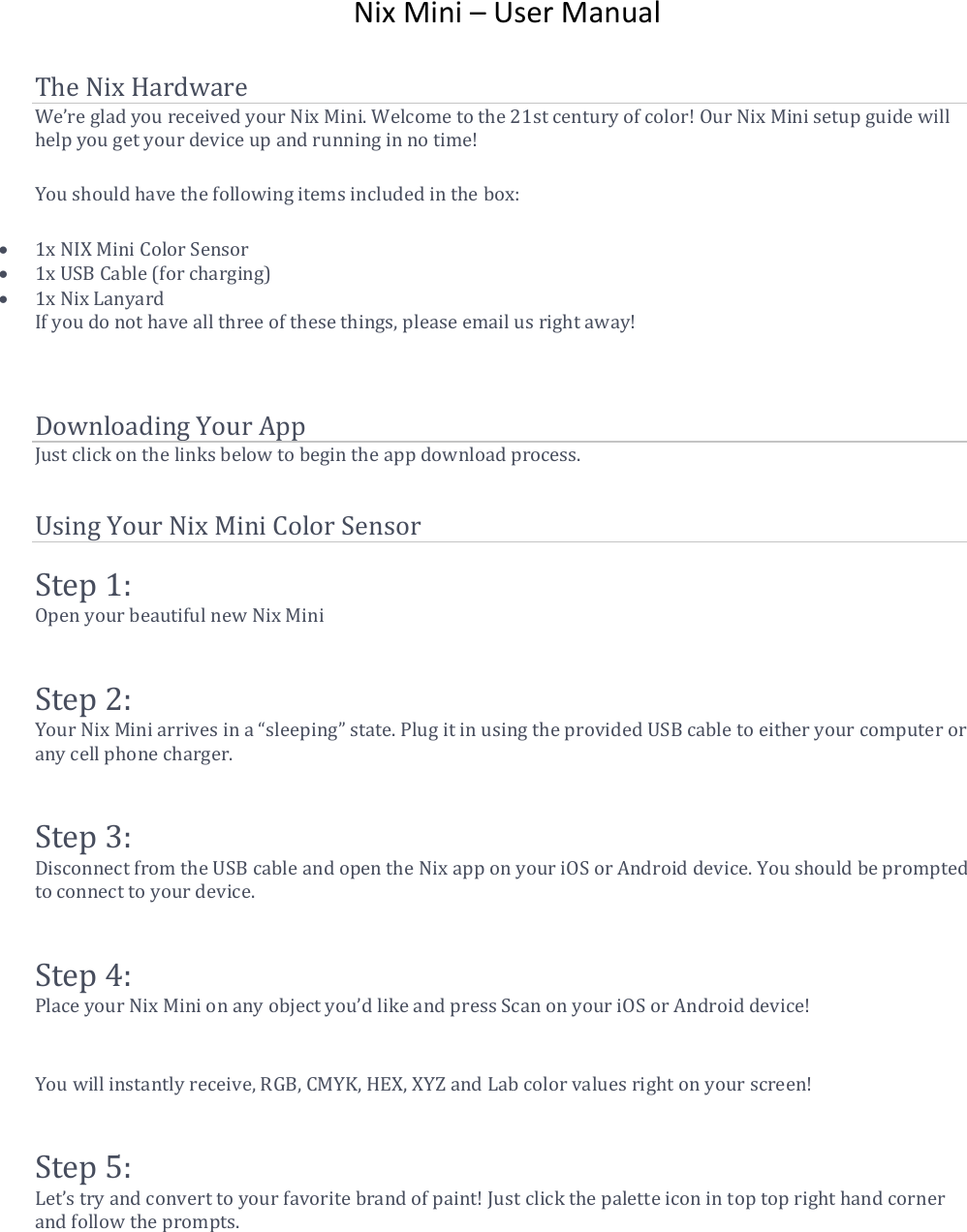
Nix Mini – User Manual The Nix Hardware We’re glad you received your Nix Mini. Welcome to the 21st century of color! Our Nix Mini setup guide will help you get your device up and running in no time! You should have the following items included in the box: • 1x NIX Mini Color Sensor • 1x USB Cable (for charging) • 1x Nix Lanyard If you do not have all three of these things, please email us right away!  Downloading Your App Just click on the links below to begin the app download process.   Using Your Nix Mini Color Sensor Step 1:  Open your beautiful new Nix Mini Step 2: Your Nix Mini arrives in a “sleeping” state. Plug it in using the provided USB cable to either your computer or any cell phone charger.  Step 3: Disconnect from the USB cable and open the Nix app on your iOS or Android device. You should be prompted to connect to your device. Step 4: Place your Nix Mini on any object you’d like and press Scan on your iOS or Android device!  You will instantly receive, RGB, CMYK, HEX, XYZ and Lab color values right on your screen! Step 5: Let’s try and convert to your favorite brand of paint! Just click the palette icon in top top right hand corner and follow the prompts.
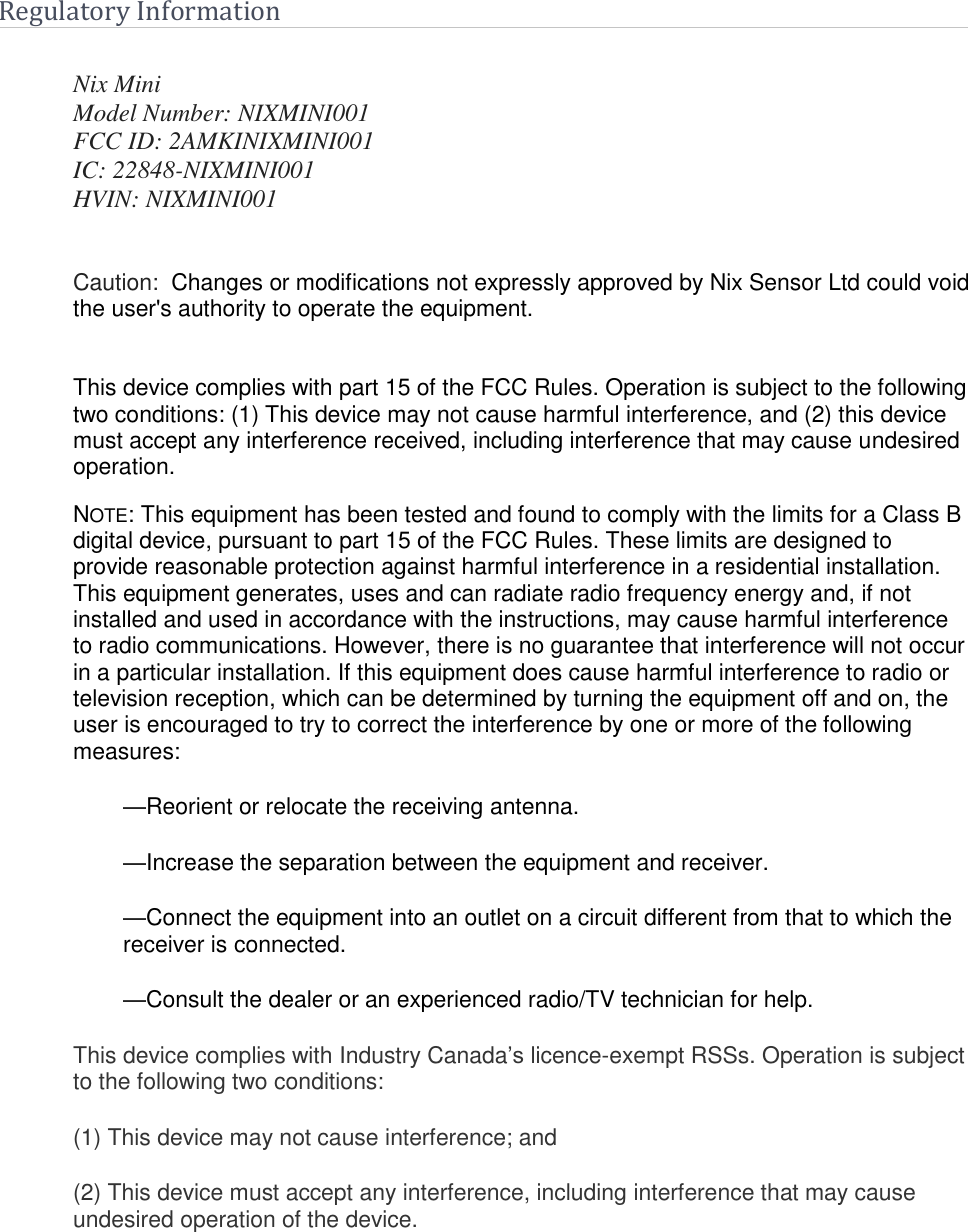
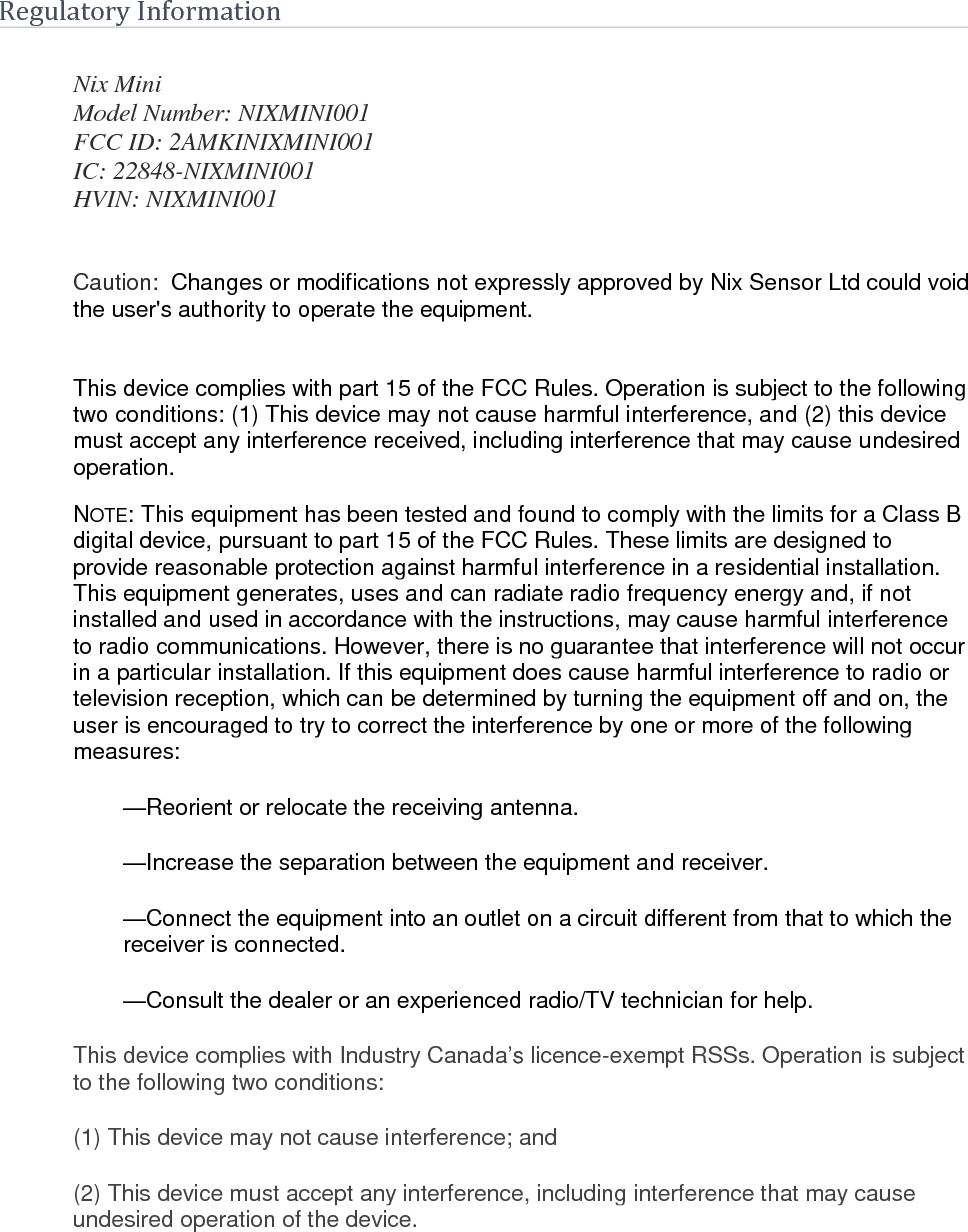
   Regulatory Information  Nix Mini Model Number: NIXMINI001 FCC ID: 2AMKINIXMINI001 IC: 22848-NIXMINI001 HVIN: NIXMINI001   Caution:  Changes or modifications not expressly approved by Nix Sensor Ltd could void the user's authority to operate the equipment.     This device complies with part 15 of the FCC Rules. Operation is subject to the following two conditions: (1) This device may not cause harmful interference, and (2) this device must accept any interference received, including interference that may cause undesired operation. NOTE: This equipment has been tested and found to comply with the limits for a Class B digital device, pursuant to part 15 of the FCC Rules. These limits are designed to provide reasonable protection against harmful interference in a residential installation. This equipment generates, uses and can radiate radio frequency energy and, if not installed and used in accordance with the instructions, may cause harmful interference to radio communications. However, there is no guarantee that interference will not occur in a particular installation. If this equipment does cause harmful interference to radio or television reception, which can be determined by turning the equipment off and on, the user is encouraged to try to correct the interference by one or more of the following measures: —Reorient or relocate the receiving antenna. —Increase the separation between the equipment and receiver. —Connect the equipment into an outlet on a circuit different from that to which the receiver is connected. —Consult the dealer or an experienced radio/TV technician for help. This device complies with Industry Canada’s licence-exempt RSSs. Operation is subject to the following two conditions: (1) This device may not cause interference; and (2) This device must accept any interference, including interference that may cause undesired operation of the device.
  For Portable Use: This equipment complies with FCC/ISED radiation exposure limits set forth for an uncontrolled environment and meets the FCC radio frequency (RF) Exposure Guidelines and RSS-102 of the ISED radio frequency (RF) Exposure rules. This equipment has very low levels of RF energy that are deemed to comply without testing of specific absorption ratio (SAR).

Navigation menu