OKAYO Electronics BX-501701 Bluetooth Chip User Manual
OKAYO Electronics Co., Ltd. Bluetooth Chip
User Manual
BX3.0 Bluetooth Receiver
User Manual
07/13
+
+
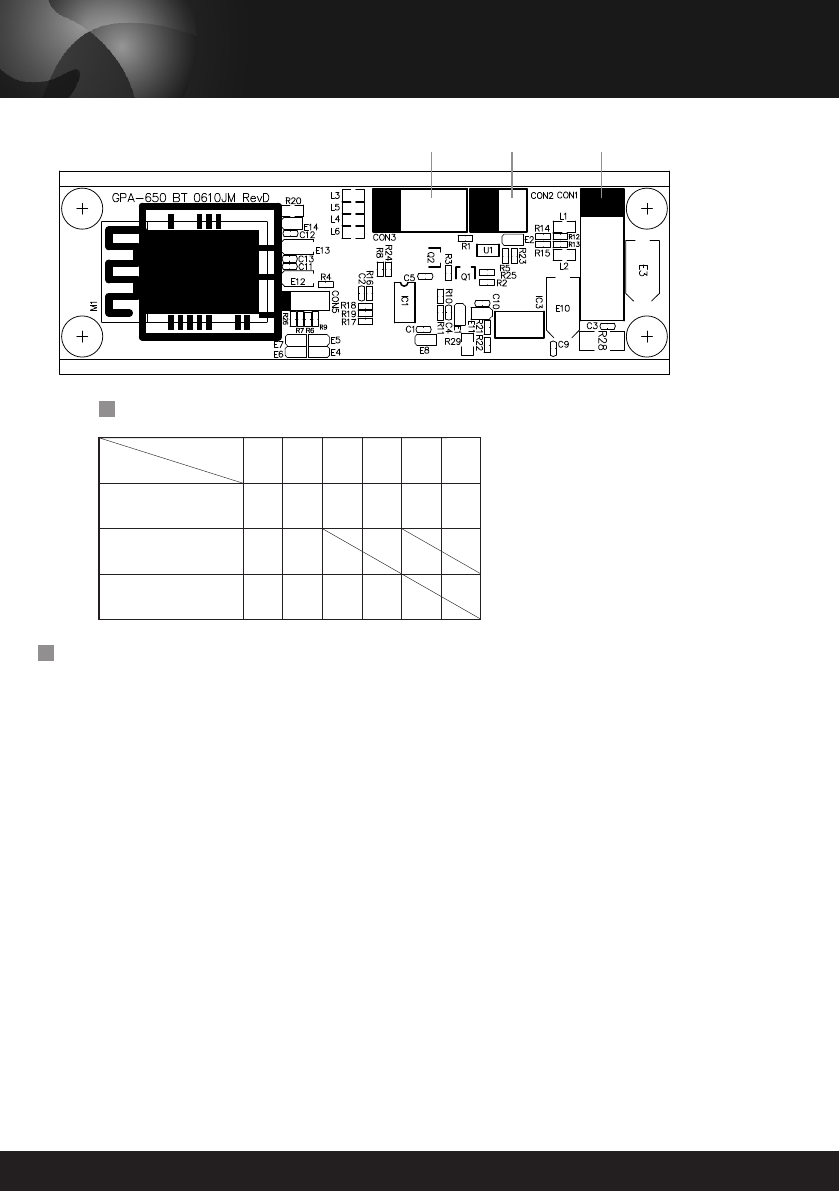
CON1
(Power & AF OUT)
CON2
(LED)
CON3
(LED & Power S.W)
Pin 1
AF
Connector
-
-
23 4 56
GND AF GND N.C +12V
S.W PW
CON1CON2CON3
Pin Assignment
Operation
6. When Bluetooth connection is out of range, it could be relinked automatically if users
get back to service range shortly. However, it depends on applied OS platform of the
smartphone. In some cases, you get to manually connect Bluetooth again.
5. During Bluetooth connection, it will stop audio playback when a call is made to your
smartphone . When the call is finished, Bluetooth will be relinked automatically and
audio files will be played.
4. When the pairing is done successfully, it will come out with a prompt tone again. The
indicators will light steady and the music will get from CON1 (AF).
3. When in pairing mode, activate Bluetooth connection on your smartphone or any
target device you want to do so. Find a device name of “okayo GPA” on pairing list and
get your smartphone connected.
1. Short the Power S.W (CON3, Pin3,4) to activate Bluetooth function.
2. A prompt tone will come out and the PWR indicator (CON3) / LINK indicator (CON2)
will flash as a sign of pairing in action.

※Specifications are subject to change
BX3.0 Bluetooth Receiver
User Manual
07/13
FEDERAL COMMUNICATIONS COMMISSION INTERFERENCE STATEMENT
This equipment has been tested and found to comply with the limit s for a Class B
digital device, pursuant to Part 15 of the FCC Rules. These limits are designed to
provide reasonable protection against harmful interference in a residential installation.
This equipment generates, uses and can radiate radio frequency energy and, if not
installed and used in accordance with the instructions, may cause harmful
interference to radio communications. However, there is no guarantee that
interference will not occur in a particular installation. If this equipment does cause
harmful interference to radio or television reception, which can be determined by
turning the equipment of f and on, the user is encouraged to try to correct the
interference by one or more of the following measures:
-- Reorient or relocate the receiving antenna.
-- Increase the separation between the equipment and receiver.
-- Connect the equipment into an outlet on a circuit different from that to which the
receiver is connected.
-- Consult the dealer or an experienced radio/TV technician for help.
CAUTION:
Any changes or modifications not expressly approved by the p arty responsible for
compliance could void the user's authority to operate the equipment.
This device complies with part 15 of the FCC Rules. Operation is subject to the following two
conditions: (1) This device may not cause harmful interference, and (2) this device must accept any
interference received, including interference that may cause undesired operation.
FCC RF Radiation Exposure Statement:
1. This Transmitter must not be co-located or operating in conjunction with any other antenna or
transmitter.
2. This equipment complies with FCC RF radiation exposure limits set forth for an uncontrolled
environment.
This equipment should be installed and operated with a minimum distance of 20 centimeters
between the radiator and your body.
Label for end product must include “Contains FCC ID: NTMBX-501701” or “A RF transmitter
inside, FCC ID: NTMBX-501701”.