Ogemray Technology WF55724MX WiFi Module User Manual
Shenzhen Ogemray Technology Co.,Ltd WiFi Module Users Manual
Users Manual

Information in this document is subject to change without prior notice. Page 1 of 13
IEEE 802.11 a/b/g/n
300Mbps WiFi Module
Product Specifications
Model: GWF-4M02
Version: 1.1
2015-12-15
Information in this document is subject to change without prior notice. Page 2 of 13
1. Introduction
The GWF-4M02 is a WLAN module supporting IEEE 802.11a/b/g/n standards with 7-pin or 4-pin
connector supporting USB2.0 interface. This is a small form factor and low cost compact WLAN module
designed for the wireless connectivity. This module operates in 2.4GHz and 5GHz dual band frequency ,
it applies a highly integrated MAC/BBP and RF/PA/LNA single chip RT5572 with 300Mbps PHY rate
supporting. It fully complies with IEEE802.11n draft 3.0 and IEEE802.11a/b/g feature.
2. Features
20MHz/40MHz bandwidth, support 2T2R mode in 2.4GHz and 5GHz .
802.11a: 6, 9, 12, 24, 36, 48, 54Mbps; 802.11b: 1, 2, 5.5, 11Mbps; 802.11g: 6, 9, 12, 24, 36, 48,
54Mbps ; 802.11n: Support PHY rate up to 300Mbps.
Support Soft-AP; QoS-WMM, WMM-PS; WiFi Direct;
WPS pin, LED indicates WiFi link & activity;
Multiple BSSID support; Power management.
3. Product Information
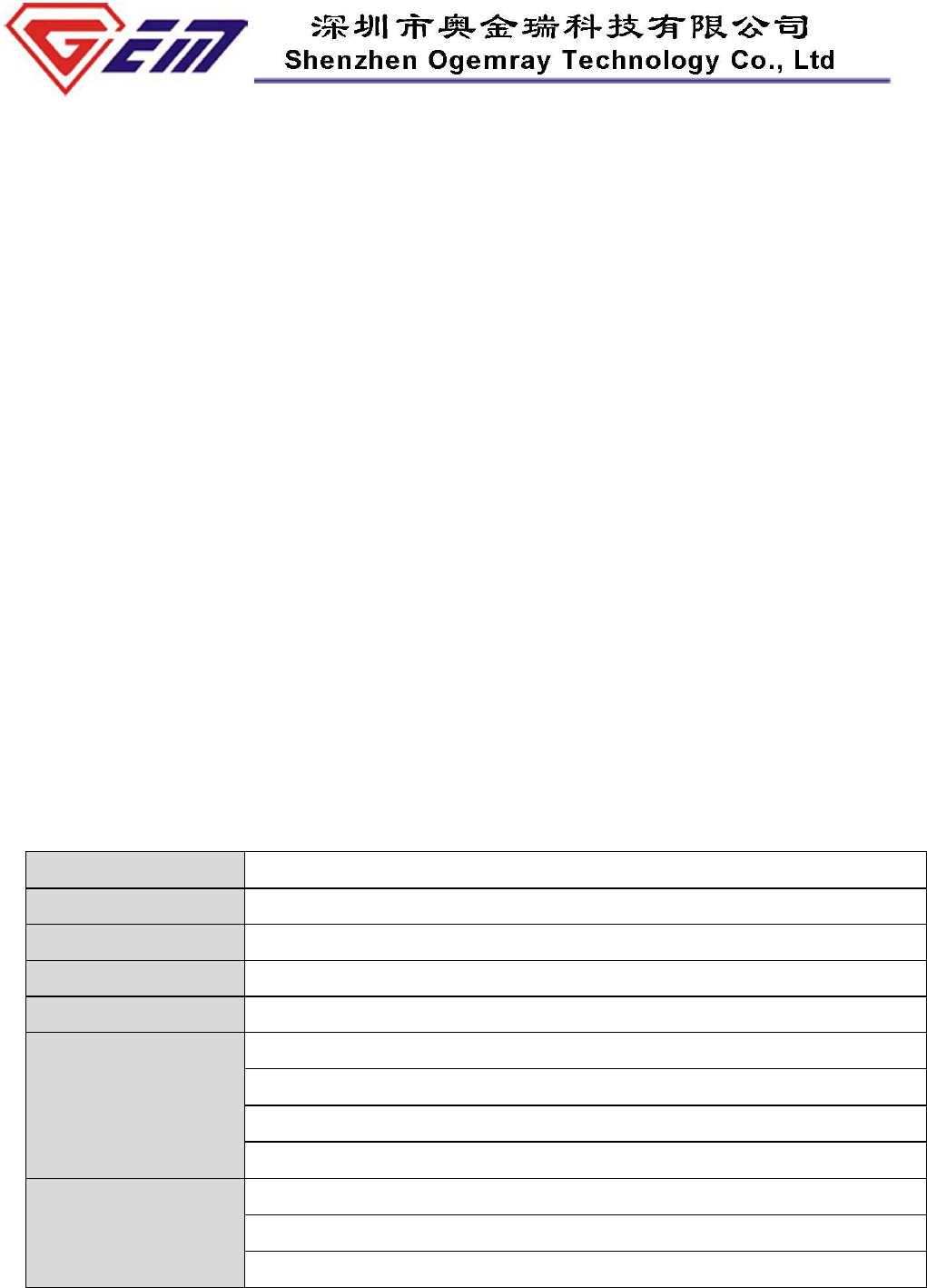
3.1 Specification (Typical Value):
Main Chipset Ralink RT5572N
Operation Frequency 2412~2483.5MHz,4.915~5.825GHz (Different country adopts different frequency)
Protocols 802.11b: CCK, QPSK, BPSK, 802.11a/g/n: OFDM
Antennas Two outputs to two dual band external antennas
Security WEP 64/128, WPA/WPA2/WAPI, TKIP/AES; WPS/WPS2:PIN,PBC
Typical Transmit
Power
(Antenna feed point)
802.11b (CCK) 11Mbps: 17+/-1dBm
802.11g (OFDM) 54Mbps: 15+/-1dBm
802.11a (OFDM) 54Mbps: 11+/-1.5dBm
802.11n (HT20@MCS7), 13+/-1dBm; (HT40@MCS7),12+/-1dBm
Receive Sensitivity
(Antenna feed point)
802.11b: -88+/-1dBm; 802.11g: -73+/-1dBm
802.11n (HT20), -71+/-1dBm; 802.11n (HT40), -68+/-1dBm
802.11a: -70+/-1dBm
Information in this document is subject to change without prior notice. Page 3 of 13
Operating
Voltage/current
5.0VDC ± 5% ; <350mA @802.11n,HT40 ; or 3.3VDV± 5% <500mA, @802.11n,HT40
5.0VDC ± 5% ; <450mA @802.11a,HT40 ; or 3.3VDV± 5% <630mA, @802.11a,HT40
Host interface USB 2.0
Interface 7-pin or 4-pin, 2.0mm , or 4-pin 2.54 mm pitch pin header
Dimensions/Weight 48x18mm / 3.6g
3.2 Block Diagram
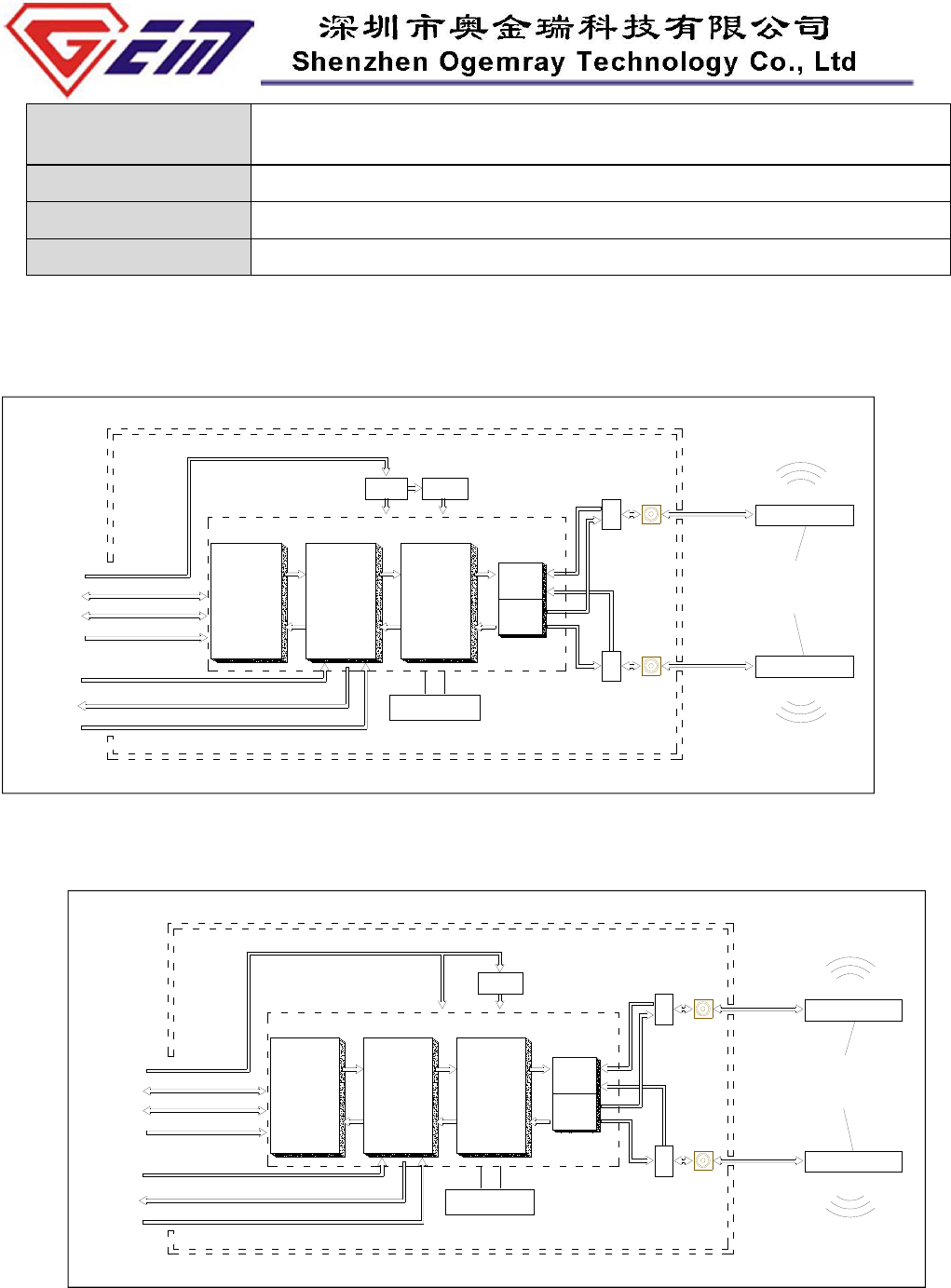
Figure 1: System Block Diagram of 7 pin GWF-4M02 5.0V WLAN Module
Figure 2: System Block Diagram of 7 pin GWF-4M02 3.3V WLAN Module
RF
Receiver
RF
Transmitter
Baseband
MAC/
Packet
Buffer/
Encrption
Engine
DM(DATA-) USB
Interface
VCC(5.0V)
DP(DATA+)
GND
RT5572
LNA
USB
Interface
External antennas
2.412~2.4835GHz
4.915~5.825 GHz
Antenna
Antenna
Dual Band
40MHz XTAL
TX CONTROL
EXTERNAL LED
WPS CONTROL
PA
2.4G/5GHz
Duplexer
2.4G/5GHz
Duplexer
3.3V/1.5V 5V/3.3V
RF
Receiver
RF
Transmitter
Baseband
MAC/
Packet
Buffer/
Encrption
Engine
DM(DATA-) USB
Interface
VCC(3.3V)
DP(DATA+)
GND
RT5572
LNA
USB
Interface
External antennas
2.412~2.4835GHz
4.915~5.825 GHz
Antenna
Antenna
Dual Band
40MHz XTAL
TX CONTROL
EXTERNAL LED
WPS CONTROL
PA
2.4G/5GHz
Duplexer
2.4G/5GHz
Duplexer
3.3V/1.5V
Information in this document is subject to change without prior notice. Page 4 of 13
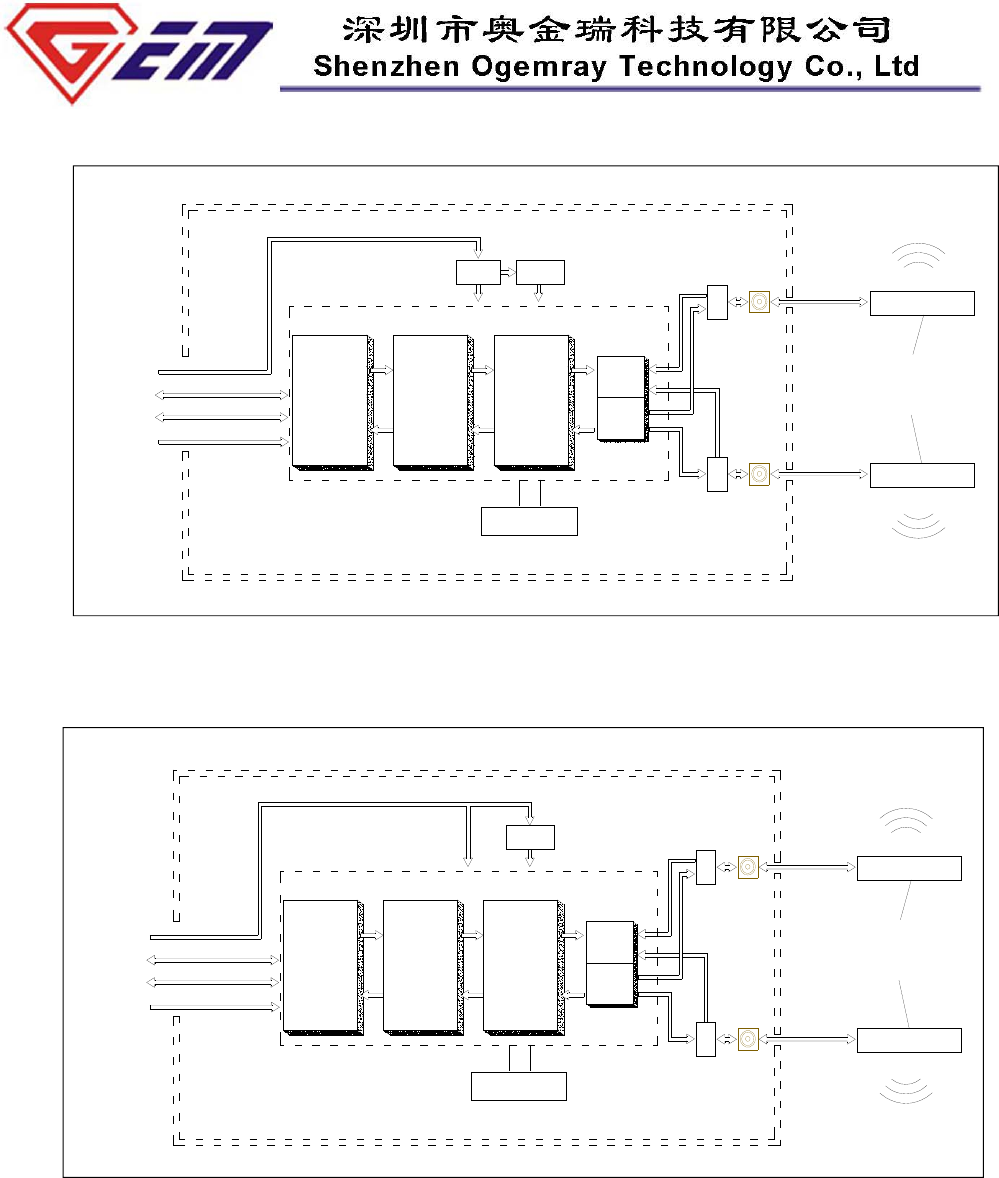
Figure 3: System Block Diagram of 4 pin GWF-4M02 5.0V WLAN Module
Figure 4: System Block Diagram of 4 pin GWF-4M02 3.3V WLAN Module
RF
Receiver
RF
Transmitter
Baseband
MAC/
Packet
Buffer/
Encrption
Engine
DM(DATA-) USB
Interface
VCC(5.0V)
DP(DATA+)
GND
RT5572
LNA
USB
Interface
External antennas
2.412~2.4835GHz
4.915~5.825 GHz
Antenna
Antenna
Dual Band
40MHz XTAL
PA
2.4G/5GHz
Duplexer
2.4G/5GHz
Duplexer
3.3V/1.5V 5V/3.3V
RF
Receiver
RF
Transmitter
Baseband
MAC/
Packet
Buffer/
Encrption
Engine
DM(DATA-) USB
Interface
VCC(3.3V)
DP(DATA+)
GND
RT5572
LNA
USB
Interface
External antennas
2.412~2.4835GHz
4.915~5.825 GHz
Antenna
Antenna
Dual Band
40MHz XTAL
PA
2.4G/5GHz
Duplexer
2.4G/5GHz
Duplexer
3.3V/1.5V
Information in this document is subject to change without prior notice. Page 5 of 13
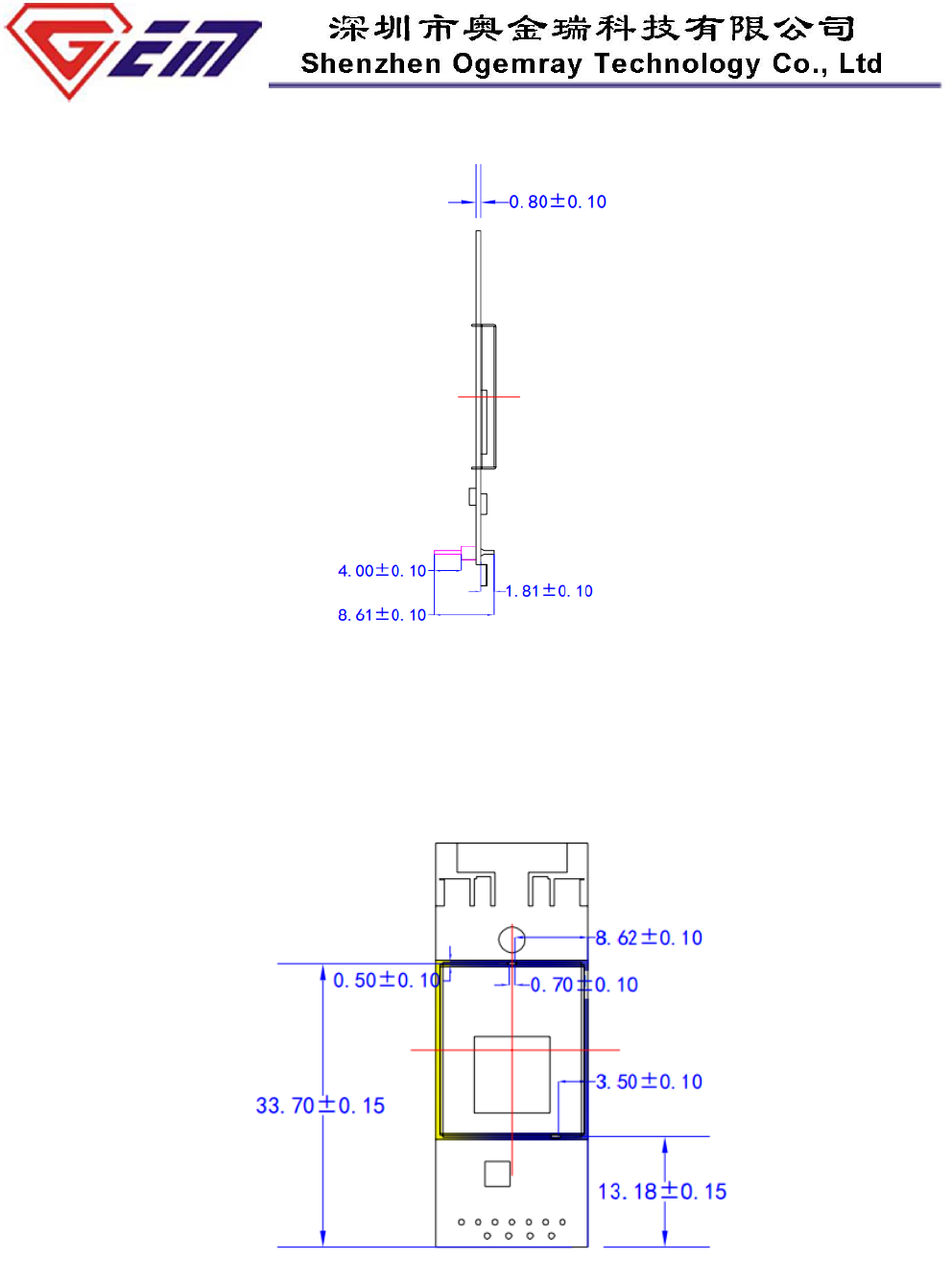
3.3 Mechanical Information
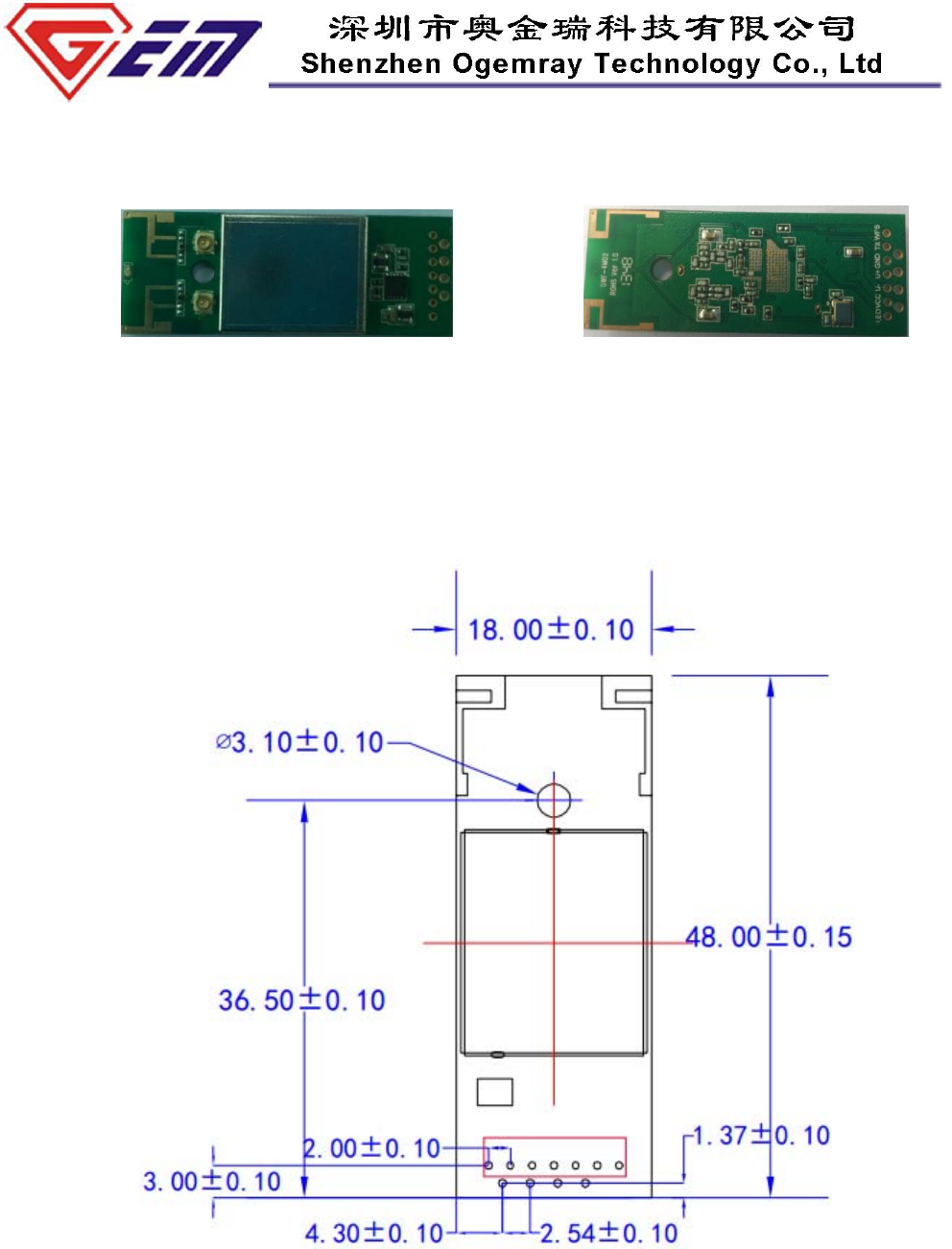
3.3.1 OUTLINE and Connection Interface (Pictures are for reference only)
Figure 5: 5.0VDC power input module.
Information in this document is subject to change without prior notice. Page 6 of 13
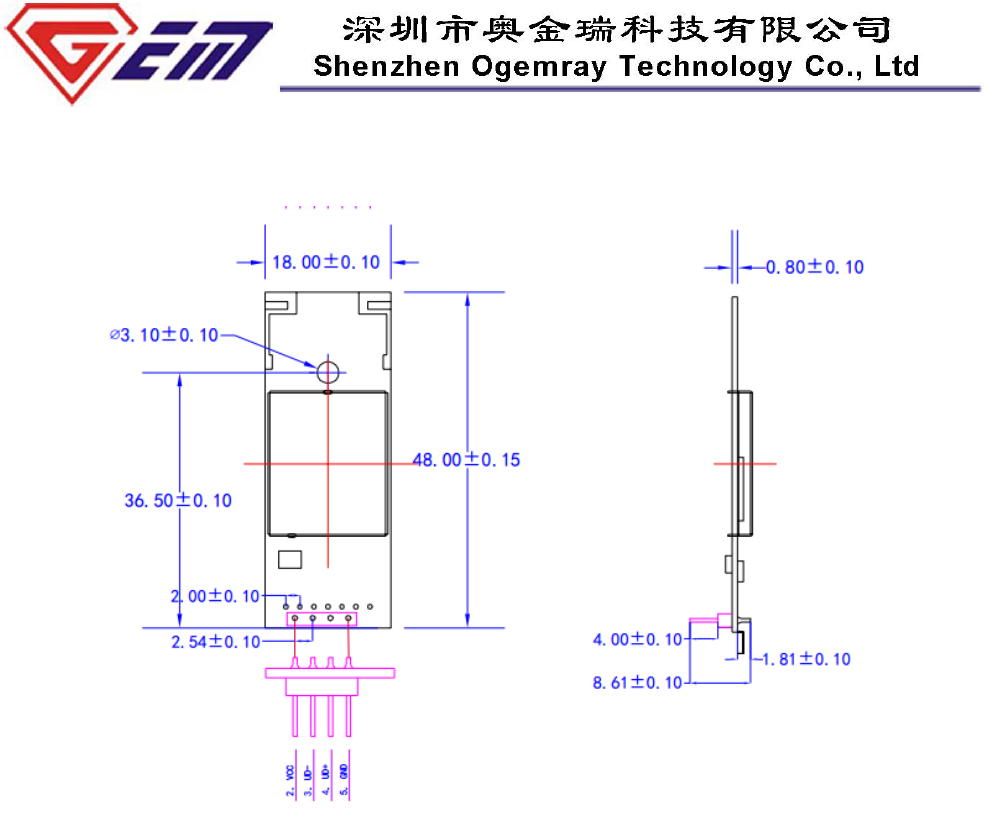
RF connector at bottom
Figure 6: General Dimensions
RF connector at top
Figure 7: General Dimensions
Information in this document is subject to change without prior notice. Page 7 of 13
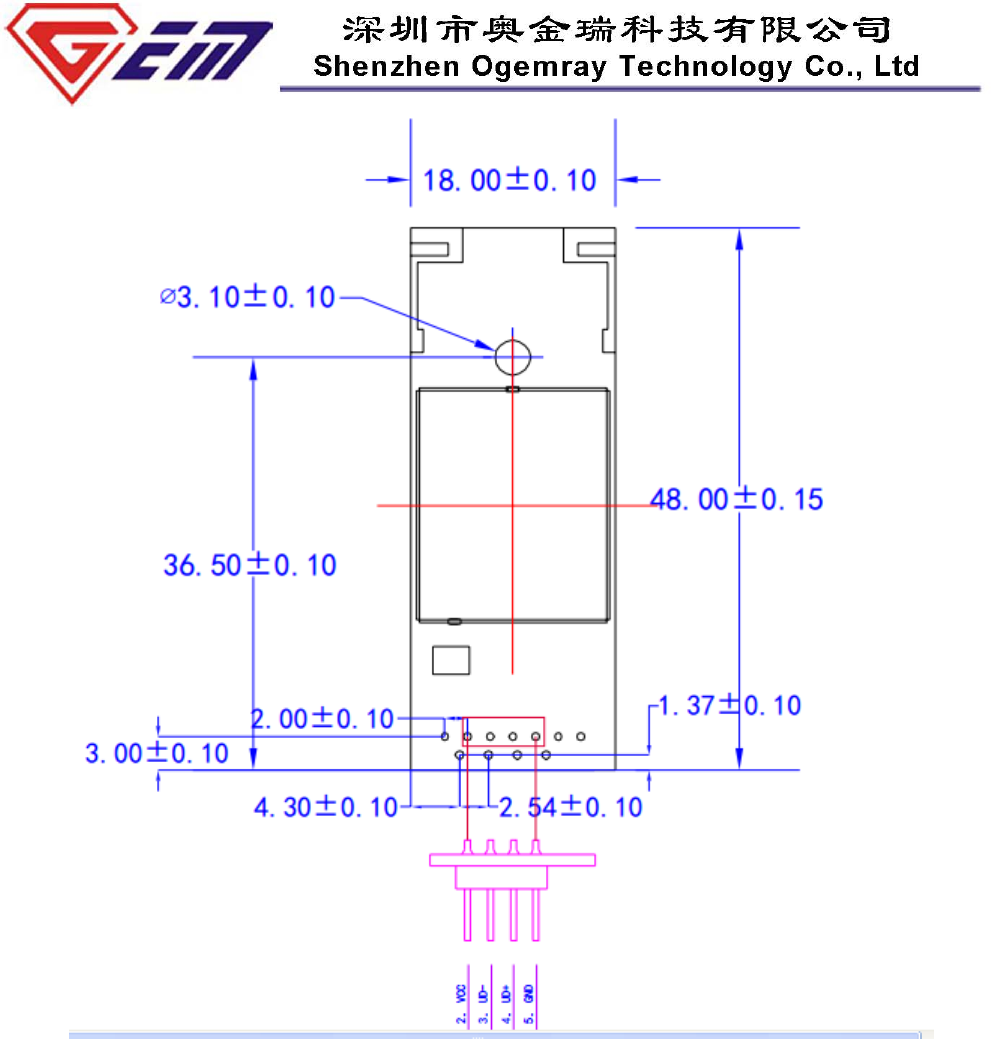
3.3.1.1 4-pin 2.54 mm pitch pin header.
a). Model: GWF-4M02-50-T-2.54-4-1; GWF-4M02-33-T-2.54-4-1
Figure 8:Bottom side 4–Pin 2.54mm pitch pin header interface.
3.3.1.2 4-pin 2.0 mm pitch pin header
a). Model: GWF-4M02-50-T-2.0-4-1; GWF-4M02-33-T-2.0-4-1
Information in this document is subject to change without prior notice. Page 8 of 13
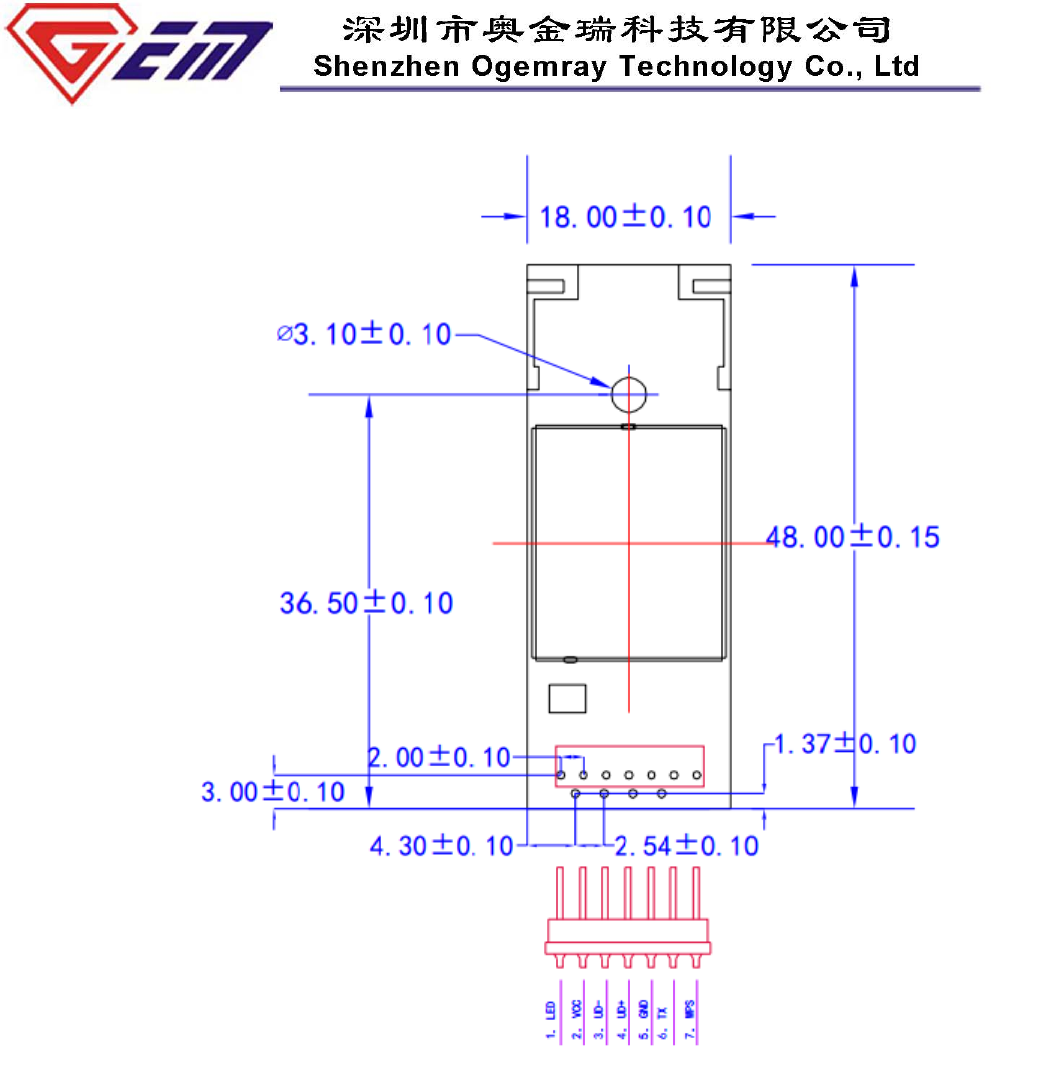
Figure 10: Bottom side 4–Pin 2.0mm pitch pin header interface.
3.3.1.3 7-pin 2.0 mm pitch pin header and RF connector at top side
a). Model: GWF-4M02-50-T-2.0-7-1; GWF-4M02-33-T-2.0-7-1
Information in this document is subject to change without prior notice. Page 9 of 13
Figure 12: Top side 7–Pin 2.0mm pitch pin header interface.
Tips:
For details model number, please refer to the ordering information.
Information in this document is subject to change without prior notice. Page 10 of 13
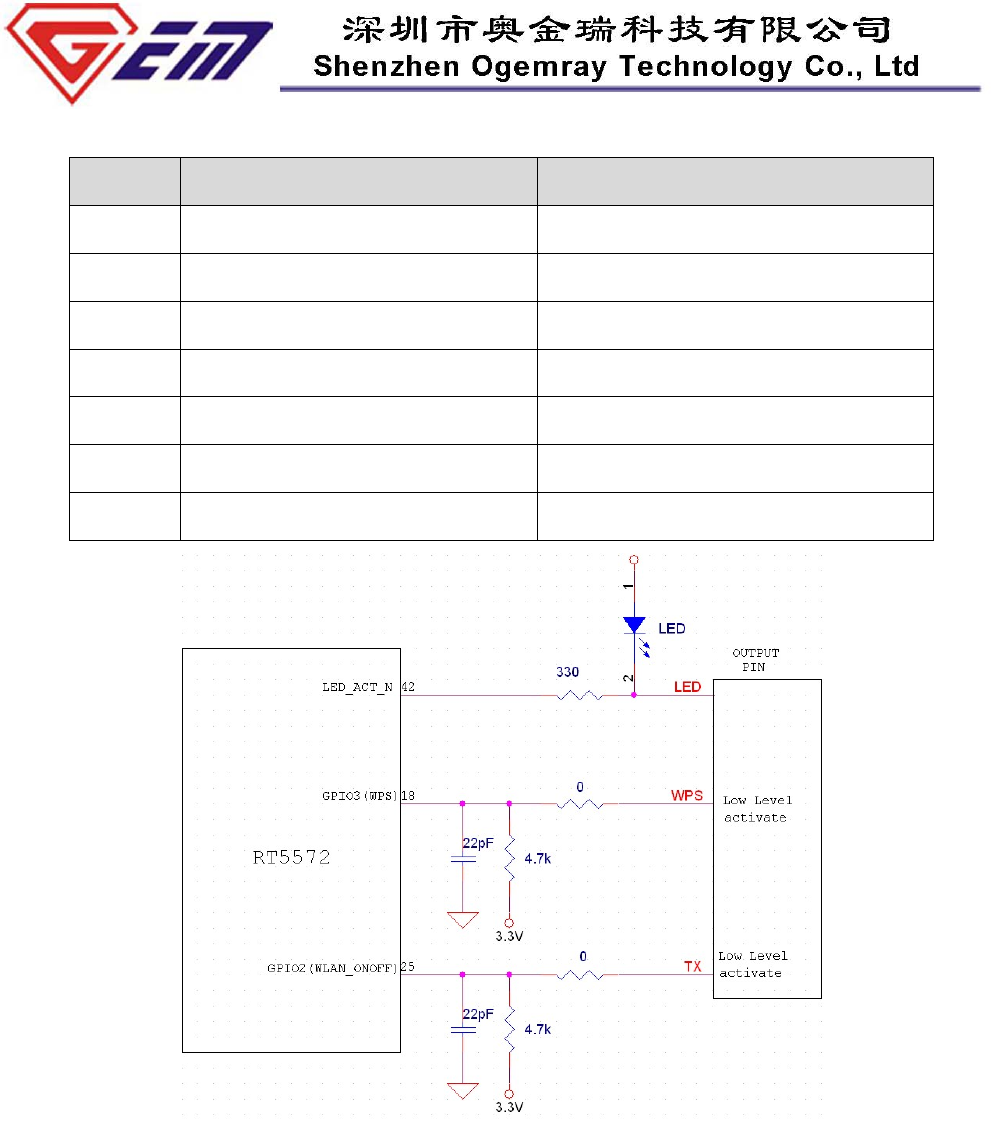
Pin Definition:
Pin-out 7-pin 2.0mm pitch pin header 4-pin 2.0 or 2.54mm pitch pin header
1 LED* (Wireless TX status) N/A
2 VCC (3.3 VDC or 5.0VDC) VCC (3.3 VDC or 5.0VDC)
3 U- (USB data+) U- (USB data+)
4 U+ (USB data-) U+ (USB data-)
5 GND (Ground) GND (Ground)
6 RF/TX ON/OFF control N/A
7 WPS control N/A
Figure 16: The onboard circuit configuration refer to LED, WPS, TX pinout.
Notes:
TX or WPS pin is internally pulled up with an onboard 4.7K ohm resistor to 3.3VDC .It is low level
(can be connected to ground) activated.
LED outputs 3.3V blink signal, the LED operation current is limited via the 330 ohm resistor.
If the onboard and external LEDs must be used simultaneously, proper LEDs’ operation current
must be considered, If necessary, the internal onboard LED can be removed while ordering.
I
I
nformation
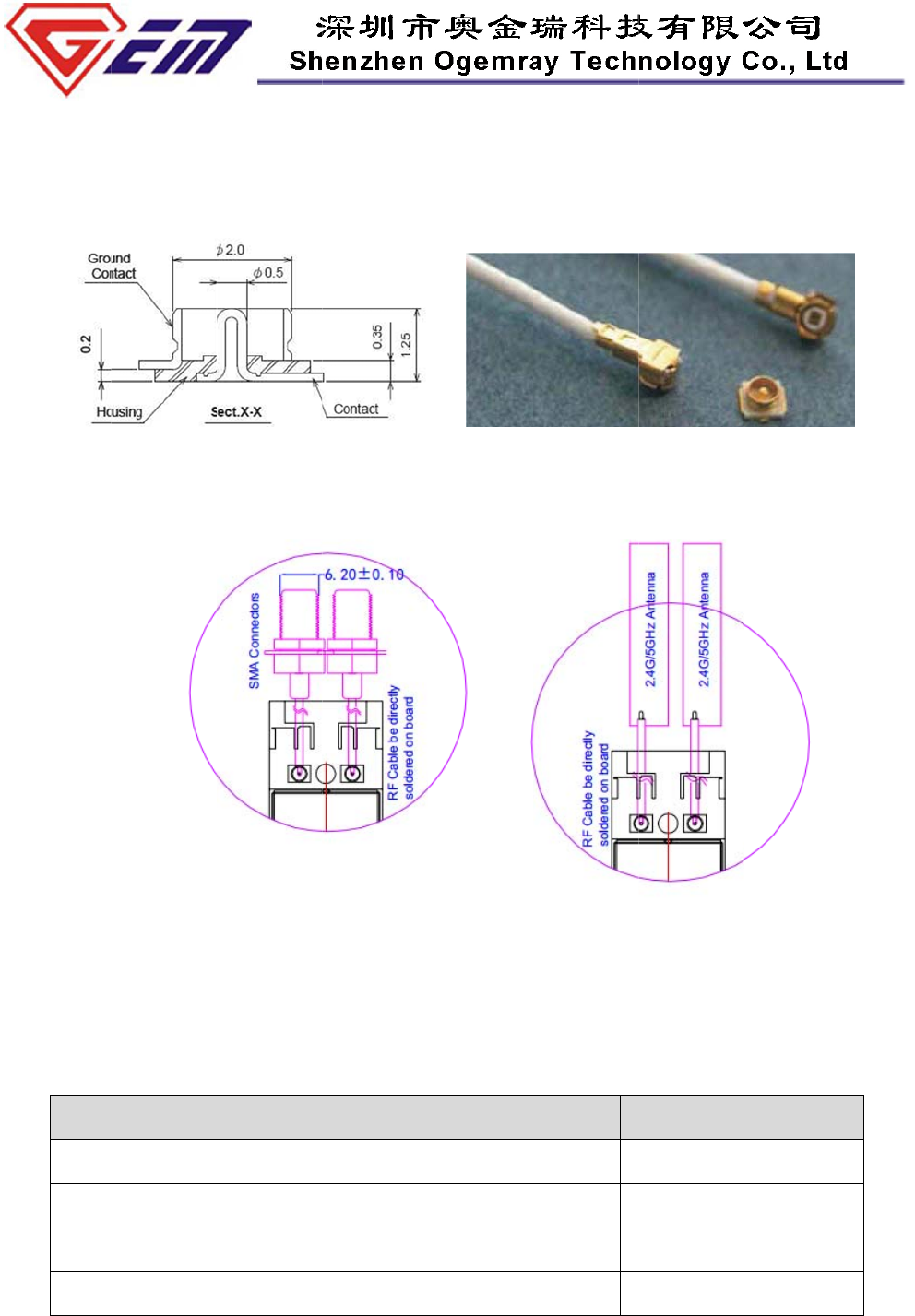
3.4 R
F
If the I-
P
RF outpu
t
3.5 Sof
t
Oper
a
Linux
Wind
o
Mac
O
Andro
in this do
c
F
output C
o
P
EX RF con
n
t
via an I-PE
X
t
ware and
s
a
tion Syste
m
2.4/2.6
o
ws XP/Vist
a
O
S X 10.4~1
0
id 4.0
c
ument is s
u
o
nnection I
n
n
ection is se
X
MHF rece
p
Figur
e
s
ystem Inf
o
m
/7/8
0
.8
u
bject to c
h
n
formation
lected, a 50
p
tacle (RF c
o
e
17:The pr
o
Figure 18:
o
rmation
CPU Suppl
i
ARM, MIPS
X86 Platfor
m
N/A
N/A
h
ange witho
u
ohm extern
a
o
nnector). (
P
o
file of the I-
P
Typical RF
o
i
e
r
II
m
u
t prior no
a
l antenna c
o
P
art No.: 20
2
P
EX connect
o
o
utput type
D
A
A
A
A
tice.
o
nnects to th
e
2
79-001E-01
or
D
rive
r
A
vailable
A
vailable
A
vailable
A
vailable
Pa
g
e
module
).
g
e
11 of 13
Information in this document is subject to change without prior notice. Page 12 of 13
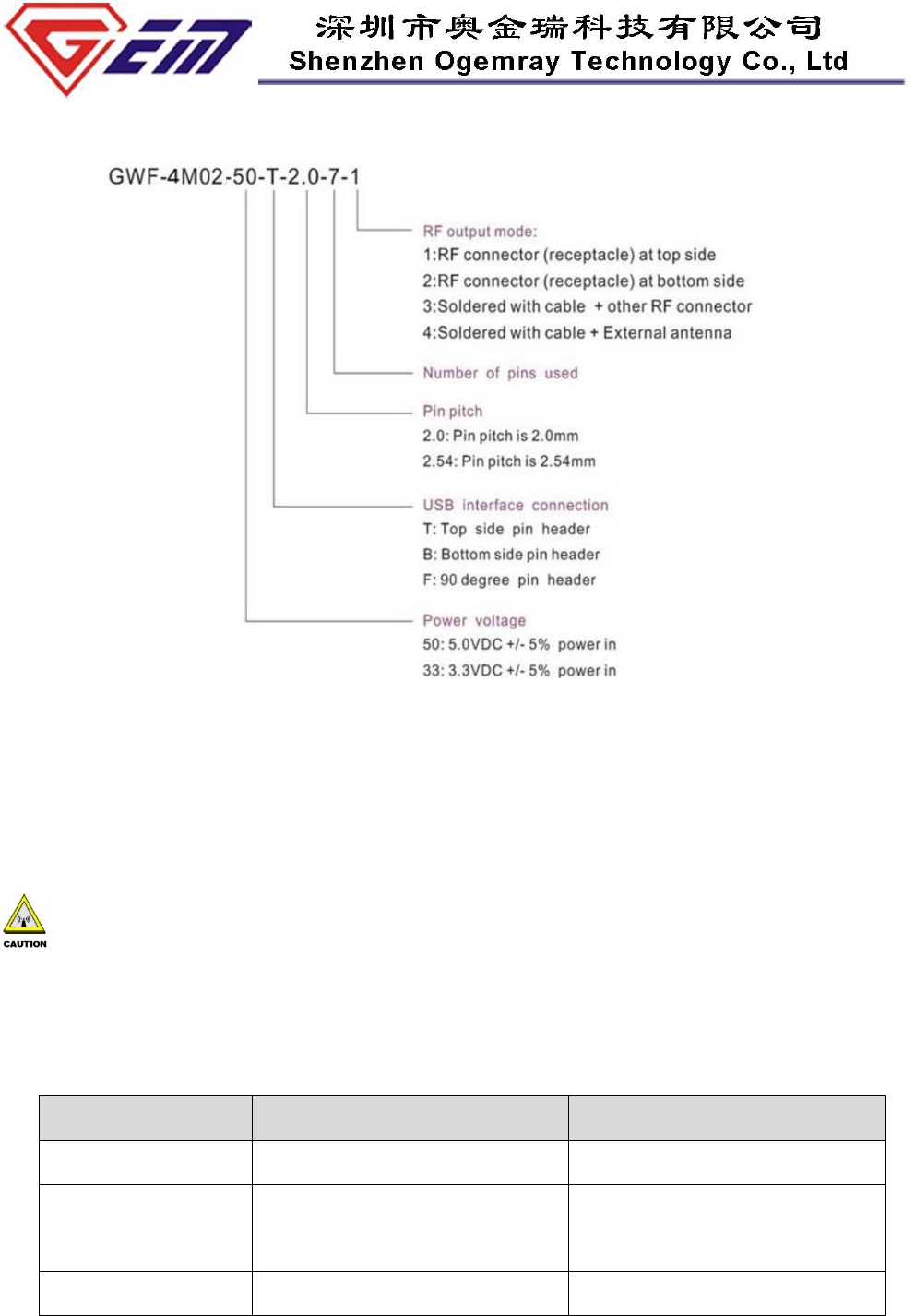
3.6 Ordering information
Since there are many different types of pin header might be used, such as: straight pin; 90 degree
bend pin; long pin; short pin…, please mention the detail requirement of the pin header when
ordering. It can be mentioned by part number or by descriptions.
4 Agency Approval
CAUTION:
This module must be installed and operated in accordance with provided instructions and the antenna used for this
transmitter must be installed to provied a separation distance of at least 20 cm from all persons and must not be
co-located or operating in conjunction with any other antenna or transmitter. End-uses and installers must be provide
with antenna installation instructions and transmitter operating conditions for satisfying RF exposure compliance.
Agency Operative standards Certificate ID
FCC Part15 C OET65 YWTWF55724MX
CE EN60950 EN301489
EN300328 EN62479 Pre-scan undergoing
RoHS 2011/65/EC √
Information in this document is subject to change without prior notice. Page 13 of 13
5 Environment pointer
Special Instructions:
Since the 5.0GHz operating current is High, in order to ensure that products -10 º C to +50 º C working
properly, must be added the heat sink;
If the customer wants to have a better product performance, it is necessary to replace the heat sink thermal
performance better (The thicker the larger the area the better the thermal performance).
Item category Range
Temperature Operating Temperature -10ºC to +50ºC
Storage Temperature -20ºC to +80ºC
Humidity Operating Humidity Conditions The range of 20% to 80%
(non-condensing) .
Non-Operating Humidity Conditions
(including warehouse)
The range of 20% to 80%
6 Disclaimer
THESE MATERIALS AND INFORMATION ARE PROVIDED “AS IS” WITHOUT WARRANTY OF ANY
KIND, EITHER EXPRESS OR IMPLIED , INCLUDING BUT NOT LIMITED TO, THE IMPLIED
WARRANTIES OF MERCHANTABILITY, FITNESS FOR A PARTICULAR PURPOSE OR
NON-INFRINGEMENT.
We use reasonable efforts to include accurate and up-to-date information on this document; it does not,
however, make any representations as to its accuracy or completeness of the information, text, graphics,
links or other items contained within these materials. You use this document to bear the risk of their own.
Ogemray,as its suppliers, and other parties involved in creating and delivering this Document’s contents
shall not be liable for any special, indirect, incidental, or consequential damages, including without limitation,
lost revenues or profits.
FCC Statement
Federal Communication Commission Interference Statement
This equipment has been tested and found to comply with the limits for a Class B digital
device, pursuant to Part 15 of the FCC Rules. These limits are designed to provide
reasonable protection against harmful interference in a residential installation. This
equipment generates, uses and can radiate radio frequency energy and, if not installed and
used in accordance with the instructions, may cause harmful interference to radio
communications. However, there is no guarantee that interference will not occur in a
particular installation. If this equipment does cause harmful interference to radio or
television reception, which can be determined by turning the equipment off and on, the
user is encouraged to try to correct the interference by one of the following measures:
- Reorient or relocate the receiving antenna.
- Increase the separation between the equipment and receiver.
- Connect the equipment into an outlet on a circuit different from that to which the
receiver is connected.
- Consult the dealer or an experienced radio/TV technician for help.
FCC Caution:
Any changes or modifications not expressly approved by the party responsible for
compliance could void the user's authority to operate this equipment.
This device complies with Part 15 of the FCC Rules. Operation is subject to the following
two conditions:
(1) This device may not cause harmful interference, and
(2) This device must accept any interference received, including interference that may
cause undesired operation.
FCC Radiation Exposure Statement:
This equipment complies with FCC radiation exposure limits set forth for an uncontrolled
environment. This transmitter module must not be co-located or operating in conjunction
with any other antenna or transmitter.
This End equipment should be installed and operated with a minimum distance of 20
centimeters between the radiator and your body.
IMPORTANT NOTE:
In the event that these conditions can not be met (for example certain laptop
configurations or co-location with another transmitter), then the FCC authorization is no
longer considered valid and the FCC ID can not be used on the final product. In these
circumstances, the OEM integrator will be responsible for re-evaluating the end product
(including the transmitter) and obtaining a separate FCC authorization.
End Product Labeling
The final end product must be labeled in a visible area with the following:
“Contains FCC ID: YWTWF55724MX”.
Manual Information to the End User
The OEM integrator has to be aware not to provide information to the end user regarding
how to install or remove this RF module in the user’s manual of the end product which
integrates this module.