Material Safety Data Sheet 16 Sections 717380 MSDS
717380 Msds 717380_MSDS 717380_MSDS MSDS s sunlightsupply 3:
2017-03-09
: Pdf 717380 Msds 717380_MSDS product s
Open the PDF directly: View PDF  .
.
Page Count: 4
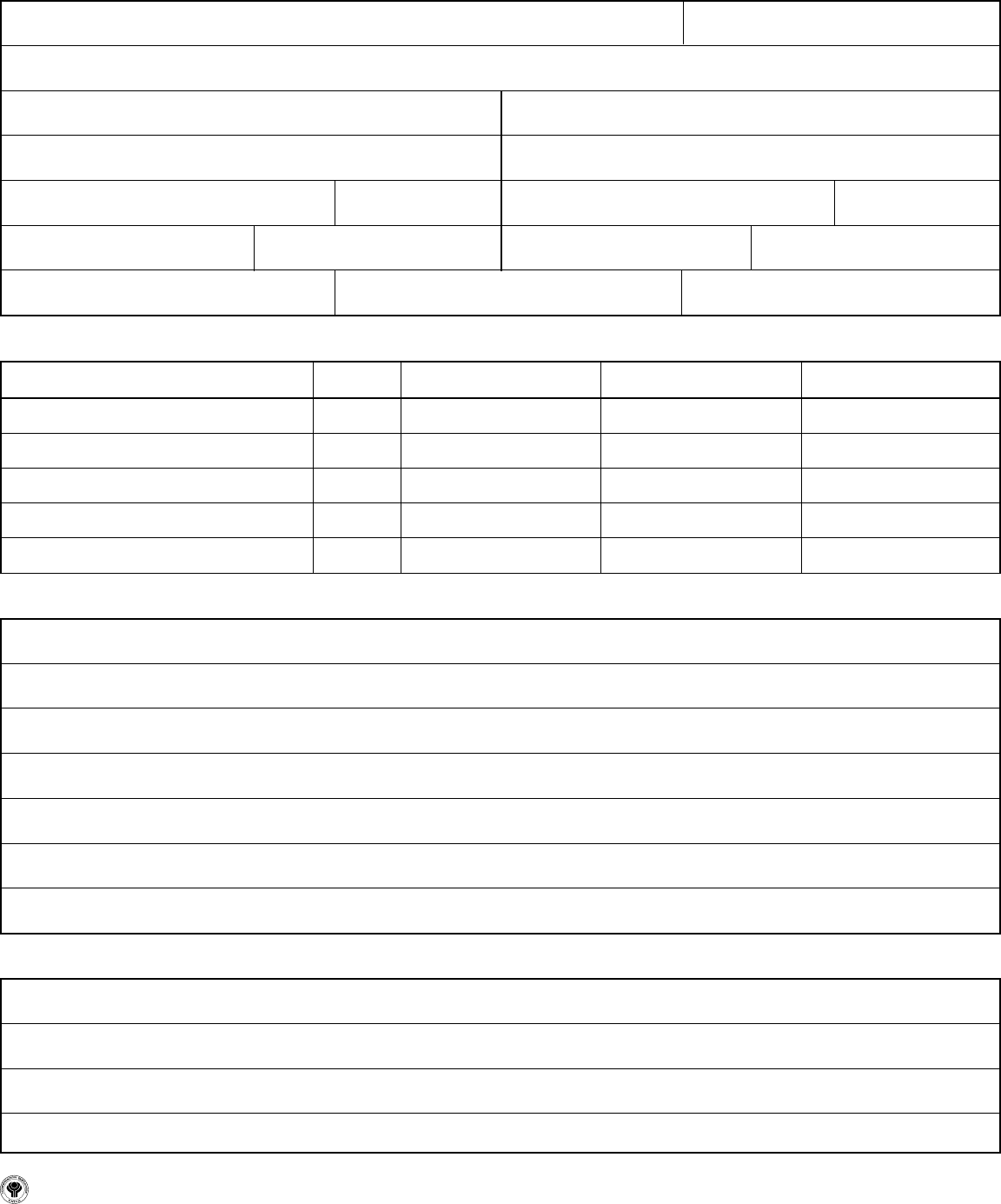
MATERIAL SAFETY DATA SHEET — 16 Sections
SECTION 1 — CHEMICAL PRODUCT AND COMPANY IDENTIFICATION
Product Identifier [WHMIS Classification]
Product Use
Manufacturer’s Name Supplier’s Name
Street Address Street Address
City Province City Province
Postal Code Emergency Telephone Postal Code Emergency Telephone
Date MSDS Prepared MSDS Prepared By Phone Number
SECTION 2 — COMPOSITION/INFORMATION ON INGREDIENTS
Hazardous Ingredients (specific) % CAS Number LD50 of Ingredient LC50 of Ingredient
(specify species and route) (specify species)
SECTION 3 — HAZARDS IDENTIFICATION
Route of Entry
[Emergency Overview]
[WHMIS Symbols]
[Potential Health Effects]
SECTION 4 — FIRST AID MEASURES
Skin Contact
Eye Contact
Inhalation
Ingestion
SAMPLE FORMAT PROVIDED BY THE WORKERS’ COMPENSATION BOARD OF BRITISH COLUMBIA
57M6 (6/99) Please continue on reverse side
❐Skin Contact ❐Skin Absorption ❐Eye Contact ❐Inhalation ❐Ingestion
SECTION 12 — ECOLOGICAL INFORMATION
[Aquatic Toxicity]
SECTION 13 — DISPOSAL CONSIDERATIONS
Waste Disposal
SECTION 14 — TRANSPORT INFORMATION
Special Shipping Information
PIN
TDG [DOT]
[IMO] [ICAO]
SECTION 15 — REGULATORY INFORMATION
[WHMIS Classification] [OSHA]
[SERA] [TSCA]
This product has been classified in accordance with the hazard criteria of the
Controlled Products Regulations (CPR) and the MSDS contains all of the information required by CPR.
SECTION 16 — OTHER INFORMATION
– 4 –
[ Optional, not required under WHMIS ][ Optional, not required under WHMIS ]
Product Identifier
Rapidgrow Industries Inc.
20203 113B Ave.
Maple Ridge
BC
V2X 0Z1
Same as manufacturer.
Immediately flush eyes with plenty of water. Remove any contact lenses (if easy to do) and continue flushing for 15 minutes. Get medical attention if irritation develops or persists.
Immediately rinse mouth out with plenty of water. If within 30 minutes after ingestion, give person a small glass of water or milk. NEVER give anything by mouth to an unconscious person. Do not induce
vomiting unless instructed to do so by a physician or poison center. Seek medical attention immediately.
Remove contaminated clothing. Flush affected area with water for 15 minutes. Wash affected area with mild soap and water. Get medical attention if irritation develops or persists.
If ammonia gas is inhaled from heated fertilizer and breathing has stopped, begin artificial respiration. If breathing is laboured, bive oxygen and seek medical attention.
2012-10-13
Brian Franczuz
604 868 1698
x
x
x
x
Skin Contact - Irritation could occur with prolonged exposure to dry fertilizer or solution. Eye contact - Irritation
could occur if dry fertilizer or solution contacts eyes. Inhalation - very low vapour activity, could produce noxious
fumes and respiratory tract irritation if heated. Ingestion - Excessive ingestion may result in health hazard.
Effects may include nausea, vomiting, diahrrea, weakness or convulsions.
Water soluble plant fertilizer
604 465 1344/604 868 1689
Supernatural Brand Superleach 0-0-1
Magnesium Sulfate
Potassium Sulfate
Citric Acid
97.8
1.0
1.0
0.2
7487-88-9
ND
Potassium Chloride
7447-40-7
Oral LD50: Acute 2500 g/kg [Guinea Pig], 2600 mg/kg [Rat},
1500 mg/kg [Mouse]
7778-80-5
Oral LD50 Acute: 6600mg/kg [Rat]
77-92-9
Oral LD50 Acute: 3000mg/kg [Rat]
x
Skin Absorrption - Potassium Sulfate
can be absorbed through the skin causing potential health hazard.
Not Controled

SECTION 5 — FIRE FIGHTING MEASURES
Flammable If yes, under which conditions?
Means of Extinction
Flashpoint (°C) and Method Upper Flammable Limit (% by volume) Lower Flammable Limit (% by volume)
Autoignition Temperature (°C) Explosion Data — Sensitivity to Impact Explosion Data — Sensitivity to Static Discharge
Hazardous Combustion Products
[NFPA]
SECTION 6 — ACCIDENTAL RELEASE MEASURES
Leak and Spill Procedures
SECTION 7 — HANDLING AND STORAGE
Handling Procedures and Equipment
Storage Requirements
SECTION 8 — EXPOSURE CONTROL / PERSONAL PROTECTION
Exposure Limits
❐ ACGIH TLV ❐ OSHA PEL ❐ Other (specify)
Specific Engineering Controls (such as ventilation, enclosed process)
Personal Protective Equipment
If checked, please specify type
❐Gloves ❐Respirator ❐Eye ❐Footwear ❐Clothing ❐Other
SECTION 9 — PHYSICAL AND CHEMICAL PROPERTIES
Physical State Odour and Appearance Odour Threshold (ppm)
Specific Gravity Vapour Density (air = 1) Vapour Pressure (mmHg)
Evaporation Rate Boiling Point (°C) Freezing Point (°C)
pH Coefficient of Water/Oil Distribution [Solubility in Water]
SECTION 10 — STABILITY AND REACTIVITY
Chemical Stability If no, under which conditions?
Incompatibility with Other Substances If yes, which ones?
Reactivity, and under what conditions?
Hazardous Decomposition Products
SECTION 11 — TOXICOLOGICAL INFORMATION
Effects of Acute Exposure
Effects of Chronic Exposure
Irritancy of Product
Skin Sensitization Respiratory Sensitization
Carcinogenicity — IARC Carcinogenicity — ACGIH
Reproductive Toxicity Teratogenicity
Embryotoxicity Mutagenicity
Name of Synergistic Products/Effects
Please continue on reverse side
❐Yes ❐No
❐Yes ❐No
– 2 – – 3 –
❐Yes ❐No
[ Optional, not required under WHMIS ]
[ Optional, not required under WHMIS ]
Product Identifier Product Identifier
X
Store in cool, dry area in closed container or package. Keep containers closed at all times. Do not reuse containers.
Store away from incompatible materials. Use with proper personal protective equipment. Keep out of reach of children.
Use flooding quantities of water. Do not use water jet. Wear SCBA and full protective
clothing if product is involved in a fire. This material is an oxidizer and therefore
increases the intensity of any fire or combustable substance
Contain the spill. Sweep up spilled material and use or dispose of in an
approved manner. Prevent entry into waterways, sewers, basements or confined areas.
Ventilate to control dust.
x
x
x
Respiratory - Dust mask if conditions warrant.
Eyes - Wear safety glasses to avoid eye contact. Do not wear contact lenses.
Skin - Wear impermeable gloves to avoid skin contact.
Avoid direct and prolonged contact with skin.
NA
NA
NA
ND
Ammonia, oxides of nitrogen and phosphorus, carbon monoxide, hydrogen cyanide.

SECTION 5 — FIRE FIGHTING MEASURES
Flammable If yes, under which conditions?
Means of Extinction
Flashpoint (°C) and Method Upper Flammable Limit (% by volume) Lower Flammable Limit (% by volume)
Autoignition Temperature (°C) Explosion Data — Sensitivity to Impact Explosion Data — Sensitivity to Static Discharge
Hazardous Combustion Products
[NFPA]
SECTION 6 — ACCIDENTAL RELEASE MEASURES
Leak and Spill Procedures
SECTION 7 — HANDLING AND STORAGE
Handling Procedures and Equipment
Storage Requirements
SECTION 8 — EXPOSURE CONTROL / PERSONAL PROTECTION
Exposure Limits
❐ ACGIH TLV ❐ OSHA PEL ❐ Other (specify)
Specific Engineering Controls (such as ventilation, enclosed process)
Personal Protective Equipment
If checked, please specify type
❐Gloves ❐Respirator ❐Eye ❐Footwear ❐Clothing ❐Other
SECTION 9 — PHYSICAL AND CHEMICAL PROPERTIES
Physical State Odour and Appearance Odour Threshold (ppm)
Specific Gravity Vapour Density (air = 1) Vapour Pressure (mmHg)
Evaporation Rate Boiling Point (°C) Freezing Point (°C)
pH Coefficient of Water/Oil Distribution [Solubility in Water]
SECTION 10 — STABILITY AND REACTIVITY
Chemical Stability If no, under which conditions?
Incompatibility with Other Substances If yes, which ones?
Reactivity, and under what conditions?
Hazardous Decomposition Products
SECTION 11 — TOXICOLOGICAL INFORMATION
Effects of Acute Exposure
Effects of Chronic Exposure
Irritancy of Product
Skin Sensitization Respiratory Sensitization
Carcinogenicity — IARC Carcinogenicity — ACGIH
Reproductive Toxicity Teratogenicity
Embryotoxicity Mutagenicity
Name of Synergistic Products/Effects
Please continue on reverse side
❐Yes ❐No
❐Yes ❐No
– 2 – – 3 –
❐Yes ❐No
[ Optional, not required under WHMIS ]
[ Optional, not required under WHMIS ]
Product Identifier Product Identifier
x
Strong acids, strong alkalies, oxidizers, organics.
Moist, wet conditions.
None known.
None known.
None known.
None known.
None known.
ND
Solid
None known.
Skin Contact - Irritation could occur with prolonged exposure to dry fertilizer or fertilizer solution. Contact with heated solution may cause
thermal burns.
Skin Absorption - Not known to be absorbed through the skin.
Eye Contact - Irritation could occur if fertilizer solution is splashed in eyes or dry product contacts eyes. Heated material may cause thermal
burns.
Inhalation - Very low vapour activity. If heated could release ammonia gas. Can cause respiratory tract irritation.
Ingestion - Excessive ingestion must occur before any health hazard results, effects of overexposure may include nausea, vomiting,
diarrhea, weakness or convulsions.
Fine powder.
NA
NA
NA
NA
ND
ND
ND
x
Exposure to heat may result in build up of dangerous pressure. Strong oxidizer, reacts
violently upon contact of many organic substances, particularly paper and textile.
Fire.
May cause minor irritation.
May cause minor irritation.
Very low, if heated may cause irritation.
Urea can cause allergic reaction in some individuals.
Ammonia, oxides of nitrogen and phosphorus, carbon monoxide, hydrogen cyanide, sulfur oxides (S0x),
Including sulfur oxide and sulfur dioxide, oxides of magnesium.

MATERIAL SAFETY DATA SHEET — 16 Sections
SECTION 1 — CHEMICAL PRODUCT AND COMPANY IDENTIFICATION
Product Identifier [WHMIS Classification]
Product Use
Manufacturer’s Name Supplier’s Name
Street Address Street Address
City Province City Province
Postal Code Emergency Telephone Postal Code Emergency Telephone
Date MSDS Prepared MSDS Prepared By Phone Number
SECTION 2 — COMPOSITION/INFORMATION ON INGREDIENTS
Hazardous Ingredients (specific) % CAS Number LD50 of Ingredient LC50 of Ingredient
(specify species and route) (specify species)
SECTION 3 — HAZARDS IDENTIFICATION
Route of Entry
[Emergency Overview]
[WHMIS Symbols]
[Potential Health Effects]
SECTION 4 — FIRST AID MEASURES
Skin Contact
Eye Contact
Inhalation
Ingestion
SAMPLE FORMAT PROVIDED BY THE WORKERS’ COMPENSATION BOARD OF BRITISH COLUMBIA
57M6 (6/99) Please continue on reverse side
❐Skin Contact ❐Skin Absorption ❐Eye Contact ❐Inhalation ❐Ingestion
SECTION 12 — ECOLOGICAL INFORMATION
[Aquatic Toxicity]
SECTION 13 — DISPOSAL CONSIDERATIONS
Waste Disposal
SECTION 14 — TRANSPORT INFORMATION
Special Shipping Information
PIN
TDG [DOT]
[IMO] [ICAO]
SECTION 15 — REGULATORY INFORMATION
[WHMIS Classification] [OSHA]
[SERA] [TSCA]
This product has been classified in accordance with the hazard criteria of the
Controlled Products Regulations (CPR) and the MSDS contains all of the information required by CPR.
SECTION 16 — OTHER INFORMATION
– 4 –
[ Optional, not required under WHMIS ][ Optional, not required under WHMIS ]
Product Identifier
Dispose of in non-crop areas away from waterways, in accordance with federal, provincial and local regulations.
NA = Not Applicable.
ND = Not Determined.
Not regulated by TDG.
Prevent entry into waterways, sewers, basements or confined areas.
The LC50/96 - hour values for fish are over 100mg/L
Class C Oxidizer
