Y Soft a s 0YX0ME01016 External reader module ASK FSK User Manual
Y Soft Corporation, a.s. External reader module ASK FSK
User Manual

CONFIDENTIAL
making the MFDs think™
Network Card Reader
October 13, 2014

October 13, 2014
Network Card Reader CONFIDENTIAL 2
TABLE OF CONTENTS
1 FCC statements . . . . . . . . . . . . . . . . . . . . . . . . . . . . . . . . . . . . . . . . . . . . . . . . . . . . . . . . . . . . . . . . . . . . 4
2 Network Card Reader overview . . . . . . . . . . . . . . . . . . . . . . . . . . . . . . . . . . . . . . . . . . . . . . . . . . . . . . . . 5
2.1 System Overview . . . . . . . . . . . . . . . . . . . . . . . . . . . . . . . . . . . . . . . . . . . . . . . . . . . . . . . . . . . . . . . 6
2.2 Ethernet Reader specification . . . . . . . . . . . . . . . . . . . . . . . . . . . . . . . . . . . . . . . . . . . . . . . . . . . . . . 7
3 Terminal's configuration . . . . . . . . . . . . . . . . . . . . . . . . . . . . . . . . . . . . . . . . . . . . . . . . . . . . . . . . . . . . . . 8
4 SafeQ server configuration . . . . . . . . . . . . . . . . . . . . . . . . . . . . . . . . . . . . . . . . . . . . . . . . . . . . . . . . . . . . 9
5 Ethernet Reader Service procedures . . . . . . . . . . . . . . . . . . . . . . . . . . . . . . . . . . . . . . . . . . . . . . . . . . . 11
5.1 Service procedures . . . . . . . . . . . . . . . . . . . . . . . . . . . . . . . . . . . . . . . . . . . . . . . . . . . . . . . . . . . . . 11
5.2 Service firmware . . . . . . . . . . . . . . . . . . . . . . . . . . . . . . . . . . . . . . . . . . . . . . . . . . . . . . . . . . . . . . . 11
5.3 Reader firmware . . . . . . . . . . . . . . . . . . . . . . . . . . . . . . . . . . . . . . . . . . . . . . . . . . . . . . . . . . . . . . . 11
October 13, 2014
Network Card Reader CONFIDENTIAL 3
DOCUMENT DESCRIPTION
At a Glance
FCC statements
Network Card Reader overview
System Overview
Ethernet Reader specification
Terminal's configuration
SafeQ server configuration
Ethernet Reader Service procedures
Service procedures
Service firmware
Reader firmware

October 13, 2014
Network Card Reader CONFIDENTIAL 4
1 FCC STATEMENTS
§ 15.21 Information to user
The user's manual or instruction manual for an intentional or unintentional radiator shall caution the user that
changes or modifications not expressly approved by the party responsible for compliance could void the
user's authority to operate the equipment. In cases where the manual is provided only in a form other than
paper, such as on a computer disk or over the Internet, the information required by this section may be
included in the manual in that alternative form, provided the user can reasonably be expected to have the
capability to access information in that form.
§ 15.105 Information to the user
This equipment has been tested and found to comply with the limits for a Class A digital device, pursuant to
part 15 of the FCC Rules. These limits are designed to provide reasonable protection against harmful
interference when the equipment is operated in a commercial environment. This equipment generates, uses,
and can radiate radio frequency energy and, if not installed and used in accordance with the instruction
manual, may cause harmful interference to radio communications. Operation of this equipment in a
residential area is likely to cause harmful interference in which case the user will be required to correct the
interference at his own expense.
October 13, 2014
Network Card Reader CONFIDENTIAL 5
2 NETWORK CARD READER OVERVIEW
The YSoft SafeQ Ethernet Reader is based on YSoft SafeQ® Terminal UltraLight. YSoft SafeQ® Ethernet®
Reader provides compact, fast and simple user interface for authorization to printer. It has no display
available; therefore user interaction is limited to status leds. User authentication (on Ethernet Reader) is
possible only with card.
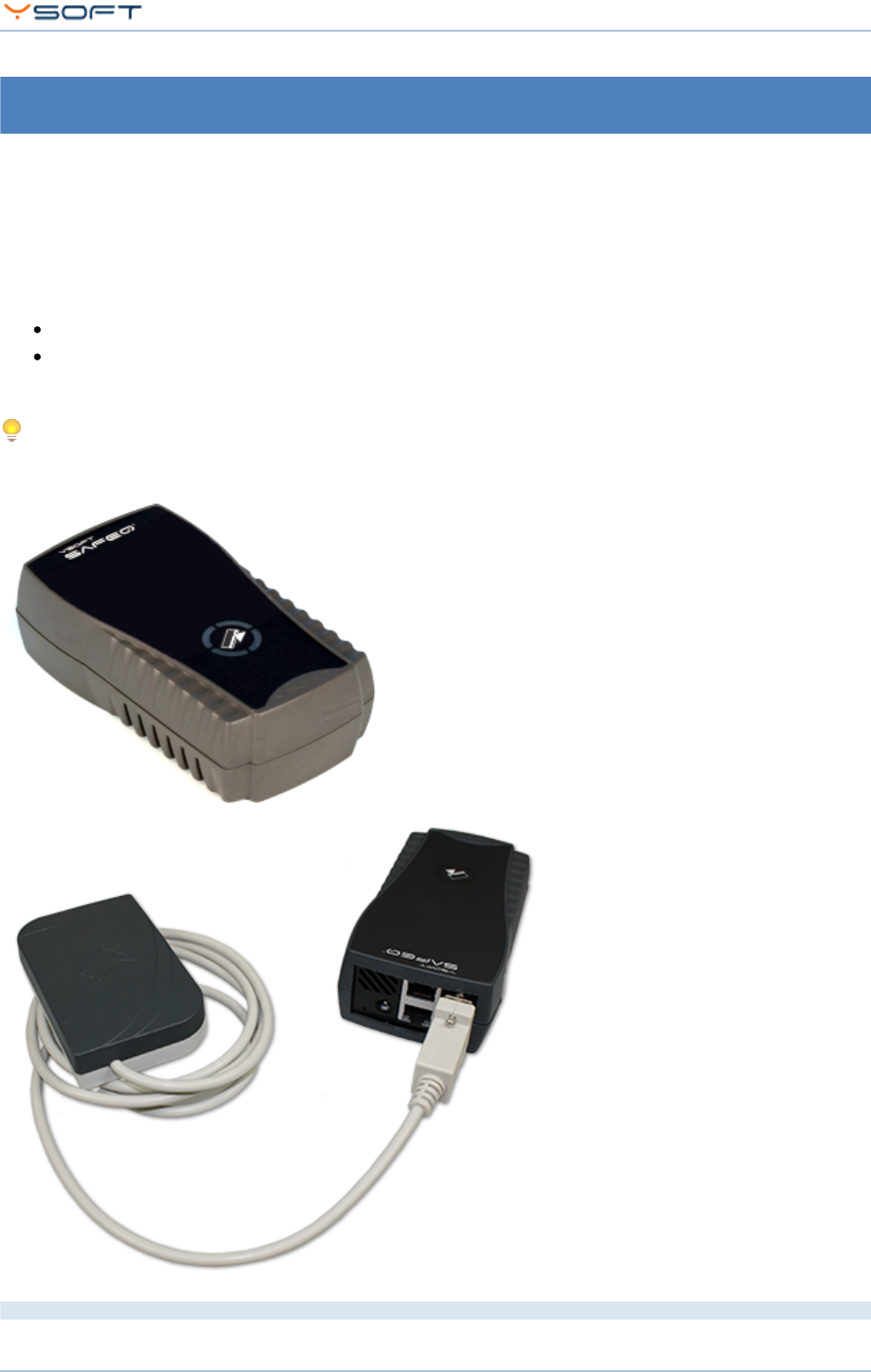
There are two types of Network Card Reader:
with embedded card reader (on the left)
with external card reader connected with RS-232 cable connected to serial port in Network Card
Reader (on the right)
Following documentation is related to both types of Network Card Readers, therefore you mightNOTE:
encounter minor differences when using Network Card reader with external card reader.
October 13, 2014
Network Card Reader CONFIDENTIAL 6
2.1 SYSTEM OVERVIEW
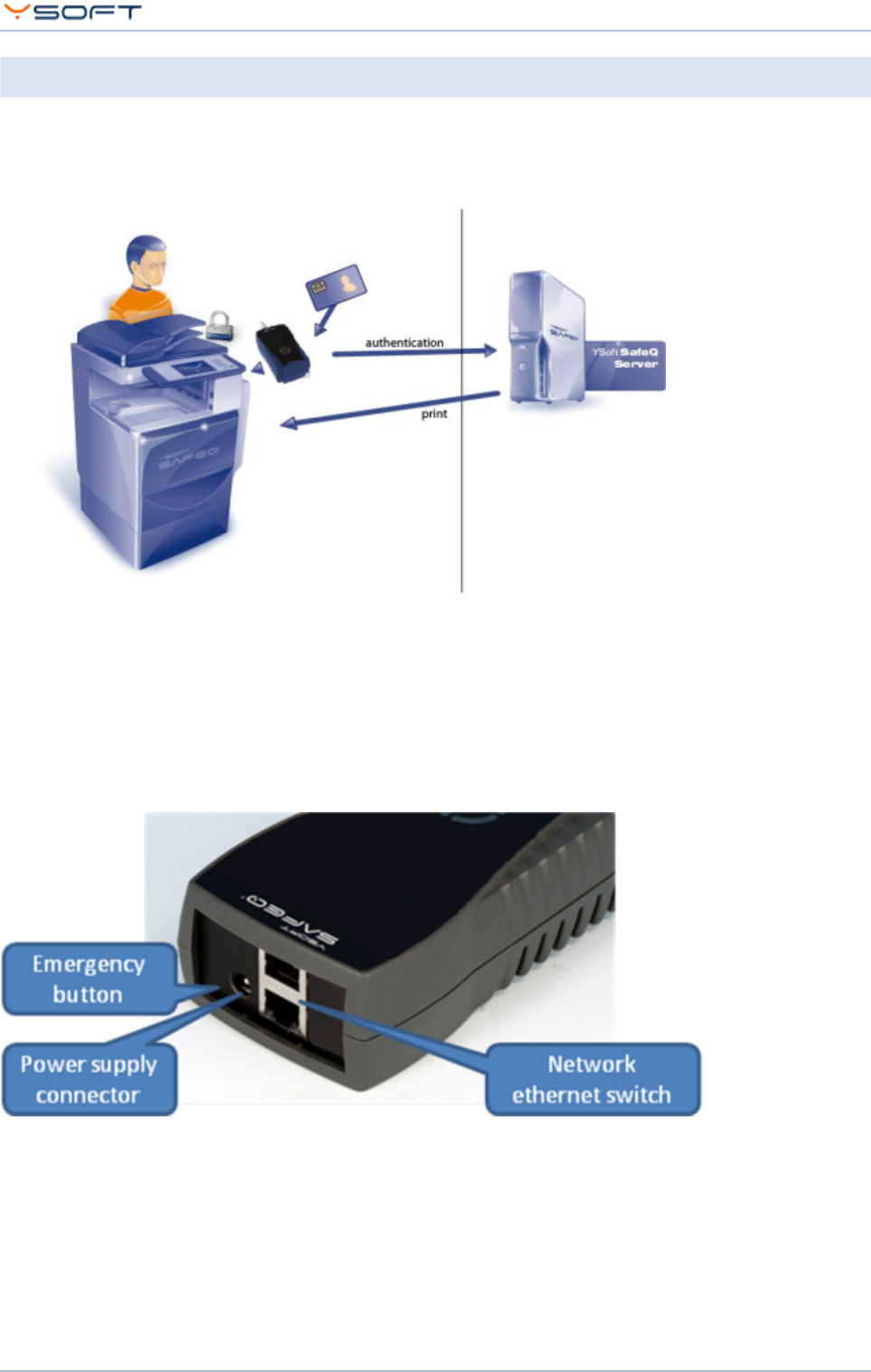
The purpose of Ethernet Reader is to handle user authentication and authorization to the device
using card.
User can use also the PIN authorization (using the MFD integrated panel).
Only selected card readers are supported by Ethernet Reader.
The Ethernet Reader is equipped with a 2-ports network switch and so it is not necessary to provide another
Ethernet socket for connection - the copier or printer can be connected via the terminal. It features a
microcomputer, flash ROM, network interface and a card reader.
Terminal is powered by external power supply that is also included in installation package.
The emergency button is used for reset the terminal into default settings.
October 13, 2014
Network Card Reader CONFIDENTIAL 7
2.2 ETHERNET READER SPECIFICATION
Parameter Value
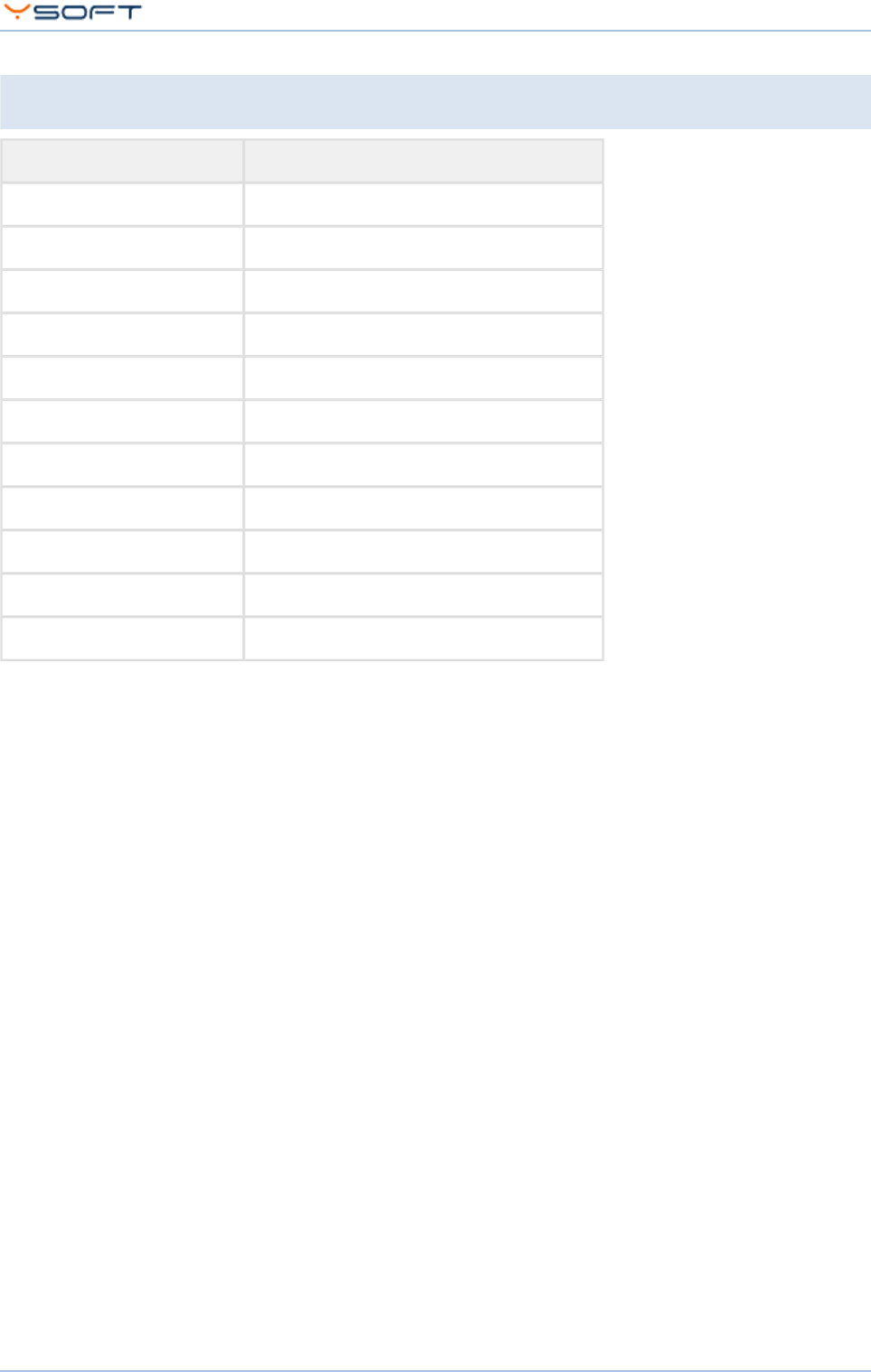
Identification Using a card reader
Network 2-port 10/100 Mbit switch (auto MDI/MDIX)
Processor Freescale Coldfire v2
Memory 64kB RAM, 512kB Flash
Electric power supply input 12V DC
Maximum current input 1.0A
Working temperature +5°C to +35°C
Storage temperature 0°C to +50°C
Working air humidity 20% to 85% without condensation
Storage air humidity 8% to 85% without condensation
Resistance to magnetic field no added resistance
October 13, 2014
Network Card Reader CONFIDENTIAL 8
3 TERMINAL'S CONFIGURATION
Ethernet Reader requires TCP/IP connection to the YSoft SafeQ server. Ethernet Reader has own IP and
MAC address.
For the proper network configuration you can use:
SafeQ Terminal Configuration utility (terminal config) or
Configuration utility for hardware terminals (termtool)
There is a default network configuration used for Ethernet Reader:
DHCP=0
IP=192.168.0.100
NETMASK=255.255.255.0
GATEWAY=192.168.0.254
DNS=192.168.0.254
SERVERIP=192.168.0.254:5011
SERVERUPD=192.168.0.254:4096
The SERVERIP corresponds to the IP address and port of the YSoft SafeQ® Terminal Server. The IP and
port are used for card authentication.
The SERVERUDP corresponds to the SafeQ server and serves for firmware updates.
October 13, 2014
Network Card Reader CONFIDENTIAL 9
4 SAFEQ SERVER CONFIGURATION
After the Ethernet Reader is properly configured, it must be connected to the YSoft SafeQ®.
Assume that the YSoft SafeQ® server and YSoft SafeQ® Terminal Server are already installed and running.
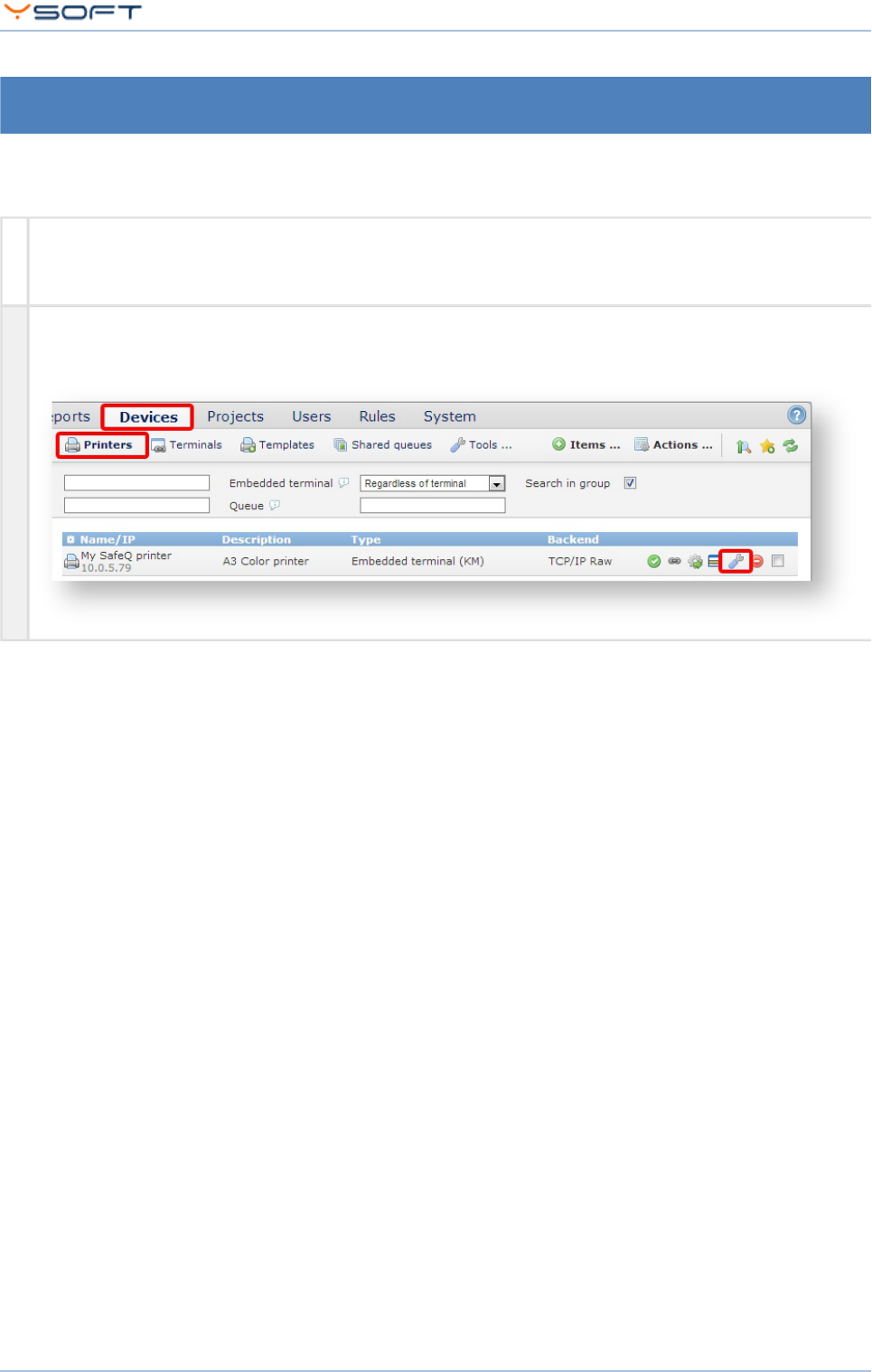
1 Log in to the SafeQ Web administration with sufficient rights to manage devices.
2Go to selection and click the next to the device or Devices > Printers edit icon double click
on the device.
October 13, 2014
Network Card Reader CONFIDENTIAL 10
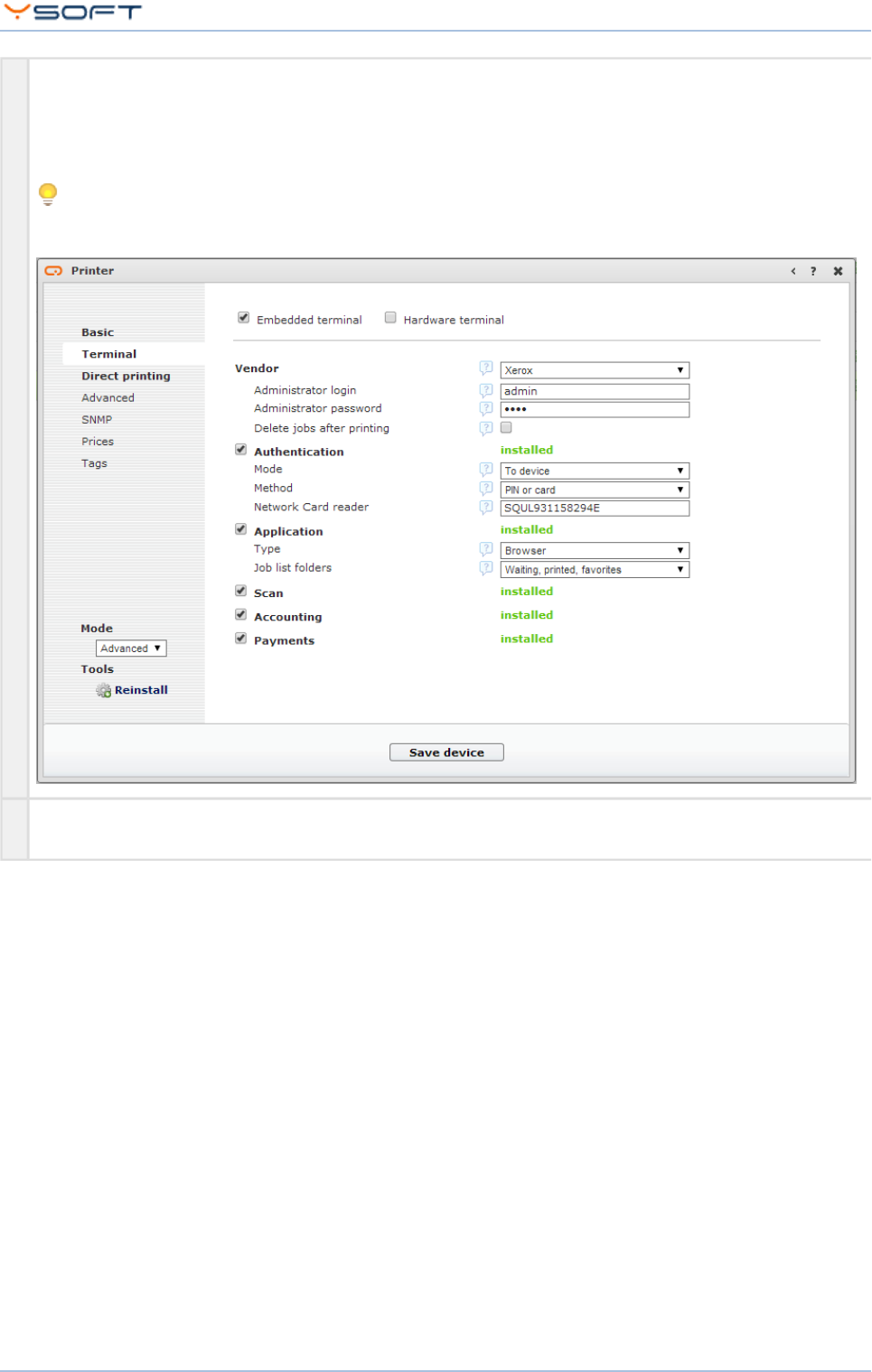
3Go to tab and insert serial number. This serial number equalsTerminal Network Card reader
to serial number written in SafeQ Terminal Configuration util (first column).
Then press button to apply new settings.Reinstall
If you want to add Network Card reader serial number, one of the authenticationNOTE:
method with card must be selected.
4Since the installation is successfully finished, the Ethernet reader is successfully configured.

October 13, 2014
Network Card Reader CONFIDENTIAL 11
5 ETHERNET READER SERVICE PROCEDURES
5.1 SERVICE PROCEDURES
For more info about all service procedures, please visit: Performing service procedures of Terminal
UltraLight and Network Card Reader
5.2 SERVICE FIRMWARE
Service firmware is the most important part of the reader firmware. Right after power-up it will check the
emergency button if any action is required. Then it will check the normal firmware for integrity. If the normal
firmware is not valid then the emergency firmware will connect to server in emergency mode and download
the firmware. If the normal firmware integrity is ok, then it is started.
5.3 READER FIRMWARE
Ethernet Reader firmware is the main part of the firmware. It initializes network, autodetects readers and
sends the card number to the server when card is placed. By default the firmware starts UDP locator server
which will help detecting available readers on the local network. Also the TCP configuration server is started.