Eaton HHB1BATR Open/Closed Sensor User Manual Manual Outside Page
Eaton Corporation Open/Closed Sensor Manual Outside Page
Eaton >
Contents
- 1. Manual Outside Page
- 2. Manual Inside Page
Manual Outside Page
Open/Closed Sensor
IM00416004E Rev. 2
Part No.: 67A5005H01
© 2005 Eaton Corporation
• Garage Door
• Storage Area
• Basement Door
• Pet Door
• Refrigerator
• Closet
• Trunk
• Deck Door
• Basement Window
• Kitchen Window
• Safe
• Supply Room
• Household Cabinets
• Jewelry Box
• Gun Cabinet
Open/Closed Sensor Uses:
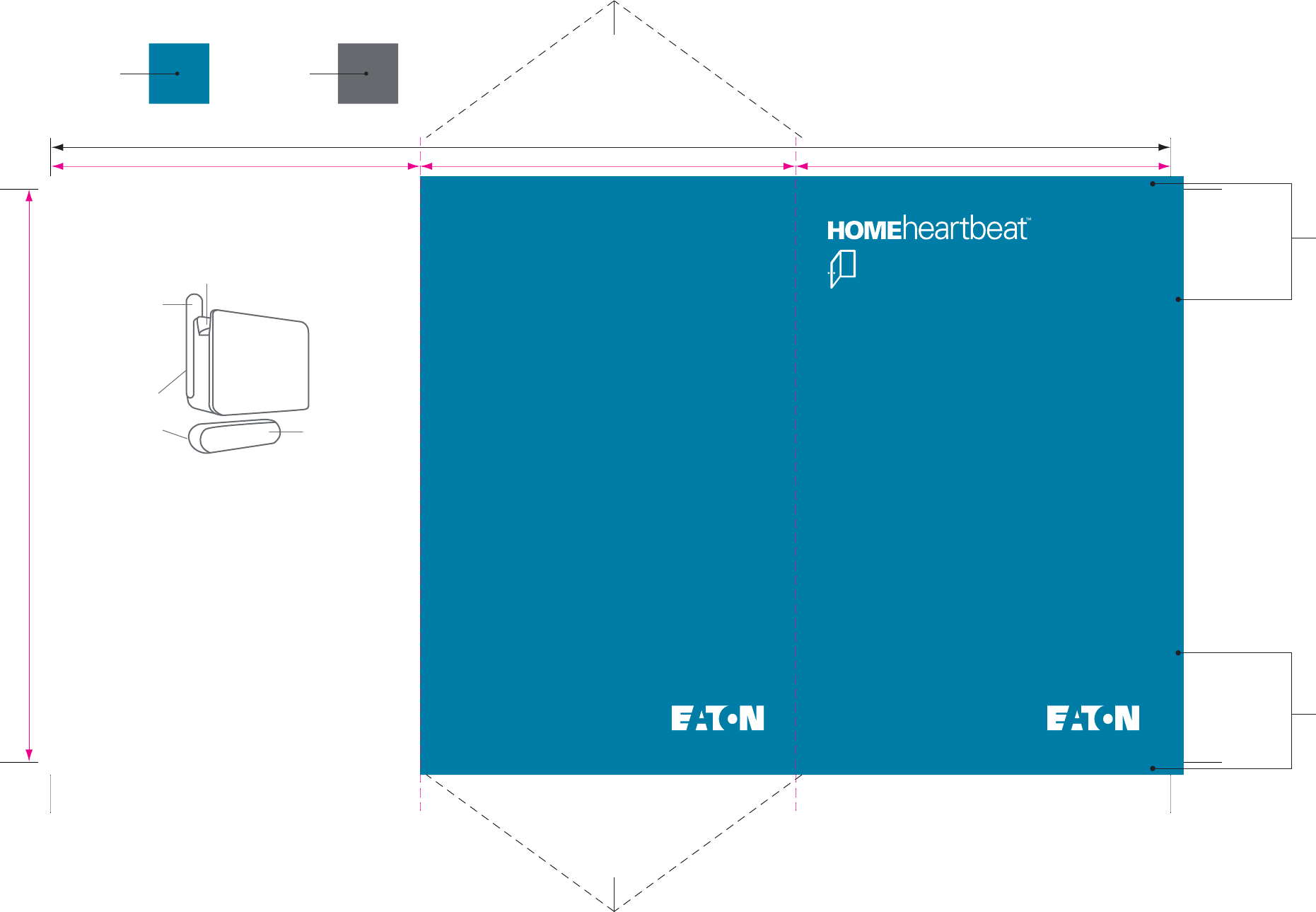
Open/Closed Sensor Components
PMS 314
MATCH CMYK
PMS 431
MATCH CMYK
Home Key™ Slide Channel
Antenna
Magnet
Attach enclosed
adhesive on
back for placement
FCC Statement
(Compliance Statement, Part 15.19): This device complies with Part 15 of the
FCC Rules. Operation is subject to the following two conditions: (1) this device
may not cause harmful interference, and (2) this device must accept any
interference received, including interference that may cause undesired
operation.
WARNING (Part 15.21): Changes or modifications not expressly approved by
the party responsible for compliance could void the user’s authority to operate
this equipment.
To comply with FCC’s RF exposure limits for general population/uncontrolled
exposure, the antenna(s) used for this transmitter must be installed to provide
a separation distance of at least 20 cm from all persons and must not be
co-located or operating in conjunction with any other antenna or transmitter.
Industry Canada Statement
The term “IC” before the certification/registration number only signifies that
the Industry Canada technical specifications were met.
Interference
This equipment has been tested and found to comply with the limits for a Class B
digital device, pursuant to Part 15 of the FCC rules. These limits are designed to
provide reasonable protection against harmful interference in a residential
installation. This equipment generates, uses, and can radiate radio frequency
energy and, if not installed and used in accordance with the instructions, may
cause harmful interference to radio communications. However, there is no
guarantee that interference will not occur in a particular installation. If this
equipment does cause harmful interference to radio or television reception,
which can be determined by turning the equipment off and on, then the user is
encouraged to try to correct the interference by one or more of the following
measures:
• Reorient or relocate the receiving antenna
• Increase the separation between the equipment and the receiver
• Connect the equipment into a power source on different circuit than the receiver.
5.625”
FOLD
DOES NOT PRINT
DOES NOT PRINT
FOLD
11”
3.625” 3.6875”
BLEED = .125”
3.6875”
BLEED = .125”