Toplink Technology Development TOPAP01 WIFI Module User Manual RA R111300A 5350

Shenzhen Toplink Technology Development CO.,LTD WIFI Module RA R111300A 5350

User Manual

    User Manual   Product Name:Model Name:WIFI ModuleTOP-AP01TEL:FAX:
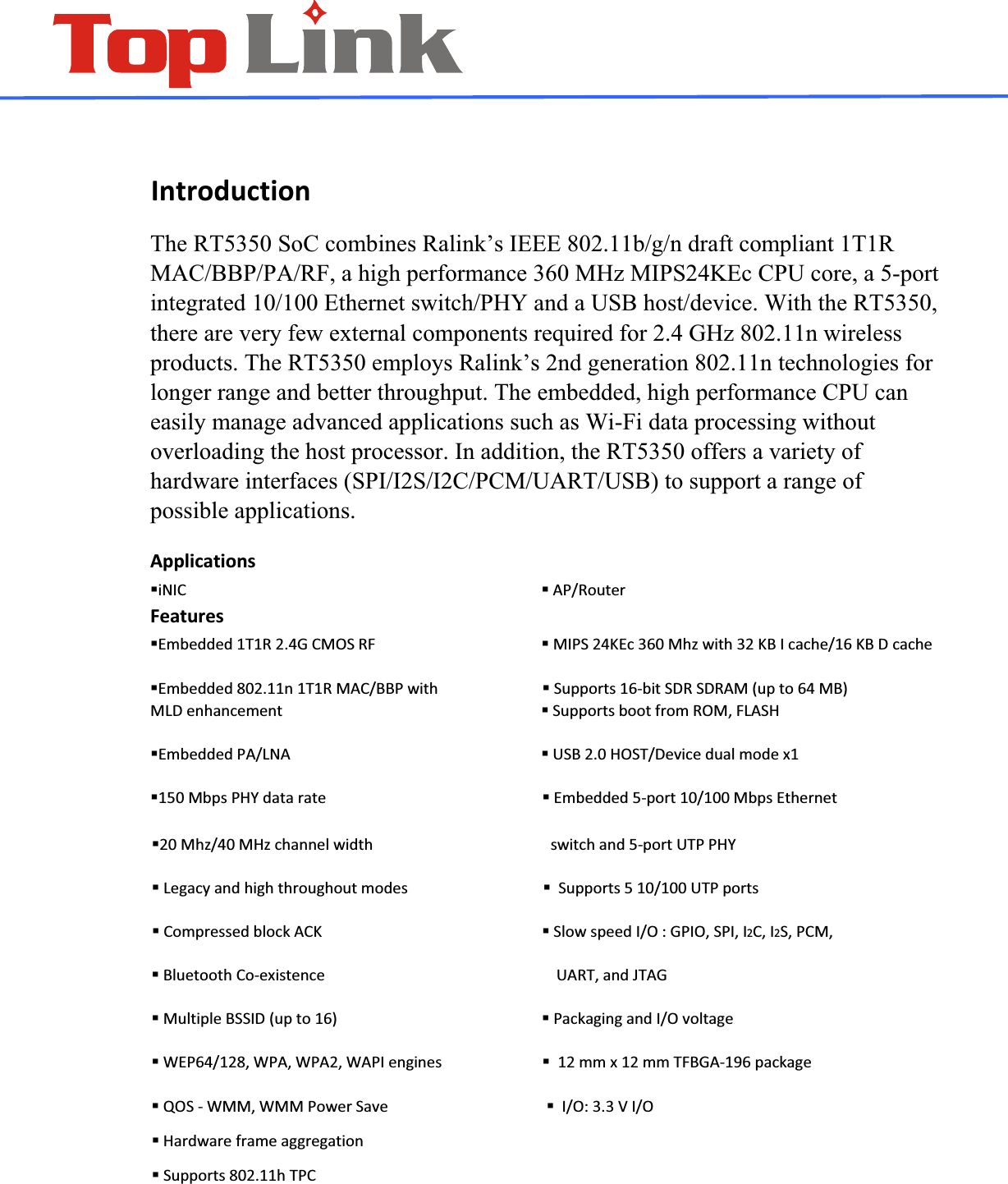
 IntroductionThe RT5350 SoC combines Ralink’s IEEE 802.11b/g/n draft compliant 1T1R MAC/BBP/PA/RF, a high performance 360 MHz MIPS24KEc CPU core, a 5-port integrated 10/100 Ethernet switch/PHY and a USB host/device. With the RT5350, there are very few external components required for 2.4 GHz 802.11n wireless products. The RT5350 employs Ralink’s 2nd generation 802.11n technologies for longer range and better throughput. The embedded, high performance CPU can easily manage advanced applications such as Wi-Fi data processing without overloading the host processor. In addition, the RT5350 offers a variety of hardware interfaces (SPI/I2S/I2C/PCM/UART/USB) to support a range of possible applications. ApplicationsiNICAP/RouterFeaturesEmbedded1T1R2.4GCMOSRFMIPS24KEc360Mhzwith32KBIcache/16KBDcacheEmbedded802.11n1T1RMAC/BBPwithSupports16ͲbitSDRSDRAM(upto64MB)MLDenhancementSupportsbootfromROM,FLASHEmbeddedPA/LNAUSB2.0HOST/Devicedualmodex1150MbpsPHYdatarateEmbedded5Ͳport10/100MbpsEthernet20Mhz/40MHzchannelwidthswitchand5ͲportUTPPHYLegacyandhighthroughoutmodesSupports510/100UTPportsCompressedblockACKSlowspeedI/O:GPIO,SPI,I2C,I2S,PCM,BluetoothCoͲexistenceUART,andJTAGMultipleBSSID(upto16)PackagingandI/OvoltageWEP64/128,WPA,WPA2,WAPIengines12mmx12mmTFBGAͲ196packageQOSͲWMM,WMMPowerSaveI/O:3.3VI/OHardwareframeaggregationSupports802.11hTPC
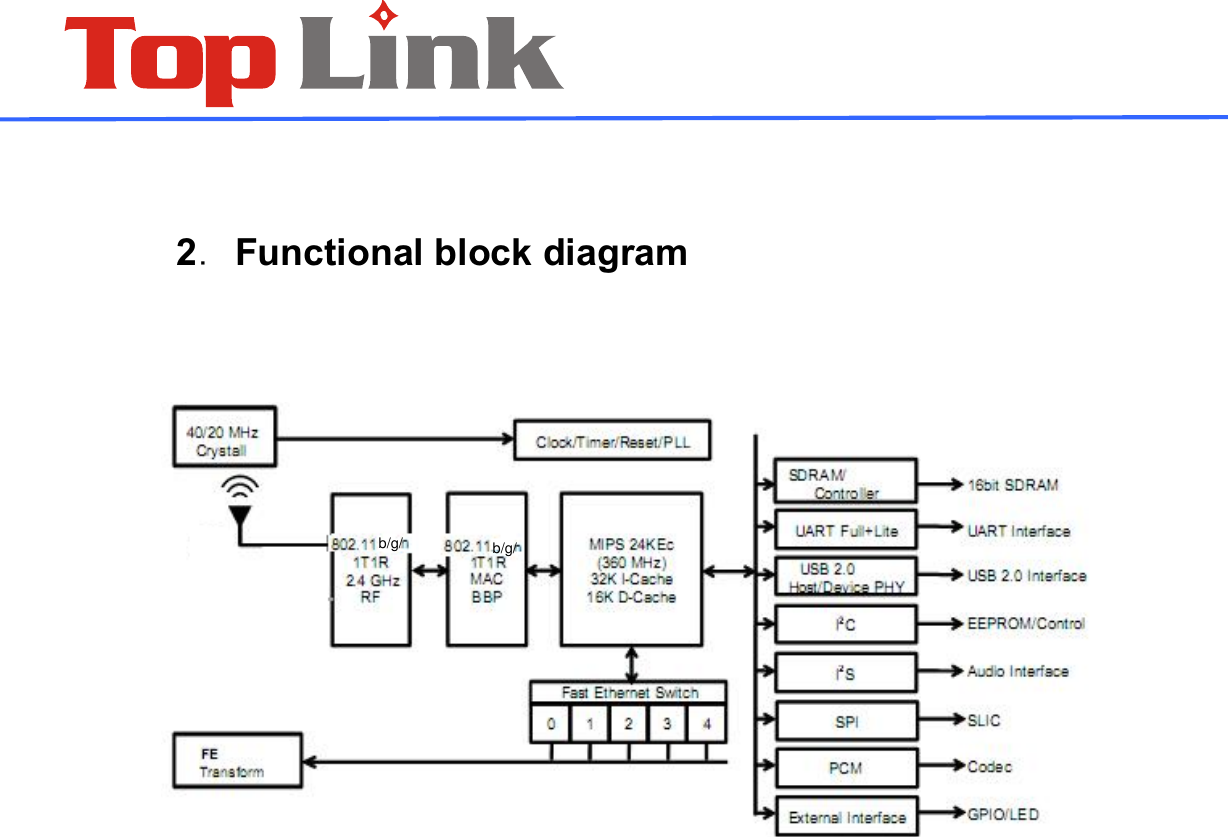
 2㧚Functional block diagram                                                           b/g/ b/g/
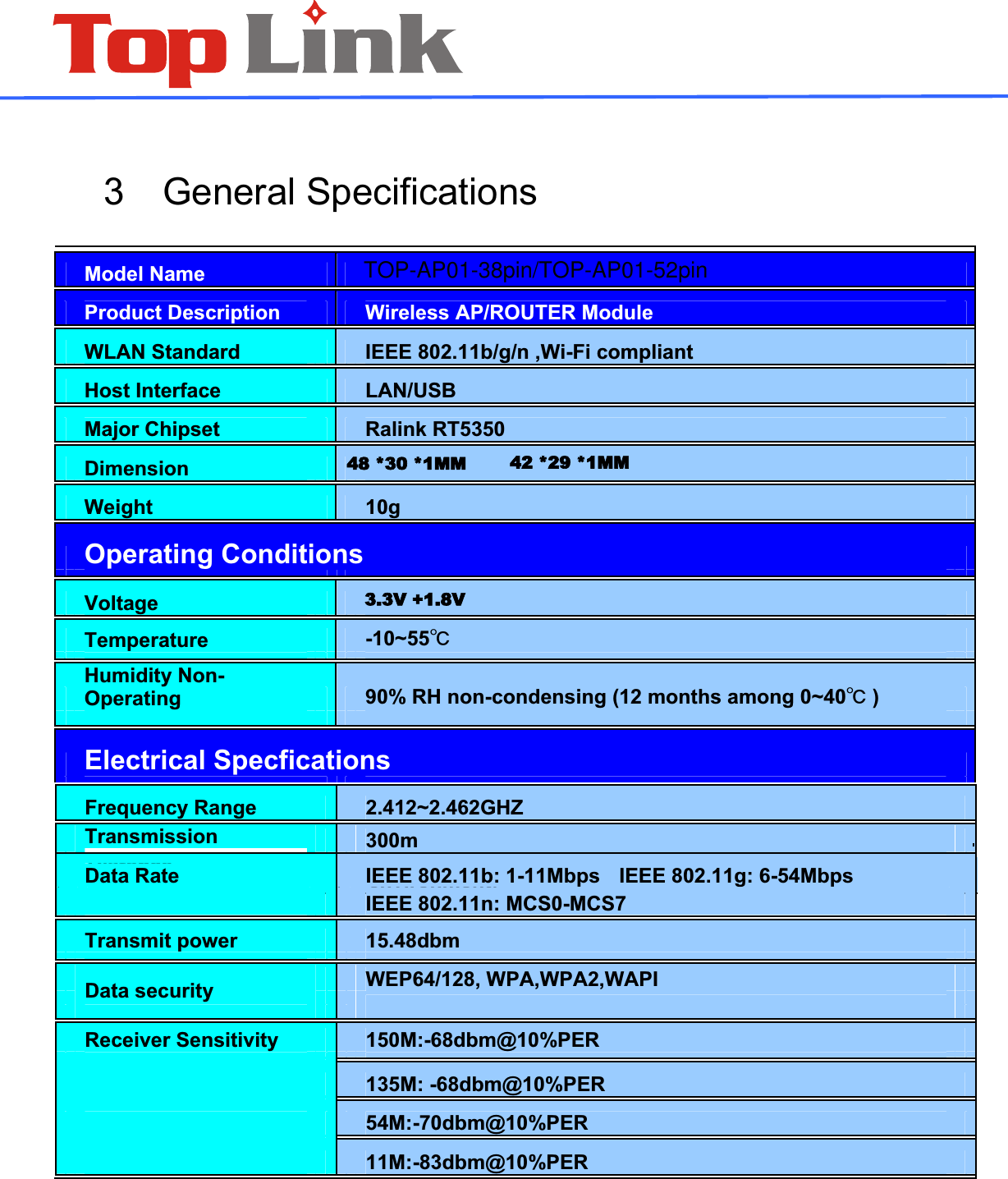
 3 General Specifications          Model Name          Product Description     Wireless AP/ROUTER Module        WLAN Standard     IEEE 802.11b/g/n ,Wi-Fi compliant        Host Interface     LAN/USB        Major Chipset     Ralink RT5350        Dimension             Weight     10g        Operating Conditions                 Voltage           Temperature     -10~55͠                   Humidity Non-Operating     90% RH non-condensing (12 months among 0~40͠ )                 Electrical Specfications                 Frequency Range     2.412~2.462GHZ             300m    Transmission Distance             environment)           Data Rate     IEEE 802.11b: 1-11Mbps IEEE 802.11g: 6-54Mbps          IEEE 802.11n: MCS0-MCS7           Transmit power     15.48dbm                              WEP64/128, WPA,WPA2,WAPI   Data security                          Receiver Sensitivity     150M:-68dbm@10%PER                                 135M: -68dbm@10%PER                    54M:-70dbm@10%PER                    11M:-83dbm@10%PER            TOP-AP01-38pin/TOP-AP01-52pin42 *29 *1MM3.3V +1.8V48 *30 *1MM
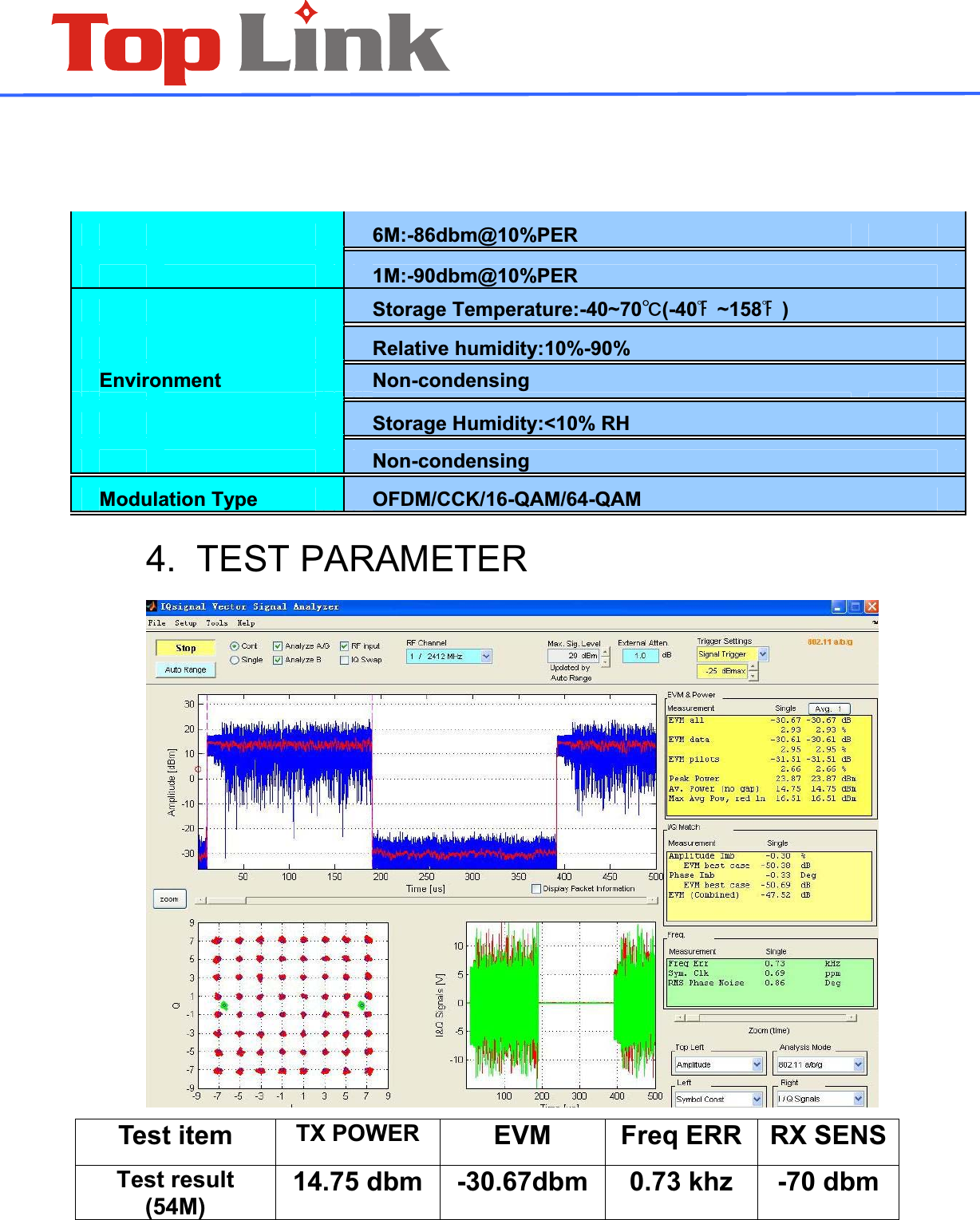
           6M:-86dbm@10%PER                          1M:-90dbm@10%PER            Storage Temperature:-40~70͠(-40ͦ~158ͦ)                         Relative humidity:10%-90%                Environment     Non-condensing                                          Storage Humidity:<10% RH                         Non-condensing             Modulation Type     OFDM/CCK/16-QAM/64-QAM               4.  TEST PARAMETER  Test item TX POWER  EVM Freq ERR RX SENSTest result (54M) 14.75 dbm  -30.67dbm  0.73 khz  -70 dbm
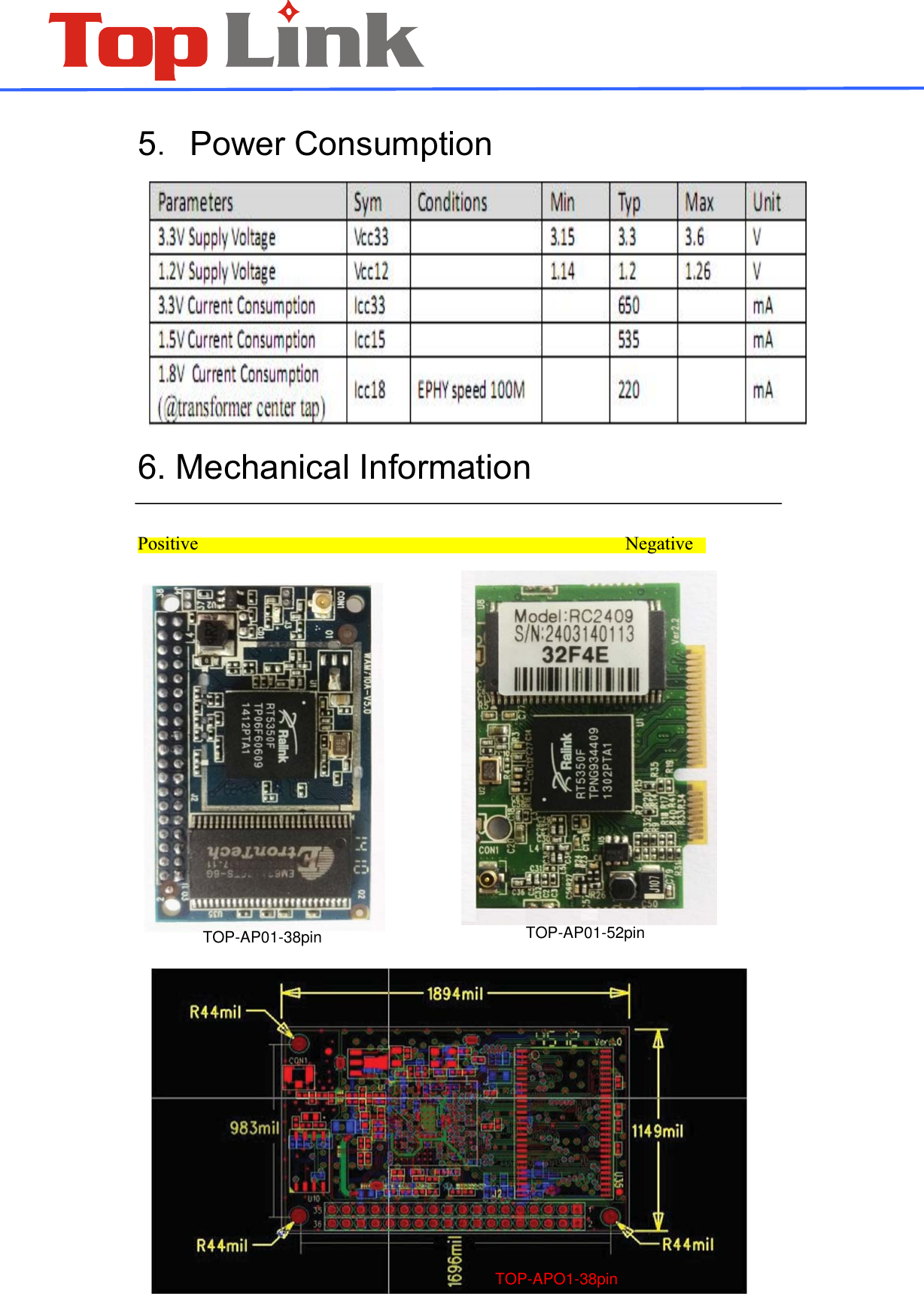
5㧚Power Consumption                   6. Mechanical Information                                                                                                                                                               Positive                                                                                           Negative                                                                                                                                                                                                                                                                                                                                                                                                               TOP-AP01-38pinTOP-APO1-38pinTOP-AP01-52pin
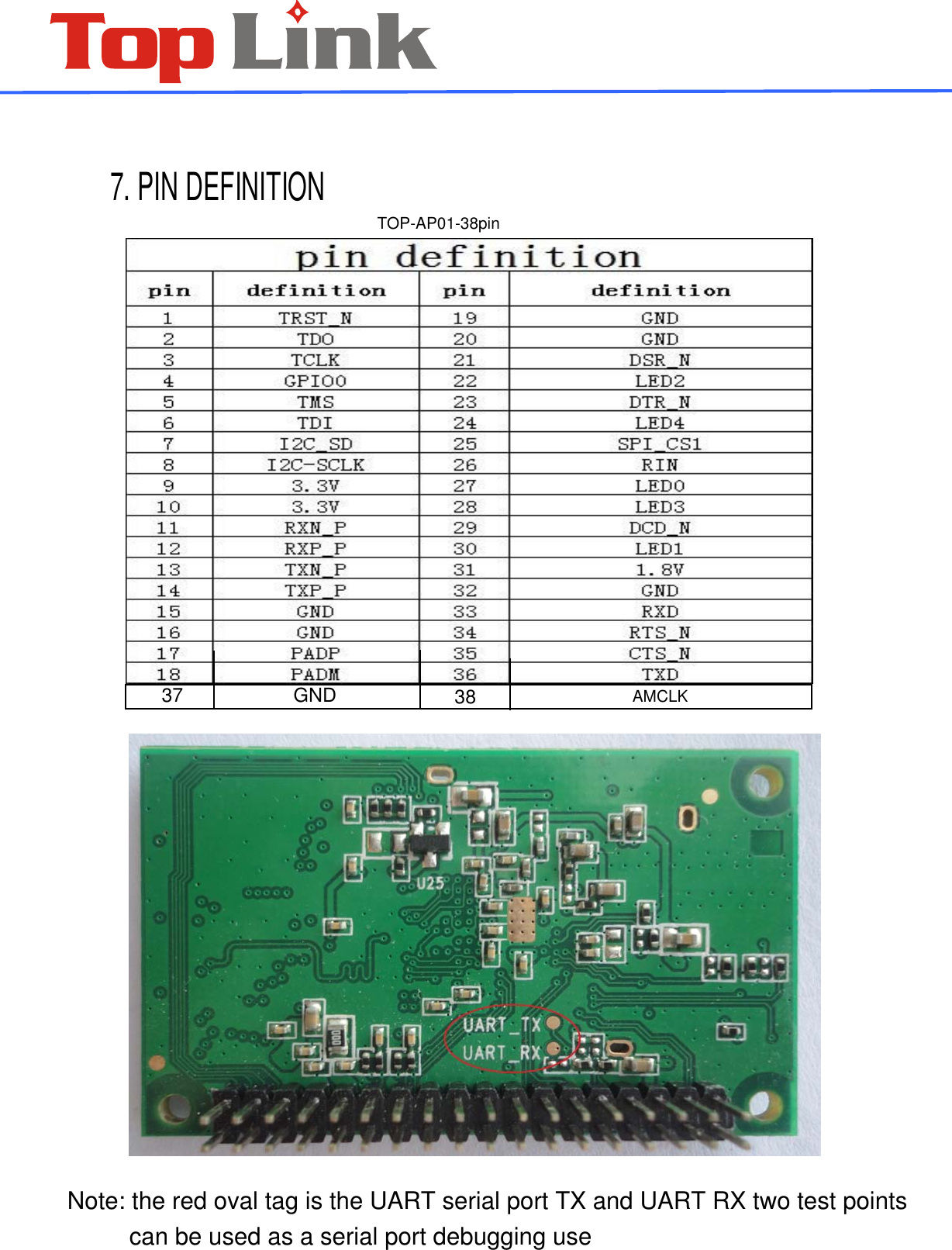
      7. PIN DEFINITION can be used as a serial port debugging useNote: the red oval tag is the UART serial port TX and UART RX two test points37 38GND AMCLKTOP-AP01-38pin
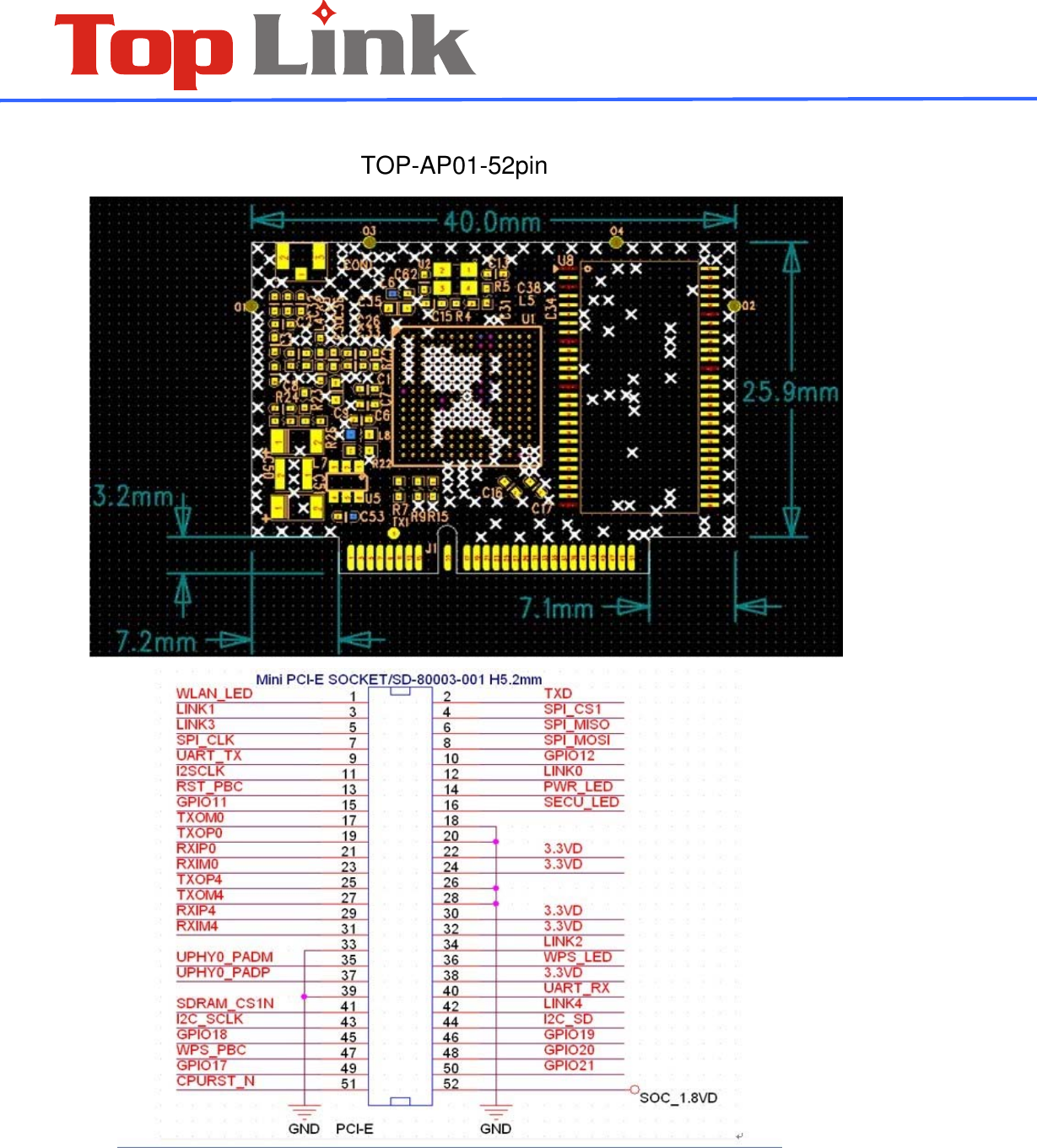
TOP-AP01-52pin
 .Antenna And Interface Connection Information   Interface and the antenna have the option    .Product ordering information  TOP-AP01 only support 802.11b/g/n, 3.3V and 1.8V voltage support And pls mark clearly your need about antenna and voltage support information.89This equipment has been tested and found to comply with the limits for a Class B digital device, pursuant to part 15 of the FCC Rules. These limits are designed to provide reasonable protection against harmful interference in a residential installation. This equipmentgenerates, uses and can radiate radio frequency energy and, if not installed and used in accordance with the instructions, may cause harmful interference to radio communications. However, there is no guarantee that interference will not occur in a particular installation. If this equipment does cause harmful interference to radio or television reception, which can be determined by turning the equipment off and on, the user is encouraged to try to correct the interference by one or more of the following measures:o Reorient or relocate the receiving antenna.o Increase the separation between the equipment and receiver.o Connect the equipment into an outlet on a circuit different from that to which the receiver is connected.o Consult the dealer or an experienced radio/TV technician for help.Caution: Any changes or modi?cations to this device not explicitly approved by manufacturer could void your authority to operate this equipment.This device complies with part 15 of the FCC Rules. Operation is subject to the  (2) this device must accept any interference received, including interference that may cause undesired operation.following two conditions: (1) This device may not cause harmful interferenceTo comply with FCC RF exposure compliance requirements,this grant isapplicable to only mobile configurations. The antennas used for this transmittermust be installed to provide a separation distance of at least 20 cm from allpersons and must not be co-located or operating in conjunction with any otherantenna or transmitter.

Navigation menu