Acrodyne NW8201E DIGITAL TELEVISION BROADCAST TRANSMITTER User Manual 32 NV8202 26 04 06 01 00
Acrodyne Industries, Inc. DIGITAL TELEVISION BROADCAST TRANSMITTER 32 NV8202 26 04 06 01 00
Acrodyne >
Contents
- 1. Users Manual Part 1
- 2. Users Manual Part 2
- 3. Users Manual Part 3
- 4. Users Manual Part 4
- 5. Users Manual Part 5
- 6. Users Manual Part 6
- 7. Users Manual Part 7
- 8. Users Manual Part 8
- 9. Users Manual Part 9
- 10. Users Manual Part 10
- 11. Users Manual Part 11
- 12. USers Manual Part 12
- 13. Users Manual Part 13
- 14. Users Manual Part 14
- 15. Users Manual Part 15
- 16. Users Manual Part 16
- 17. Users Manual Part 17
- 18. Users Manual Part 18
- 19. Users Manual Part 19
- 20. Users Manual Part 20
Users Manual Part 7
Chapter 2 Design and Characteristics
2099.9595.72 - 2.18 - E-2
1.5.2 Amplifier
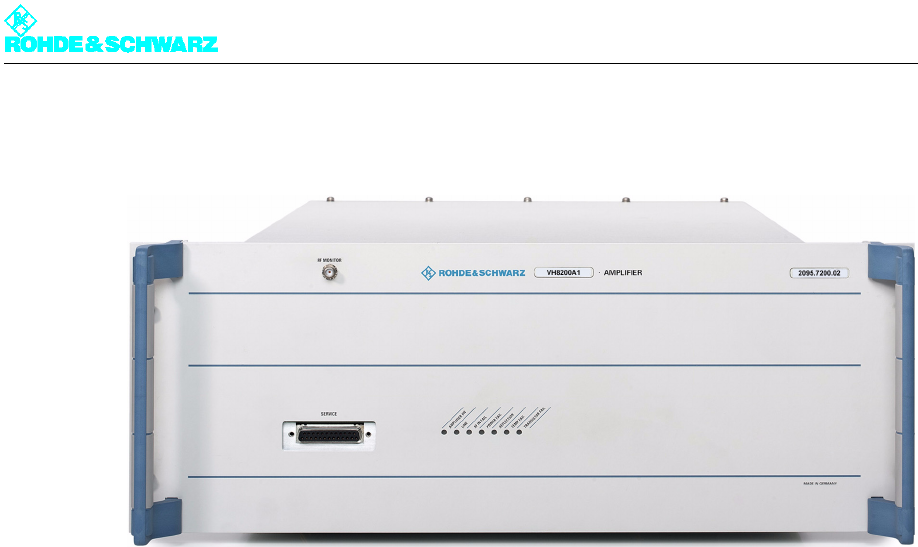
Fig. 22 Amplifier
The air-cooled, broadband VM8350A1 amplifier operates in the range from 170 MHz to
254 MHz (VHF band III). It can be used both for analog and digital signals without re-
quiring any adjustments. The output power of an amplifier is 325 W in the case of digital TV.
The amplifiers amplify the exciter signals distributed by the splitter and forward them to the
combiner. The amplifiers in a transmitter rack are controlled via the rack controller. Mea-
sured values and status information are recorded by the rack controller via CAN bus and
forwarded to the NETCCU® transmitter control unit. The number of exciters in the transmit-
ter depends on the transmit power.
Note For detailed information about the amplifier, refer to the amplifier manual.
Chapter 2 Design and Characteristics
2099.9595.72 - 2.19 - E-2
1.5.3 Combiner
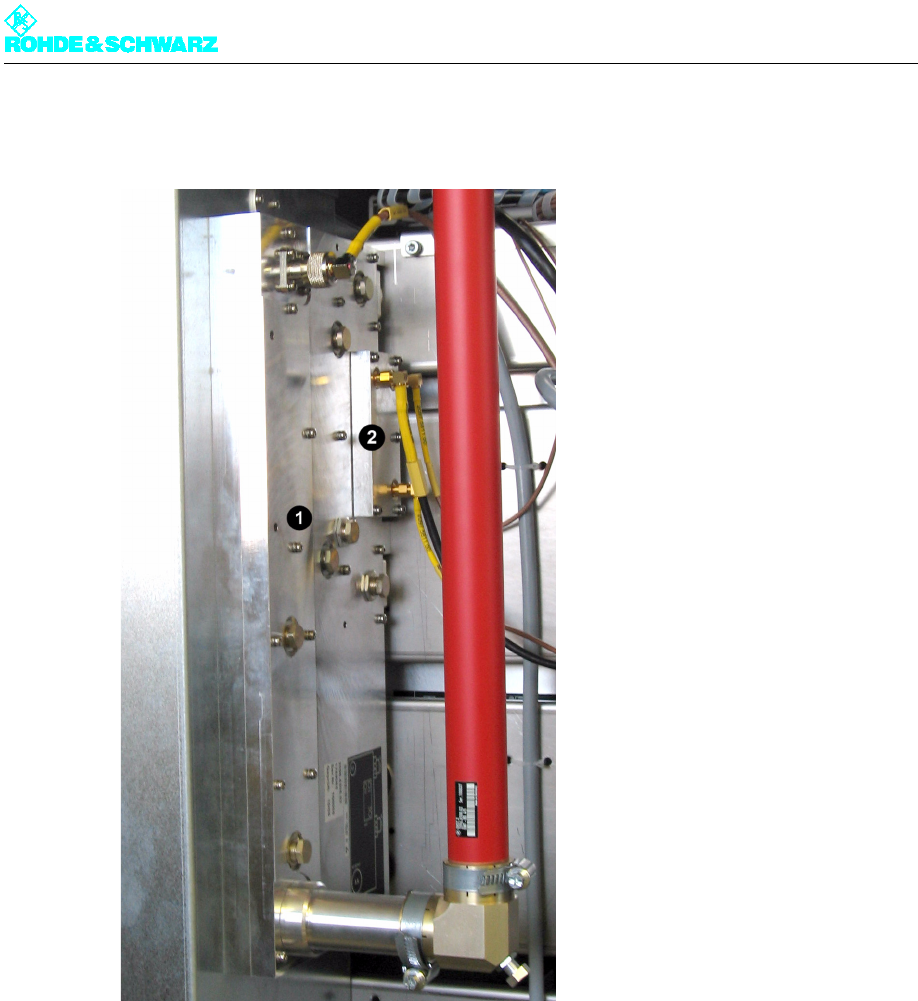
Fig. 23 Combiner (1) with splitter (2)
The RF power output by the amplifiers is merged via the combiner.
The combiner consists of a cascade of 3 dB couplers housed in a single unit.
Chapter 2 Design and Characteristics
2099.9595.72 - 2.20 - E-2
1.5.4 Absorber
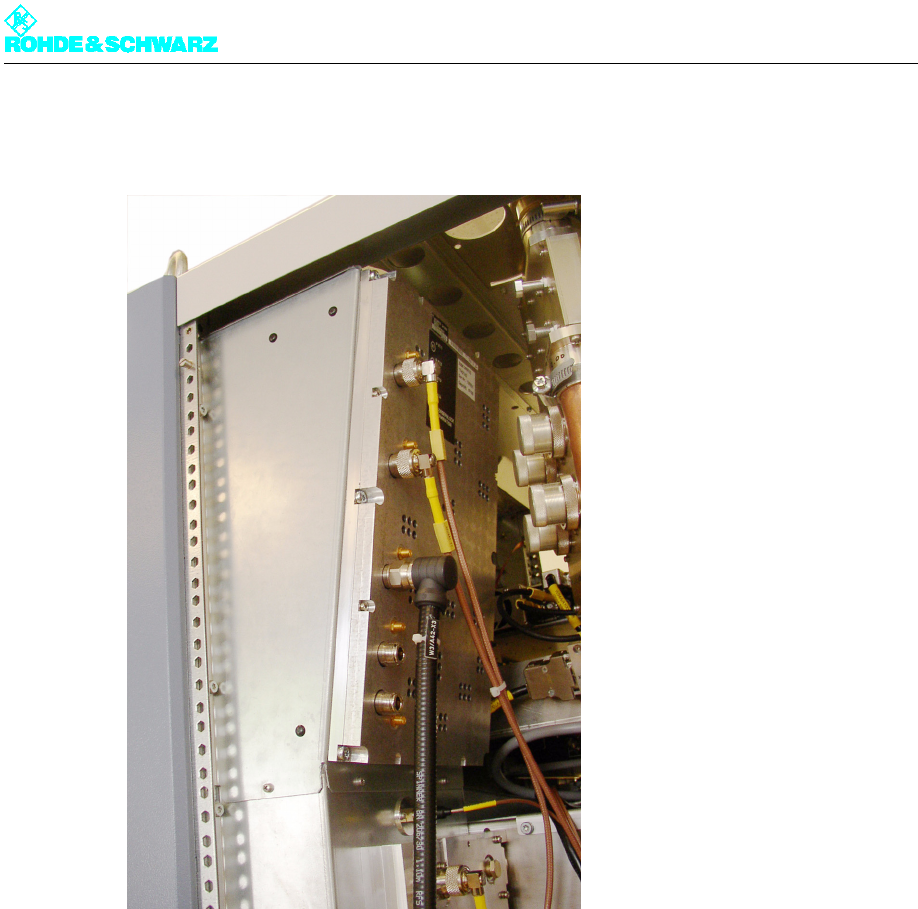
Fig. 24 Absorber
The absorber functions as the absorber resistor for the combiner. If combiner operation is
not symmetrical (e.g. one or more amplifiers are disconnected or removed), the portion of
the RF power that cannot be coupled in is expelled as additional thermal energy via the
transmitter's exhaust system.